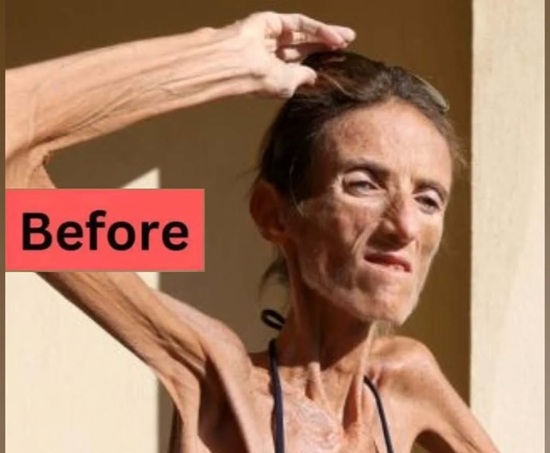
In a world obsessed with filters, perfect angles, and unrealistic beauty standards, it’s easy to forget that appearances rarely tell the full story.
Social media often celebrates thinness as success, confidence, and desirability. But behind many carefully curated images are struggles that remain invisible to the public eye. Few stories reveal that reality more powerfully than the journey of Valeria Levitin — a woman once widely labeled as “the world’s thinnest woman.”
Her story is not about glamour or shock value. It is a heartbreaking reminder of how dangerous society’s obsession with appearance can become when self-worth is tied entirely to body image.
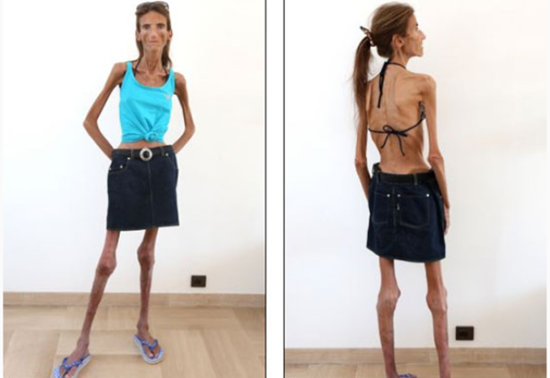
The Pressure Started Early
Growing up in Russia, Valeria was surrounded by constant messaging about beauty and appearance. Like many young girls, she learned early that being thin was often praised while natural body shapes were criticized.
Compliments about weight loss and pressure to look a certain way slowly shaped how she viewed herself. Over time, the idea that happiness and acceptance depended on becoming thinner became deeply rooted in her mind.
When she later moved to the United States as a teenager, those pressures intensified. Wanting to fit in and feel accepted, she began dieting at just sixteen years old, believing it would improve her confidence and future.
But what began as a simple attempt to lose weight gradually turned into something far more dangerous.
When Dieting Became an Obsession
As the years passed, Valeria’s relationship with food changed dramatically.
Eating became associated with guilt, fear, and control rather than nourishment or health. The pursuit of extreme thinness slowly consumed her daily life, especially after entering the modeling industry in her twenties.
Instead of encouraging balance, the industry reinforced harmful expectations. Even as her body became dangerously fragile, she was still told she needed to lose more weight.
The pressure never stopped.
And neither did the damage.
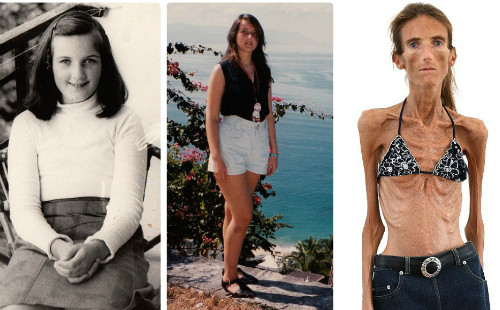
A Health Crisis Hidden Behind Public Attention
By her early twenties, Valeria’s health had become critically unstable.
Her body weakened.
Her bones became fragile.
Simple daily activities caused pain and exhaustion.
Despite the physical suffering, the fear of gaining weight remained overwhelming. Eating disorders often distort reality so deeply that even life-threatening conditions can feel “not thin enough.”
Eventually, her weight dropped below 60 pounds — a level that placed enormous strain on her organs and overall health.
Public attention soon followed.
Media outlets began referring to her as “the world’s thinnest woman,” turning her private struggle into a global headline.
The Dangerous Side of Online Attention
As photos of Valeria spread online, she began receiving messages from strangers asking for dieting advice and praising her appearance.
But behind the viral attention was immense suffering.
Instead of encouraging those dangerous ideals, Valeria chose to speak openly about the reality of anorexia and the emotional damage caused by extreme body obsession.
One of her most powerful statements became widely shared:
“I’m not here to teach girls how to disappear.”
That message marked a turning point in her life.
Turning Pain Into Purpose
Rather than staying silent, Valeria began using her story to raise awareness about eating disorders, body image pressure, and mental health.
She explained that anorexia is not about vanity or attention — it is a serious medical and psychological condition that can destroy both body and mind.
Her honesty resonated with people around the world because it challenged the dangerous fantasy often attached to extreme thinness.
Behind every “perfect” image may exist anxiety, insecurity, loneliness, or emotional pain that outsiders never see.
Why Her Story Matters Today More Than Ever
In today’s social media culture, unrealistic beauty standards spread faster than ever before.
Filters, editing apps, comparison culture, and viral trends constantly pressure people — especially young audiences — to chase impossible ideals.
Valeria’s story cuts through that illusion.
She reminds people that health matters more than approval, and that no photo, trend, or online validation is worth sacrificing physical or emotional well-being.
Her experience also highlights how eating disorders often begin quietly.
Small comments.
Obsessive dieting.
Constant comparison.
Fear of weight gain.
What seems harmless at first can slowly develop into a dangerous cycle if left unnoticed.
Recovery Is About More Than Weight
Valeria’s journey also shows that healing involves much more than physical recovery.
Eating disorders affect emotional health, self-esteem, relationships, and identity. Recovery requires support, compassion, professional help, and environments that encourage acceptance rather than judgment.
Today, Valeria continues encouraging people to focus on purpose, connection, and mental well-being instead of unrealistic standards.
Her dream of building a meaningful future — including becoming a mother — represents hope after years of suffering.
A Powerful Reminder About Self-Worth
One of the strongest messages from Valeria’s story is simple:
A person’s value is not measured by body size, weight, or appearance.
Real strength comes from resilience, kindness, courage, and the ability to heal — not from fitting into impossible beauty standards.
Her advocacy continues helping people understand that eating disorders are serious health conditions, not lifestyle choices or trends.
And perhaps most importantly, her story reminds people that asking for help is never weakness.
Final Thoughts
Valeria Levitin’s journey is more than a story about body image.
It is a story about survival, awareness, resilience, and reclaiming self-worth after years of pressure and pain.
In a culture that often rewards appearance over well-being, her voice serves as an important reminder that health — both mental and physical — must always come first.
Because no trend, compliment, or social media image is worth losing yourself.