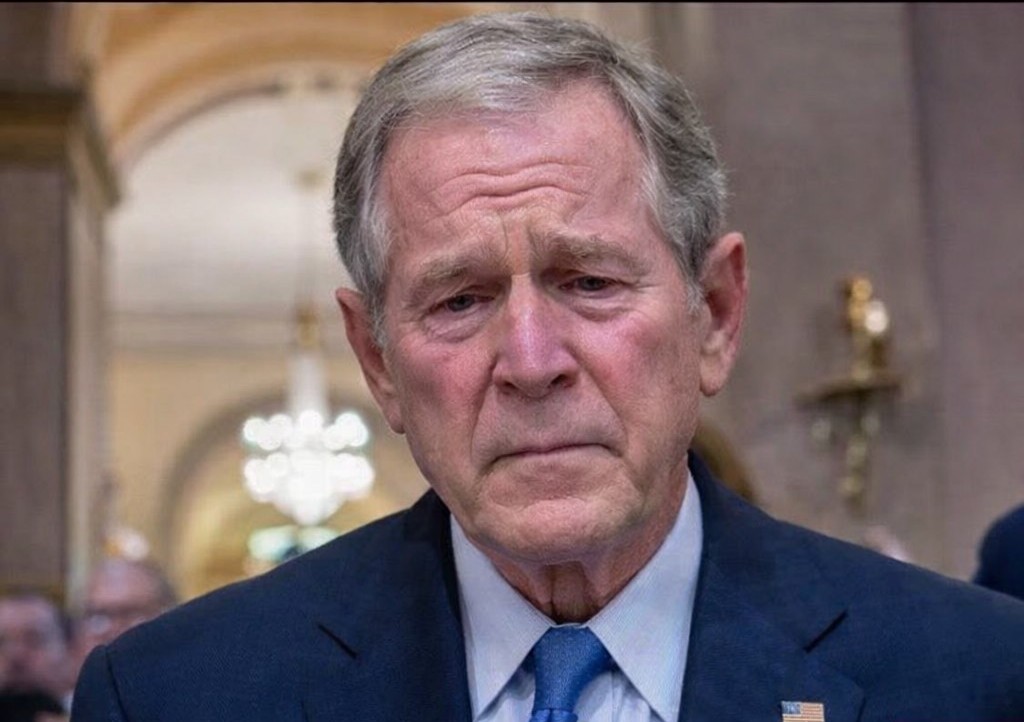
Former President George W. Bush has recently re-entered the public conversation with a rare and carefully measured warning about the direction of political decision-making in Washington. His remarks, delivered without theatrics or partisan framing, focused instead on what he described as growing structural risks inside the legislative process itself.
Rather than pointing to a single bill or administration, Bush raised concerns about a broader pattern in how major legislation is increasingly crafted and passed. According to his comments, complex policies are sometimes bundled into fast-moving, last-minute agreements, leaving limited time for full review or public understanding before they become law.
His message centered on the idea that the process itself matters just as much as the outcome. When legislation is negotiated under tight deadlines or political pressure, he suggested, important details can be overlooked or insufficiently examined. Over time, those gaps may lead to unintended consequences that only become visible long after laws are implemented.
Bush’s tone was notably restrained, focusing less on political conflict and more on institutional responsibility. He emphasized that governance relies not only on policy decisions but also on trust in how those decisions are made. When transparency is reduced or compromise is replaced by urgency-driven bargaining, he warned, public confidence in democratic systems can gradually weaken.
Keep reading…