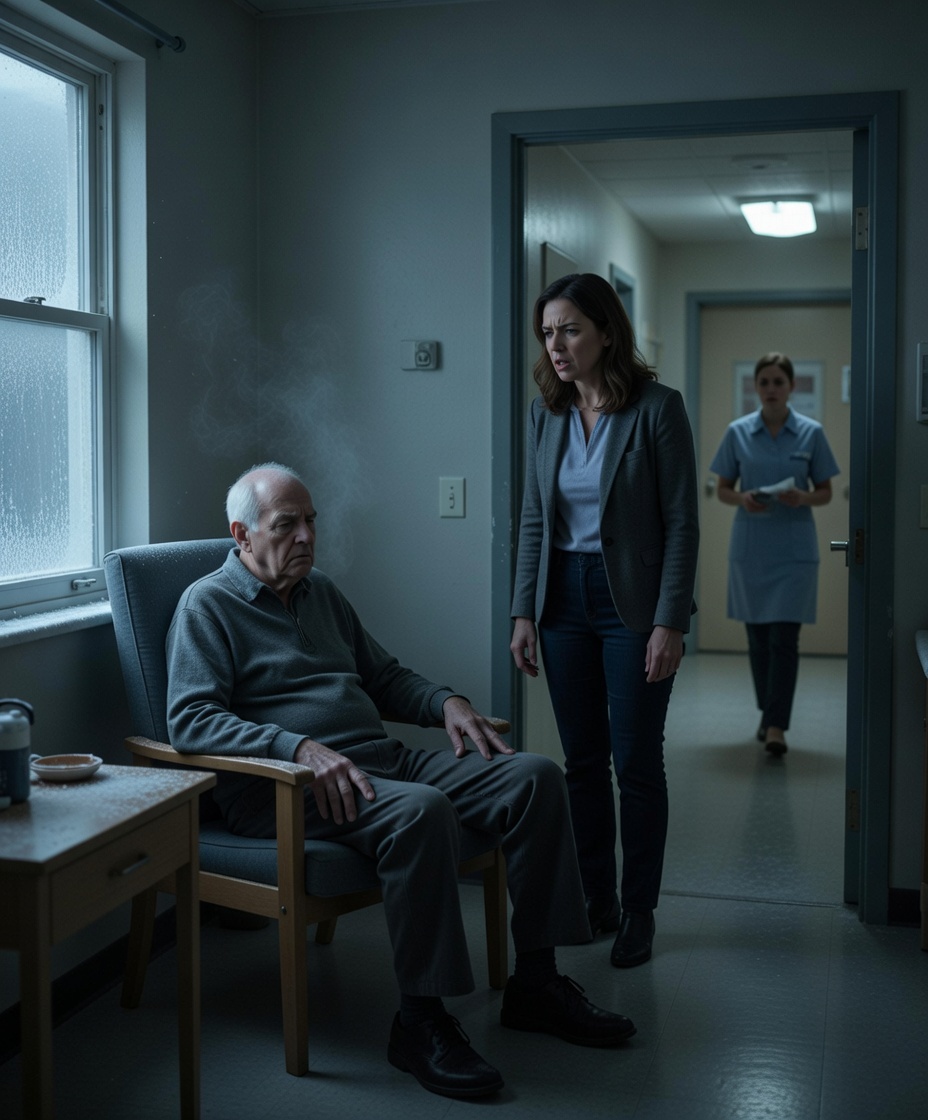
I was the one who finally got my father-in-law, Pop, into a top-tier nursing home after my late husband’s sister, Diane, refused to do more than sign the admission papers.
Pop—William, seventy-eight, a retired Navy electrician—was stubborn, proud, and suffering. Severe arthritis, early-stage dementia, and a lifetime of refusing to complain left him frail but dignified.
One cold November evening, I visited after work. He was slouched in his wheelchair, staring at the wall, body curled in on itself. But it wasn’t just his posture that hit me—it was the cold.
The room felt like a freezer. I could see my breath. His hands were blue at the fingertips. Fifty-six degrees.
Anger flared. I grabbed blankets, wrapped him up, and ran to the head nurse. Patricia, competent and kind, told me Diane had ordered the heat to stay low—she claimed Pop preferred it cold, even though he constantly complained.
I was stunned. His own daughter was letting him freeze. Legally, there was nothing I could do. I wasn’t family in her eyes. Only Diane, his “primary contact,” mattered.
I returned to Pop’s room, wrapped him tighter, and called the facility to stay overnight. I brought a space heater, warm blankets, and tea, and kept him warm while telling him stories about my late husband David and their adventures together. Slowly, his eyes cleared, and for the first time in days, he smiled.
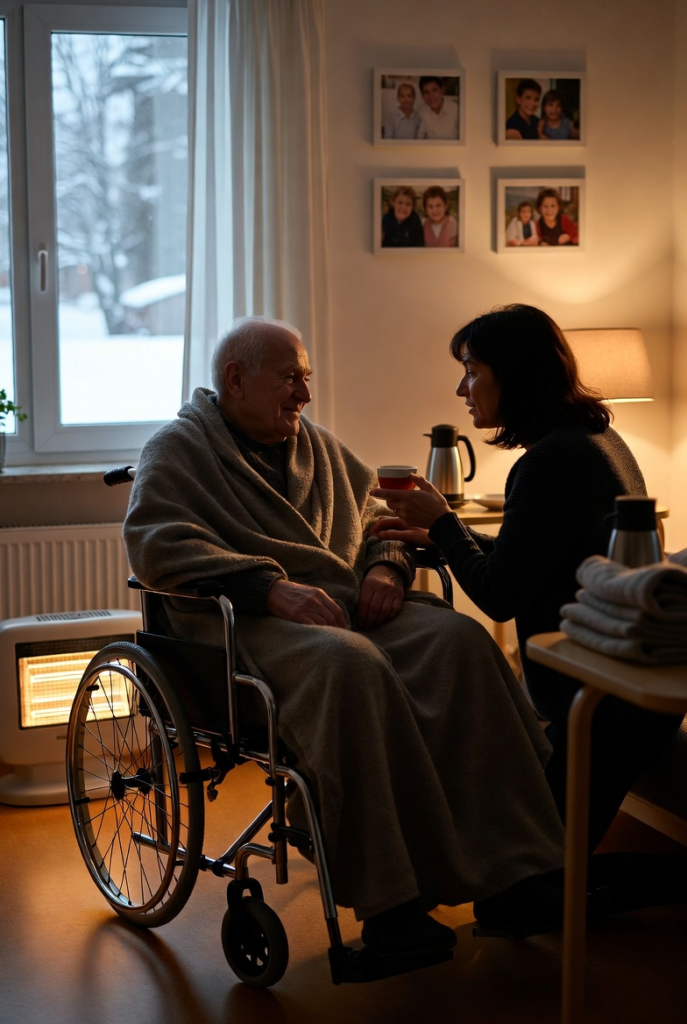
That night, I realized: Diane’s neglect wasn’t accidental—it was deliberate. She didn’t want to spend a little extra on heat, even if it meant Pop suffered.
I went home, digging through old letters between Pop and David. One, dated years earlier, made my blood run cold:
“When the time comes, the house goes to you and Anne to handle. Diane means well sometimes, but she’s never been good with caring for people. Make sure I’m taken care of properly. —Dad”
A father left in the cold. A will hidden in letters. And one quiet decision that would change everything…