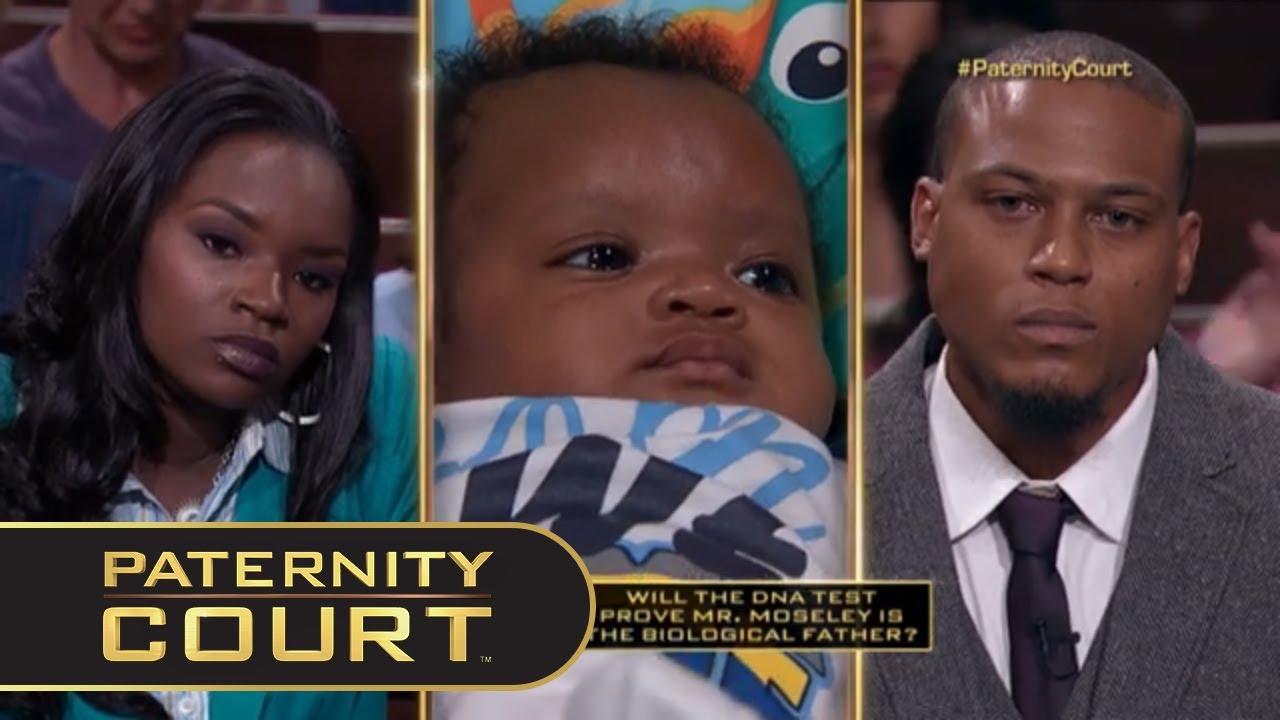
The situation quickly became more complicated when the woman admitted she had set a firm condition: if the DNA results proved he was not the biological father, she would end the relationship. With plans for marriage already discussed, the stakes couldn’t have been higher.
For her, the issue was about certainty and building a future on truth. For him, it was about holding onto both the woman he loved and the child he had already bonded with.
As the courtroom discussion unfolded, emotions ran high. The woman struggled with fear and frustration, torn between her feelings and her need for clarity. The man, visibly shaken, expressed his desire to remain part of the child’s life regardless—but hoped the test would confirm what he had believed all along.
Presiding over the case, Lauren Lake reminded both of them that while emotions are powerful, only scientific evidence can resolve uncertainty in situations like this.
Then came the moment everyone had been waiting for.
The DNA results confirmed that the man was the biological father.
Relief swept across the courtroom. The tension that had built throughout the case gave way to a sense of closure. For the man, it meant validation—not only of biology, but of the emotional bond he had already formed. For the woman, it brought clarity and forced her to reconsider the ultimatum she had set.
With the truth revealed, the couple was given a second chance to rebuild—with honesty now at the center of their future.
This case highlights how quickly trust can be tested when uncertainty enters a relationship. It also shows how communication, accountability, and truth are essential when building a family.
While the DNA test provided answers, the emotional journey behind it left a lasting impact—one that will shape how this couple moves forward together.
Do you think relationships can survive this kind of pressure, or does doubt change everything? Share your thoughts and join the conversation.
FULL VIDEO: