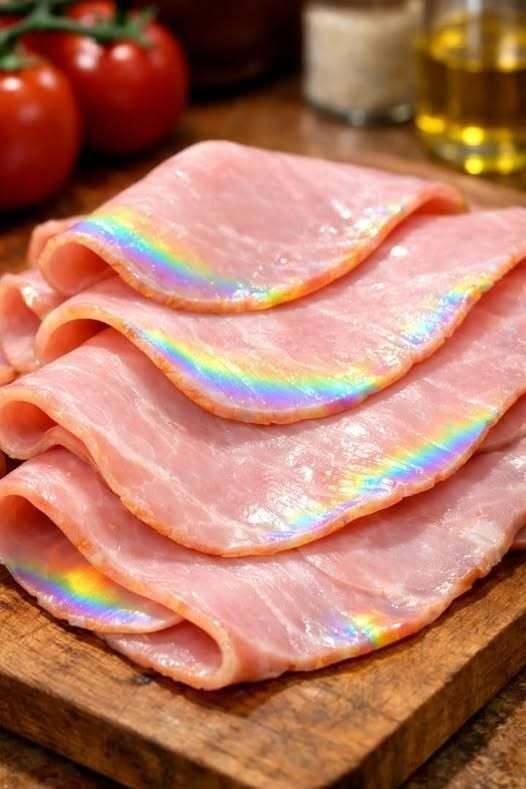
Thinly sliced ham is especially prone to this effect because of its smooth, moist surface. Curing salts and moisture inside processed meats can intensify the rainbow appearance, making the colors seem even brighter. While it may look unnatural, the shimmer alone does not automatically mean the meat has gone bad.
However, food safety experts warn that appearance should never be the only factor when deciding whether deli meat is safe to eat.
The real signs of spoiled meat are usually found through texture and smell. Fresh deli ham should feel firm and slightly moist, but never slimy or sticky. If the surface develops a slick film or leaves residue on your fingers, bacteria may already be growing.
Odor is another major warning sign. Fresh ham typically has a mild, smoky, or salty smell. If the meat begins to smell sour, acidic, or unusually pungent, it should be discarded immediately. Experts say your nose is often more reliable than color alone when identifying spoilage.
There are also visual differences between harmless iridescence and actual spoilage. Rainbow reflections tend to shift when the meat moves under light, while spoiled meat often develops dull gray, brown, or green discoloration that remains fixed on the surface. Mold, fuzz, or dark patches are clear indicators the meat should not be consumed.
Storage time matters as well. Once opened, deli meats generally should be eaten within three to five days, even if they still look normal. Certain bacteria can continue growing inside refrigerated foods without obvious visible signs.
To help preserve freshness, experts recommend sealing deli meat tightly and storing it in an airtight container inside the coldest part of the refrigerator.
So the next time your ham appears to glow with metallic colors, there’s usually no reason to panic. That strange rainbow effect is often just light reflecting off the meat’s natural fiber structure. Still, smart food safety habits remain essential. If the texture feels wrong, the smell seems off, or the meat has been sitting too long, it’s always safer to throw it away.
Have you ever opened food that looked strange enough to make you question it? Share your experience in the comments and follow for more surprising food facts and everyday science explained.