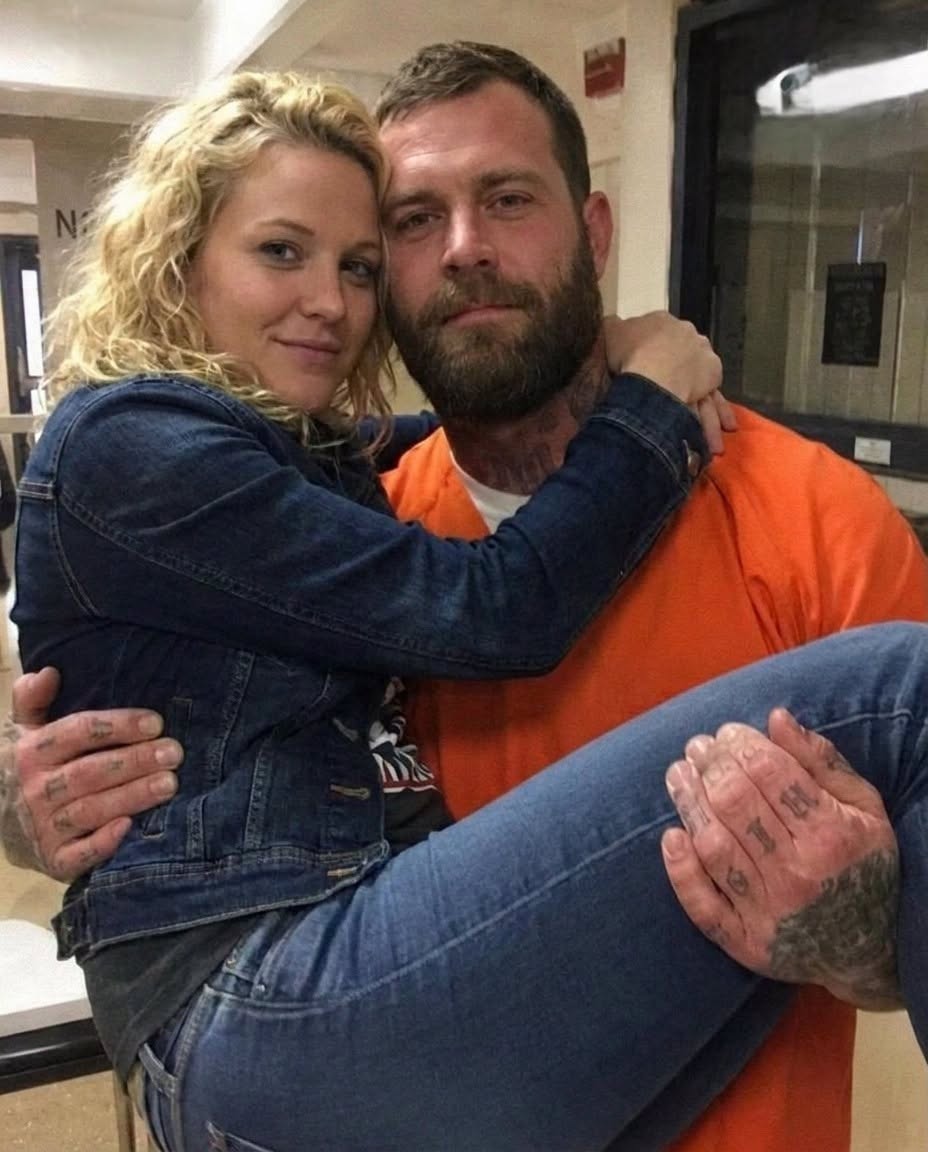
“I know this started because you needed help.”
He admitted he had made mistakes. He didn’t pretend he was innocent in everything that happened.
But he maintained that some of the accusations against him were not accurate.
At the time, I didn’t care about proving anything.
I wasn’t there to solve his case.
I was there because Owen needed a home.
Months passed.
Then years.
The arrangement continued.
I visited.
He wrote letters.
At first, the conversations were careful and distant.
Then something changed.
Jonah remembered small details about my life. He asked about Owen’s school. He remembered things I had mentioned weeks earlier.
Sometimes his letters included simple drawings in the margins.
They weren’t grand gestures.
They were reminders that someone was thinking about me.
Slowly, without realizing it, I stopped seeing him as a stranger.
He became someone I looked forward to hearing from.
One evening, after a long day at work, I found myself reviewing Jonah’s court documents.
I wasn’t sure why.
Maybe curiosity.
Maybe instinct.
Owen walked into the kitchen, looked at the papers spread across the table, and frowned.
“You’ve been looking at those for hours.”
“I just feel like something is missing,” I said.
Together, we started organizing the information.
Dates.
Financial records.
Witness statements.
One detail immediately stood out.
A document contained Jonah’s signature on a date when he was already in custody.
It didn’t make sense.
That single inconsistency led us to look deeper.
We created timelines across the apartment walls with notes and printed records. The more we examined the information, the more questions appeared.
Eventually, I brought everything to a legal aid attorney.
She agreed the evidence deserved another review.
The process was slow.
There were hearings, paperwork, setbacks, and moments when giving up seemed easier.
Jonah often told me to stop.
“You’ve already done enough,” he said.
“I don’t want my situation to consume your life.”
But by then, something had changed.
I wasn’t helping him because I felt obligated.
I was helping him because somewhere along the way, I had fallen in love with the person behind the prison uniform.
Eventually, the court reviewed the evidence.
Some records were found to be unreliable. Important details had not received proper attention during the original proceedings.
Jonah still accepted responsibility for the choices he had made.
But some of the larger accusations against him were overturned.
The day he walked out of prison, he didn’t look like someone celebrating.
He looked overwhelmed.
Freedom was unfamiliar.
I invited him home.
Our apartment was small.
Owen still left dishes in the sink.
Nothing about our life was perfect.
But for the first time, it felt real.
Then, one evening, Jonah walked into the kitchen carrying an old black box.
“I need to tell you something.”
Those words immediately made my stomach tighten.
Inside was a notebook.
The handwriting belonged to Celeste.
Page after page contained notes about me.
My financial struggles.
My family situation.
My responsibilities.
My vulnerability.
She had not simply found someone willing to help her son.
She had researched people who were struggling until she found someone who might accept her offer.
Someone desperate enough to say yes.
Someone like me.
Then I found the legal documents beneath the notebook.
They revealed why Celeste had chosen me.
Jonah’s family trust contained conditions connected to his marriage status and legal situation.
If his conviction was challenged successfully, his spouse could have influence over certain matters.
Celeste hadn’t chosen me because she trusted me.
She chose me because she believed I would never question anything.
She was wrong.
I looked at Jonah.
“How long have you known?”
He lowered his eyes.
“Months.”
My heart sank.
“You should have told me.”
“I was afraid.”
The honesty hurt because it came too late.
I asked him to leave.
Not because I stopped caring.
Because trust is not rebuilt with a single apology.
The next morning, Celeste invited me to her office.
She placed a check on the table.
$100,000.
All I had to do was sign away my legal authority connected to the trust.
For a moment, I imagined what that money could change.
Owen’s education.
Our bills.
A life without constant financial pressure.
Then I looked at the documents.
And I remembered the notebook.
I pushed the papers back.
“No.”
Her expression changed.
“You should think carefully.”
“I already have.”
Money had influenced my decisions once.
It would not control me again.
Weeks later, Celeste’s family foundation held a major public event.
Board members, donors, and community leaders gathered for the evening.
I arrived carrying the same black box.
When I stepped forward, the room became silent.
I told my story.
Not with anger.
Not with revenge.
Just facts.
I explained how financial hardship had been treated as an opportunity. I explained how vulnerable people could be manipulated when they had no better choices.
Then I opened the notebook.
The words inside spoke louder than I ever could.
The organization launched an independent review.
Policies changed.
Leadership was questioned.
And accountability finally began.
Life moved forward.
Owen started college.
Jonah found steady work and focused on rebuilding his future.
He never demanded that I forgive him.
Instead, he worked every day to earn back trust.
Slowly.
Patiently.
Honestly.
One afternoon, he found me reviewing scholarship applications for students who were facing financial struggles.
“You’ve helped so many people,” he said.
I smiled.
“I only gave them what I once needed.”
He looked at me quietly.
“I’ll spend the rest of my life proving you made the right choice.”
I thought about the first time I married Jonah.
That decision came from fear.
From desperation.
From survival.
But if I ever chose him again, it would be different.
No contracts.
No payments.
No pressure.
Just two people choosing each other freely.
Because real trust cannot be bought.
It has to be earned.