Why This Happens During Slow Cooking
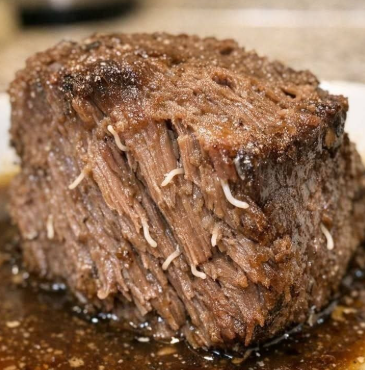
Beef roasts naturally contain collagen-rich connective tissue that helps hold muscle fibers together. During long, slow cooking, that collagen gradually breaks down and softens.
As this process happens, the connective tissue can become visible as:
- Thin white strands
- Soft gelatin-like pieces
- Stringy fibers between sections of meat
This is especially common in cuts designed for slow cooking, such as chuck roast or brisket.
A Normal Part of Tender Meat
When collagen breaks down properly, it helps create the tender texture and rich flavor people expect from slow-cooked beef. The white strands may not look appealing, but they are usually a normal result of the cooking process.
These pieces are typically:
- Soft and easy to pull apart
- Slightly gelatinous or slick
- Irregular in shape
What About Parasites?
In countries with modern food inspection systems, parasites in commercially sold beef are considered very uncommon. In addition, proper cooking temperatures greatly reduce food safety risks.
If the roast:
- Was stored safely
- Smelled normal before and after cooking
- Reached a safe internal temperature
then the white strands are far more likely to be connective tissue rather than anything harmful.
When to Be Cautious
While these strands are usually harmless, it’s still important to avoid eating meat that shows signs of spoilage, including:
- Sour or unusual odors
- Slimy texture before cooking
- Discoloration unrelated to normal browning
- Improper storage or refrigeration
If something about the meat seems genuinely unusual or unsafe, it’s best to discard it and follow food safety guidelines.
Final Thoughts
Those strange-looking white strands in a slow-cooked roast are most often just softened connective tissue created during the cooking process. While the appearance can be surprising, it’s usually a sign that the collagen has broken down properly, helping make the meat tender and flavorful.
Sometimes, the science behind cooking can look a little strange—but that doesn’t necessarily mean anything is wrong.