In Joshua 7, Achan and his household face judgment after Achan's disobedience. The account includes burning as part of the punishment described in the passage.
A different example appears in 1 Samuel 31. After Saul and his sons die in battle, the Philistines mistreat their bodies. The men of Jabesh-gilead recover the bodies, burn them, and bury their bones.
Their actions take place in the aftermath of war and the dishonoring of the dead. The passage does not present a general command that all bodies should be burned, nor does it establish that every form of cremation has the same spiritual meaning.
The Bible's references to burning must therefore be understood in their historical and literary contexts.
Why Did Early Christians Prefer Burial?
Early Christians inherited important burial customs from Jewish tradition, which emphasized respectful treatment of the dead.
Burial also became closely associated with Christian hope in the resurrection. Jesus had been laid in a tomb, and Christians saw the body as part of God's creation rather than something without value after death.
In the Roman world, burial could also distinguish Christian communities from certain pagan funerary practices, although customs varied across time and place.
As Christianity developed, burial became the customary practice in many Christian communities. Churches preserved the tradition through funeral liturgies, cemetery practices, prayers for the dead, and teachings about the dignity of the human body.
This historical preference remains important today. For many Christians, burial is not simply a practical choice; it is a visible expression of faith, reverence, and hope.
However, a longstanding tradition is not necessarily identical to a universal biblical prohibition against every alternative.
Can God Raise Someone Who Has Been Cremated?
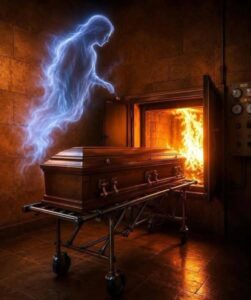
One of the most common concerns about cremation is whether it could prevent a person from being resurrected.
Christian teaching about resurrection generally rests on God's power rather than the preservation of a person's physical remains.
 Up Next: Page 3 of 5
Bodies naturally change after death. They decompose, return to the elements, and...
If resurrection depended on every physical particle remaining intact, these circumstances would raise serious theological difficulties.
Continue Reading