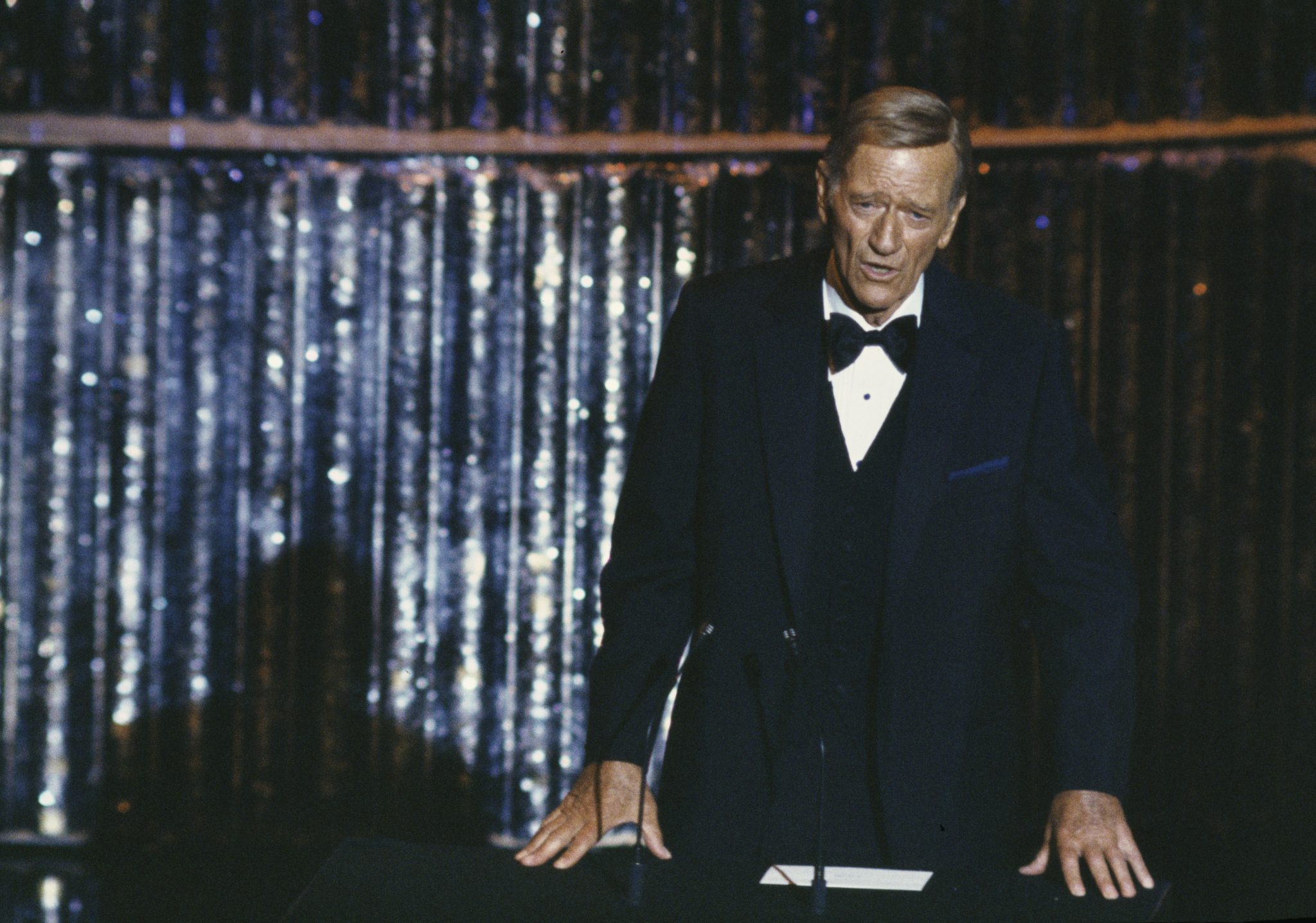
Only three months earlier, what was meant to be routine gallbladder surgery turned into a grueling nine-and-a-half-hour procedure for the “Duke.”
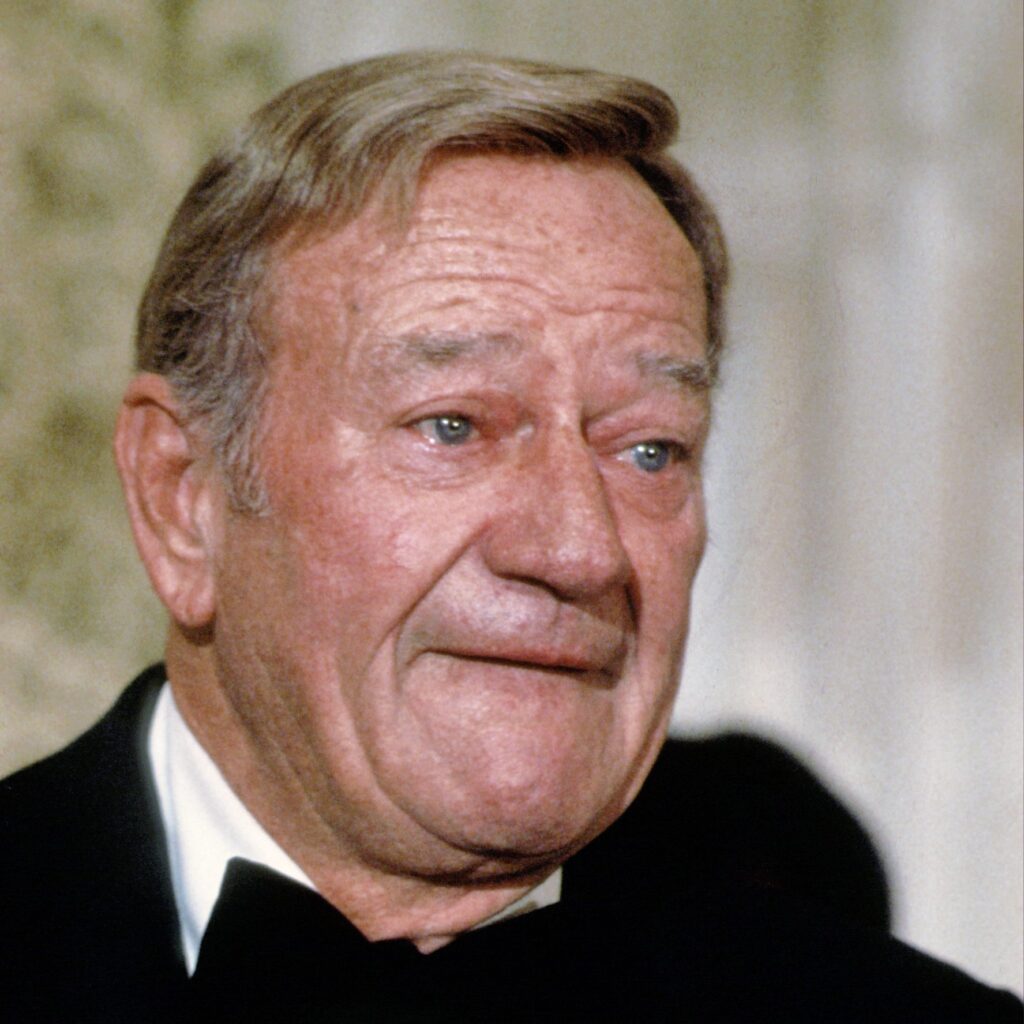
Surgeons discovered stomach cancer and removed his entire stomach. At seventy-two, he was no stranger to beating the odds — fifteen years earlier he had survived lung cancer, losing a lung and several ribs in 1964. The year before, he had even missed the Academy Awards while recovering from open-heart surgery to replace a valve.
Would Duke appear this time? His longtime friend Bob Hope called him personally to ask. Wayne said yes.
Thin but tanned and jaunty
Inside the auditorium, the audience included colleagues who had shared the screen with him across more than five decades, from silent films in 1926 to the 179 productions that shaped Hollywood’s idea of heroism. They knew his politics and controversies — but this night was about something deeper.
Wayne’s entrance was pure “Duke” — he slowly made his way down the staircase, smiling warmly at the crowd. Many noticed he looked thinner, yet still tanned and filled with his signature charm.
One by one, people rose to their feet. The standing ovation grew and did not fade. They weren’t simply applauding a career — they were honoring a man who had faced death and still showed up.
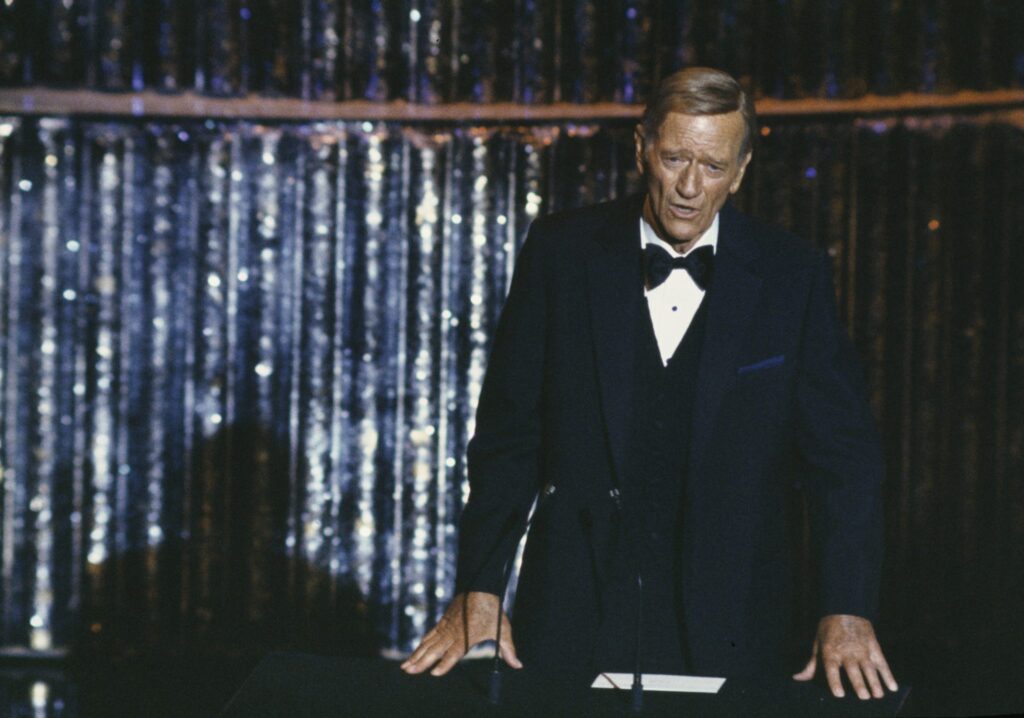
When the applause finally softened, Wayne spoke in the voice that had echoed through cavalry charges and frontier towns for half a century:
“Thank you, ladies and gentlemen,” he said. “That’s just about the only medicine a fellow would ever really need.”
Five words — and the crowd erupted again.
He continued, smiling with the weight of survival behind him:
“Believe me when I tell you that I’m mighty pleased that I can amble down here tonight. Well, Oscar and I have something in common. Oscar first came to the Hollywood scene in 1928. So did I. We’re both a little weather-beaten, but we’re still here and plan to be around for a whole lot longer.”
Wiped away tears
The audience laughed, some brushed away tears, all understanding the meaning behind those words.
Wayne then announced the nominees for Best Picture: The Deer Hunter, Coming Home, Midnight Express, An Unmarried Woman, and Heaven Can Wait. Opening the envelope, he declared The Deer Hunter the winner. As the producers walked onstage, Wayne stepped back among friends. No one realized it would be his final public appearance.
Eleven days later, on April 20, he was admitted to UCLA Medical Center with a bronchial condition. A week later, he was released. On his seventy-second birthday, May 26, he received the Congressional Gold Medal.
Died shortly after
Sixteen days later, on June 11, 1979, Wayne passed away at UCLA Medical Center. In his final months, he had joined an experimental cancer vaccine study, telling doctors, “If this is helpful, I’m going to help you afterward.”
His family later founded the John Wayne Cancer Institute, continuing his legacy of courage and hope.
Wayne was laid to rest at Pacific View Memorial Park Cemetery in Newport Beach, California, a peaceful hillside overlooking the ocean. For decades, the exact location of his grave remained a mystery.
According to reports in the Los Angeles Times, security kept fans away from his funeral, and the farewell remained private. His gravesite went unmarked for nearly twenty years — a quiet resting place for one of Hollywood’s most enduring legends.