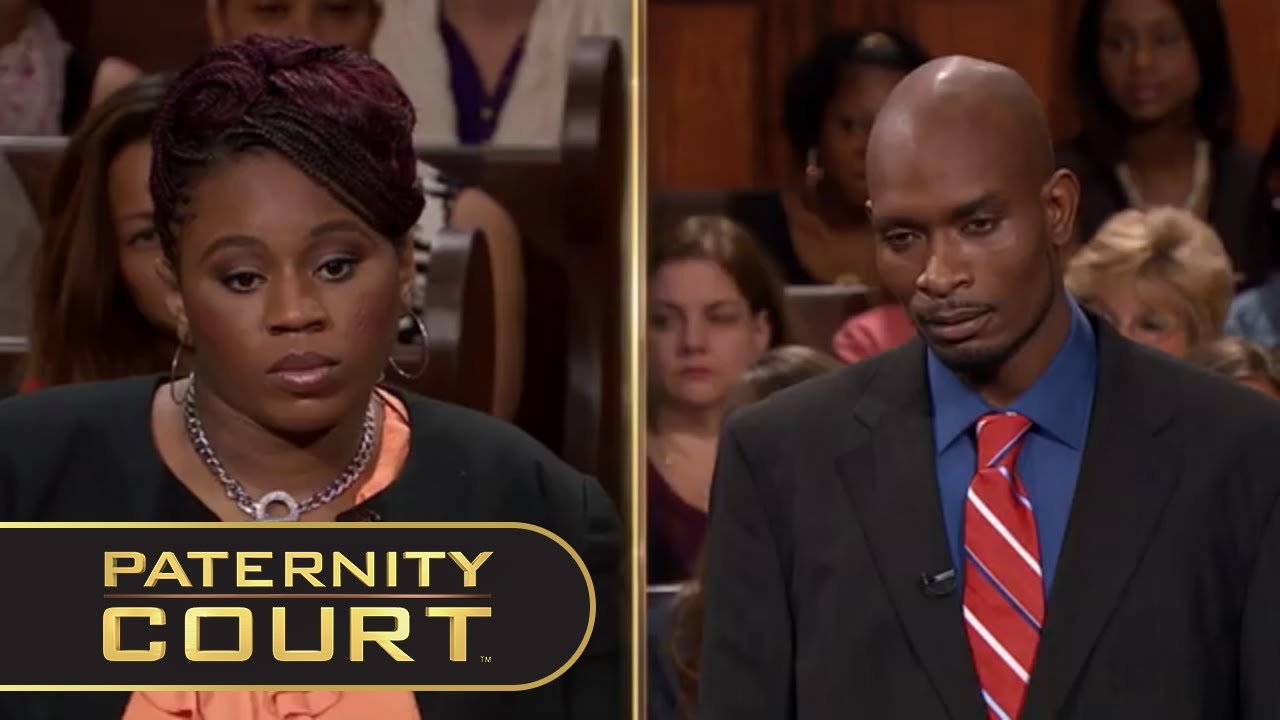
Standing across from him, the woman strongly denied those accusations.
She pushed back firmly, stating that the claims were based on insecurity rather than facts. While she admitted the relationship had its challenges, she insisted that those difficulties did not mean she had been unfaithful. In her view, the man had misinterpreted situations and allowed doubt to shape his version of events.
The clash between their perspectives was immediate and intense.
As both sides presented their arguments, it became clear that the issue went beyond paternity. It was about trust—broken, questioned, and possibly misunderstood. The man described feeling confused and emotionally drained, while the woman expressed frustration at constantly having to defend her integrity.
To bring order to the situation, the judge stepped in.
Rather than focusing on accusations, the judge shifted attention to facts. Both individuals were asked to clearly explain timelines—when they were together, when they were apart, and how their interactions overlapped. The goal was simple: separate emotion from reality.
The woman maintained that during the time of conception, she was not involved with anyone else. She emphasized that the child deserved stability and clarity, not assumptions driven by past conflict. Her stance remained consistent—she believed the man was the father.
The man, however, remained unconvinced.
He pointed to moments he found suspicious—times when communication broke down, when explanations didn’t seem to add up, and when he felt excluded. While he admitted he didn’t have exact dates or concrete proof, he believed the overall pattern raised serious doubts.
For him, it wasn’t about guessing—it was about questioning what didn’t make sense.
Throughout the hearing, the judge repeatedly redirected the focus to what truly mattered: the child.
She reminded both parties that the case was not about revisiting every disagreement in their past, but about establishing the truth moving forward. The child’s future, stability, and identity depended on clarity—not ongoing conflict.
As emotions continued to rise, both individuals revealed the toll the situation had taken.
The man spoke about feeling manipulated and uncertain, while the woman described the emotional exhaustion of being accused repeatedly. Their exchange showed how quickly trust can erode when communication breaks down and assumptions take over.
Still, one thing became increasingly clear—this situation could not be resolved through arguments alone.
The judge emphasized that no amount of belief, suspicion, or personal interpretation could determine paternity. Only scientific evidence could provide a final, unquestionable answer.
That’s when the case reached its turning point.
A DNA test was identified as the only way to settle the dispute. Both sides understood that the results would bring clarity, but also consequences. Whether confirming or denying paternity, the outcome would force both individuals to confront the truth.
As the hearing came to a close, the tension shifted into anticipation.
The courtroom, once filled with accusations and defenses, now waited for something definitive. While the emotional damage from the conflict was evident, there was also a sense that resolution—and possibly closure—was within reach.
This case highlights more than just a question of paternity.
It shows how fragile trust can be, how quickly doubt can grow without clear communication, and how important it is to rely on facts when the stakes are high. When a child’s future is involved, certainty isn’t optional—it’s essential.
In the end, only one thing can cut through confusion and emotion: the truth.
What’s your perspective?
In situations like this, should doubts be enough to question everything—or should proof always come first? Share your thoughts below and join the conversation.
longer please!
Here’s a longer, high-RPM, AdSense-safe, fully original rewrite with stronger pacing and depth:
Intense Courtroom Battle Erupts Over Allegations, Trust Issues, and Paternity Doubts
A highly emotional courtroom case unfolded as a man brought serious accusations against the mother of his alleged child, claiming her past behavior made it impossible for him to trust her—and even more difficult to believe he was the father. What started as a paternity dispute quickly turned into a deeper conflict centered on trust, communication, and unresolved tension.
From the very beginning, the atmosphere was charged.
The man didn’t hesitate to explain why he doubted the situation. According to him, the relationship had been unstable for a long time, marked by inconsistent communication and moments that raised suspicion. He claimed that during their time together, there were instances where the woman’s actions didn’t align with what she was saying, leading him to believe she may have been involved with other people.
For him, this wasn’t about one isolated doubt—it was about a pattern.
He described feeling confused and emotionally drained, as if he had been trying to make sense of a situation that never fully added up. Those doubts carried over into the present, shaping how he viewed the question of paternity. Without clear proof, he simply couldn’t accept the responsibility of being a father.
The woman, however, pushed back immediately.
She denied every accusation and made it clear that she believed the claims were rooted in insecurity rather than reality. While she acknowledged that their relationship had its challenges, she insisted that those difficulties had been misinterpreted. In her view, the man had allowed doubt and frustration to distort what actually happened.
Her stance was firm—she had not been unfaithful, and she believed he was the father.
As both sides continued to present their arguments, the courtroom tension intensified. It became clear that this case wasn’t just about biology—it was about two completely different versions of the same relationship. Each person believed their perspective was the truth, and neither was willing to back down.
The judge stepped in to bring order and direction.
Instead of allowing the situation to remain driven by emotion, the judge focused on facts. Both individuals were asked to walk through the timeline carefully—when they were together, when they separated, and how their interactions overlapped during the critical period.
The goal was to strip away assumptions and focus on what could actually be verified.
The woman maintained that during the time of conception, she was not involved with anyone else. She emphasized that the child deserved clarity and stability, not ongoing conflict fueled by past disagreements. Her argument centered on responsibility—not just proving a point, but ensuring the child had the truth.
The man, however, remained skeptical.
He pointed to specific moments that raised concerns—times when communication broke down, when explanations seemed incomplete, and when he felt something wasn’t right. While he admitted he didn’t have concrete proof, he argued that the overall pattern created reasonable doubt.
For him, the uncertainty was too strong to ignore.
As the discussion continued, the judge repeatedly redirected attention to what truly mattered—the child.
She reminded both parties that the case was not about reliving every argument from their past, but about establishing a clear and factual answer moving forward. The child’s future depended on it. Identity, responsibility, and stability were all tied to the outcome of this case.
Throughout the hearing, the emotional toll became more visible.
The man expressed feelings of frustration, confusion, and even embarrassment, as he tried to defend himself against what he believed were unfair expectations. The woman, on the other hand, showed signs of exhaustion from having her honesty questioned repeatedly. She felt that her integrity—not just her claims—was under attack.
Their exchange revealed something deeper than disagreement—it showed how fragile trust can be when communication breaks down.
At several points, the judge emphasized an important reality: emotions can cloud judgment.
Anger, doubt, and past conflict can make situations feel more certain than they actually are. But in a case like this, feelings are not enough. Assumptions, no matter how strong, cannot determine something as serious as paternity.
That’s where the turning point came in.
The judge made it clear that only scientific testing could provide a definitive answer. A DNA test was not just recommended—it was necessary. It would remove uncertainty, eliminate assumptions, and provide a result that could not be debated.
For both sides, this was the moment everything shifted.
The man saw it as his chance to finally confirm whether his doubts were valid. The woman saw it as an opportunity to prove she had been telling the truth all along. But beyond that, it represented something bigger—a way to move forward with clarity.
As the hearing came to a close, the energy in the courtroom changed.
The arguments, accusations, and emotional exchanges gave way to anticipation. The next step was no longer about opinions—it was about evidence. Everyone understood that the results would bring closure, but also consequences.
No matter the outcome, things would not go back to how they were.
If paternity was confirmed, the man would need to step into a role he had questioned from the start. If it was denied, the woman would have to face the implications of the accusation. Either way, the emotional impact of the situation would remain.
This case highlights something many people overlook.
It’s not just about proving who is right or wrong—it’s about how quickly trust can break down when communication fails. It shows how doubt can grow when there are unanswered questions, and how difficult it becomes to separate fact from feeling when emotions take over.
In situations like this, clarity isn’t just helpful—it’s essential.
And in the end, there’s only one thing that can provide it: the truth.
What’s your take?
When trust is already broken, should doubts be enough to question everything—or should proof always come first? Share your thoughts below and join the conversation.
Full video: