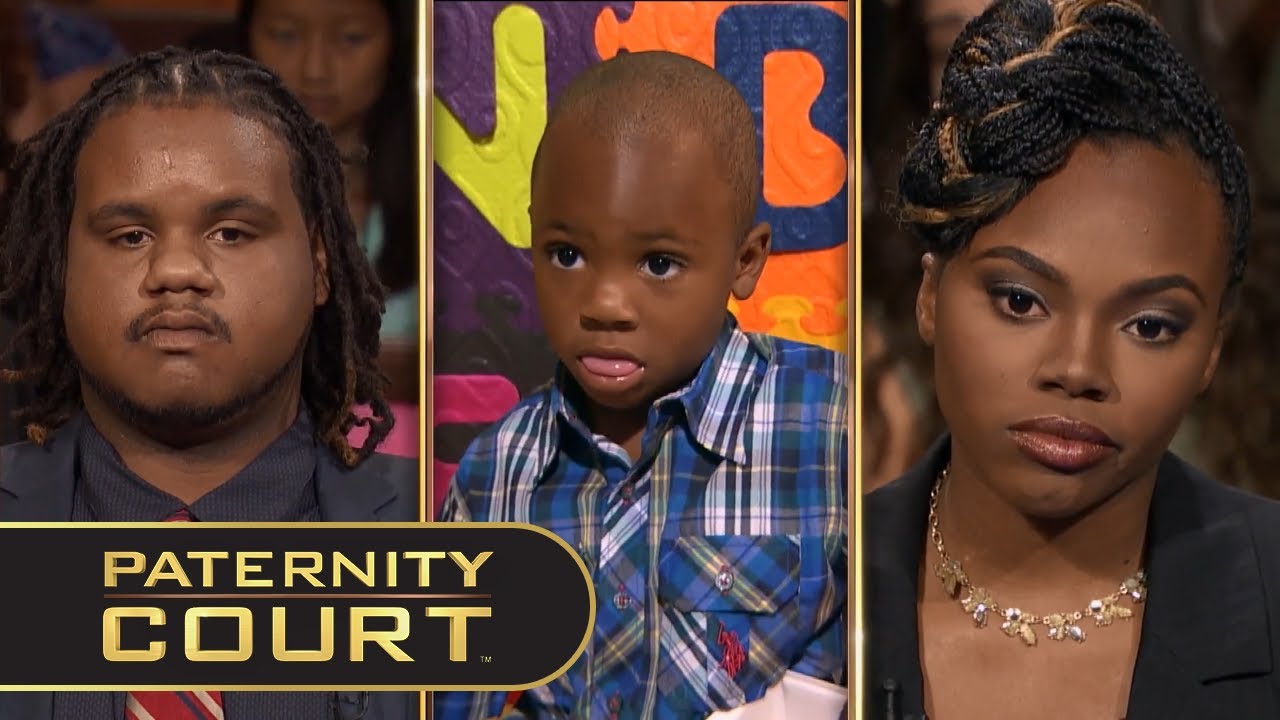
On the other side, the woman strongly defended herself.
She rejected every accusation and insisted that she had been truthful from the start. In her view, there was no confusion—the man in the courtroom was the father, and his doubts were rooted more in fear or denial than in reality. She expressed frustration that her honesty was being questioned, especially on something so personal and important.
What followed was more than just a disagreement—it was a full breakdown of trust.
The courtroom quickly became a space filled with emotional tension. The man’s frustration wasn’t only about the present situation; it came from a belief that he had been misled in the past. That feeling made it harder for him to accept her claims now, even if they were true.
At the same time, the woman felt attacked.
To her, the accusations went beyond the case—they challenged her integrity as a person and as a mother. She struggled to understand why someone she believed to be the father would doubt her so strongly.
As both sides held firm, the judge stepped in to redirect the focus.
Rather than allowing the situation to spiral into emotional arguments, the judge emphasized the importance of facts. The courtroom wasn’t there to decide who sounded more convincing—it was there to determine the truth. And when it comes to paternity, the truth cannot be based on assumptions or past conflicts.
It must be proven.
The judge also highlighted something critical—the child.
While both adults were focused on defending themselves, the real impact of the situation was on the child’s future. Questions about identity, responsibility, and stability were all tied to the outcome of this case. The judge reminded them that beyond their personal conflict, there was a responsibility to provide clarity for the child.
As the case moved forward, everything pointed toward one key moment—the paternity test.
Both sides knew that the results would bring a definitive answer. For the man, it was a chance to confirm whether his doubts were justified. For the woman, it was an opportunity to prove that she had been telling the truth all along.
But regardless of the outcome, one thing was already clear—the damage had been done.
Years of doubt, accusations, and emotional strain had left a mark on their relationship. Even if the test confirmed paternity, rebuilding trust would not be easy. And if it disproved it, the situation would likely become even more complicated.
This case goes beyond just a legal dispute.
It highlights how fragile trust can be, especially when communication breaks down. It shows how quickly uncertainty can grow when there are unanswered questions, and how difficult it becomes to separate facts from emotions when personal history is involved.
At its core, it’s a reminder that truth matters—but so does how people handle it.
In the end, the court can deliver a result. It can confirm or deny biological connection. But it cannot repair trust on its own. That part is left to the individuals involved, and it often takes much longer than any legal decision.
Now, everything depends on one thing—evidence.
What’s your opinion?
Do you think trust should come first in situations like this—or should proof always be the priority? Drop your thoughts below and join the discussion.
FULL VIDEO: