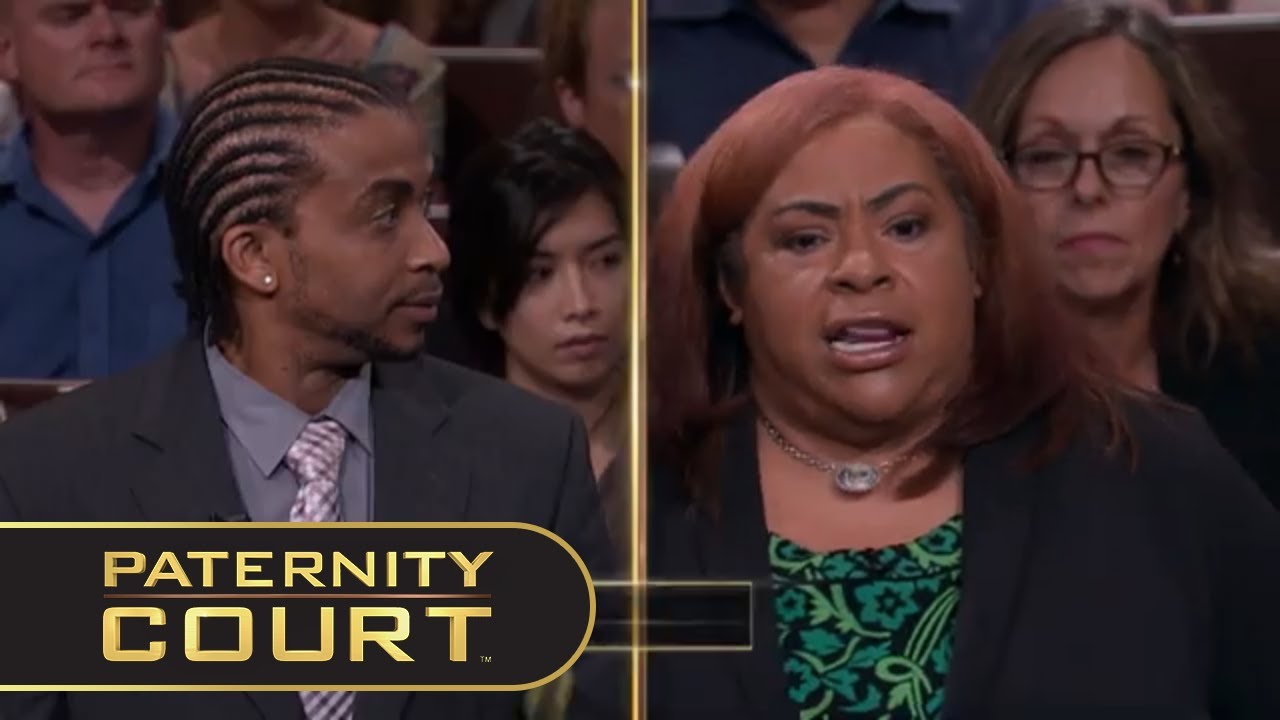
The mother strongly rejected his doubts. She maintained that he had always been the father and expressed deep hurt over the timing of his questions. From her perspective, the challenge wasn’t just about proving paternity—it was about defending her integrity and protecting her son from emotional harm.
As both sides shared their stories, it became clear that this case was as emotional as it was factual.
Presiding over the case, Lauren Lake emphasized the importance of separating emotion from evidence. While the courtroom acknowledged the years of shared history, only a DNA test could provide a definitive answer.
At the center of it all was the 20-year-old son.
His entire sense of identity rested on the outcome. Having grown up believing one man was his father, the possibility of a different truth carried profound emotional weight. Regardless of the result, his understanding of family and belonging could be permanently affected.
The case highlights a difficult reality: fatherhood is built through time, presence, and commitment—but in legal terms, biology often takes precedence. When those two definitions don’t align, the consequences can be deeply personal.
As the courtroom awaited the results, one thing was certain—whatever the outcome, it would bring clarity, but not necessarily closure.
Because while DNA can answer questions, it cannot instantly repair trust or erase years of doubt.
This story serves as a reminder of how important honesty and communication are in long-term relationships. Unspoken questions don’t disappear—they grow. And when they finally surface, the impact can be life-changing.
What do you think defines a father more—biology or the years spent raising a child? Share your perspective in the comments and be part of the conversation.
FULL VIDEO: