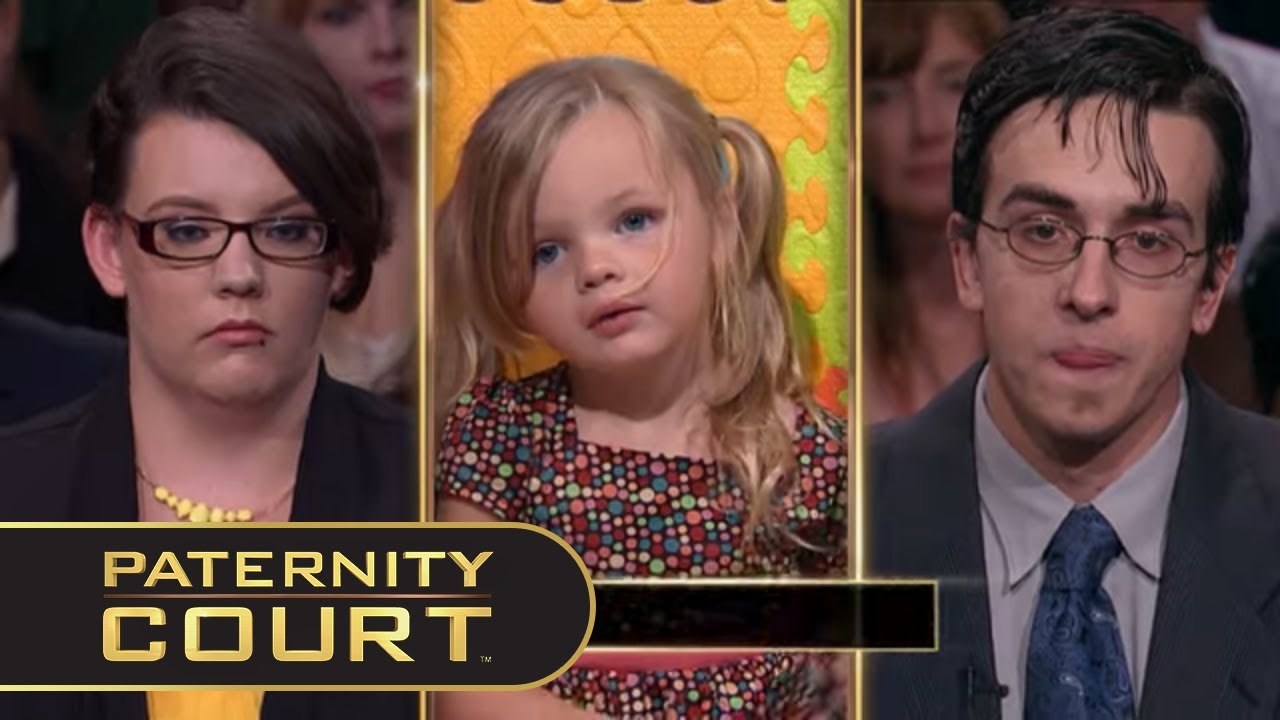
Curtis is stuck in the worst position possible:
- If he’s not the father → he’s emotionally attached to a child that isn’t his
- If he is the father → he’s tied to someone he clearly doesn’t trust anymore
Either way, he loses something.
The mother’s stance adds another layer. Her insistence that he isn’t the father signals deeper issues—trust is already broken, and this test is just exposing everything that was already unstable. It’s not just about the child anymore; it’s about unresolved conflict between them.
And then there’s the child.
Caught right in the middle, completely unaware, but still affected. That’s the part people overlook. These situations don’t just damage adults—they shape the kid’s environment, stability, and future.
When the courtroom finally gets the test results, the tension peaks. This is the moment where everything collapses into one answer. No more guessing. No more “what if.”
Just truth.
And truth doesn’t care about feelings.
No matter the outcome, the damage is already there—trust broken, emotions stretched, relationships permanently altered.
What this really shows:
Uncertainty is brutal. It eats away at people over time. And when it finally ends, the truth doesn’t fix everything—it just makes things clear.
Bottom line:
Don’t build a life on assumptions. Get clarity early, communicate properly, and don’t let things drag until they explode like this.
If this kind of story hits you, think about how much of life people gamble on belief instead of facts. Drop your take, share it, and keep digging into real stories like this—they expose what people usually avoid.
FULL VIDEO: