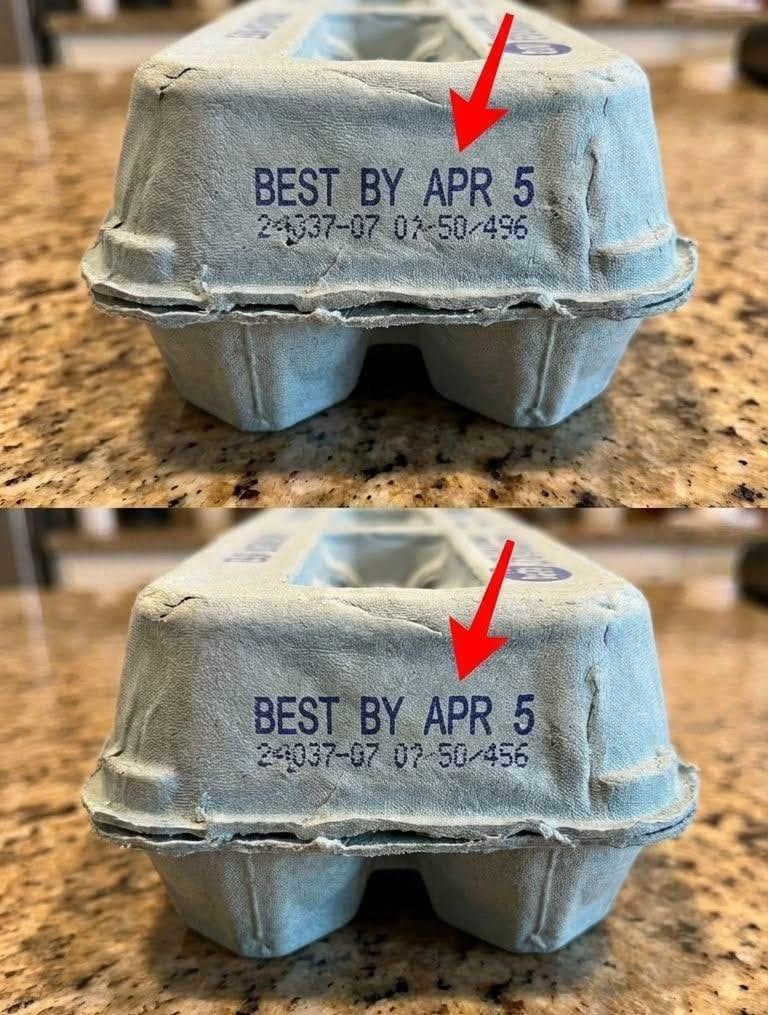
That number turned out to matter more than I realized.
Later, I learned it is called the Julian date — a packing code that tells you the exact day of the year the eggs were processed and packed. For example, a code of 001 represents January 1st, while 365 represents December 31st.
Unlike “sell by” dates, which are mainly intended for store inventory management, the Julian date gives consumers a better sense of actual freshness.
When I checked the carton again, I realized the eggs were not technically expired, but they were older than I would normally want for a dish built almost entirely around eggs. Freshness may not always determine safety directly, but it can absolutely affect flavor, texture, and overall quality.
That small discovery completely changed how I shop.
Now, whenever I buy eggs, I automatically look for the highest Julian date available because it means the eggs were packed more recently. I also pay attention to the plant code printed on the carton, which identifies where the eggs were processed. That information can become especially useful during recalls or food safety alerts.
The more I learned, the more I realized how much information is quietly hidden on egg cartons.
Labels like Grade AA or Grade A indicate differences in quality and cooking performance. Terms such as “cage-free,” “free-range,” and “pasture-raised” provide clues about how hens were raised and cared for. Even packaging dates can help consumers make smarter decisions without relying solely on front-label marketing.
Understanding these details does not mean becoming fearful or obsessive about food.
It simply means becoming more informed.
Small habits like checking carton codes, storing eggs properly, and paying attention to freshness can quietly improve both food quality and kitchen confidence over time.
Now, every time I reach for a carton, I no longer see just eggs.
I see information.
I see freshness.
And honestly, I see one unforgettable dinner party that taught me to start paying attention to the details most people overlook.
Have you ever discovered a hidden food label tip that completely changed the way you shop? Share your best grocery insights and kitchen lessons in the comments below.