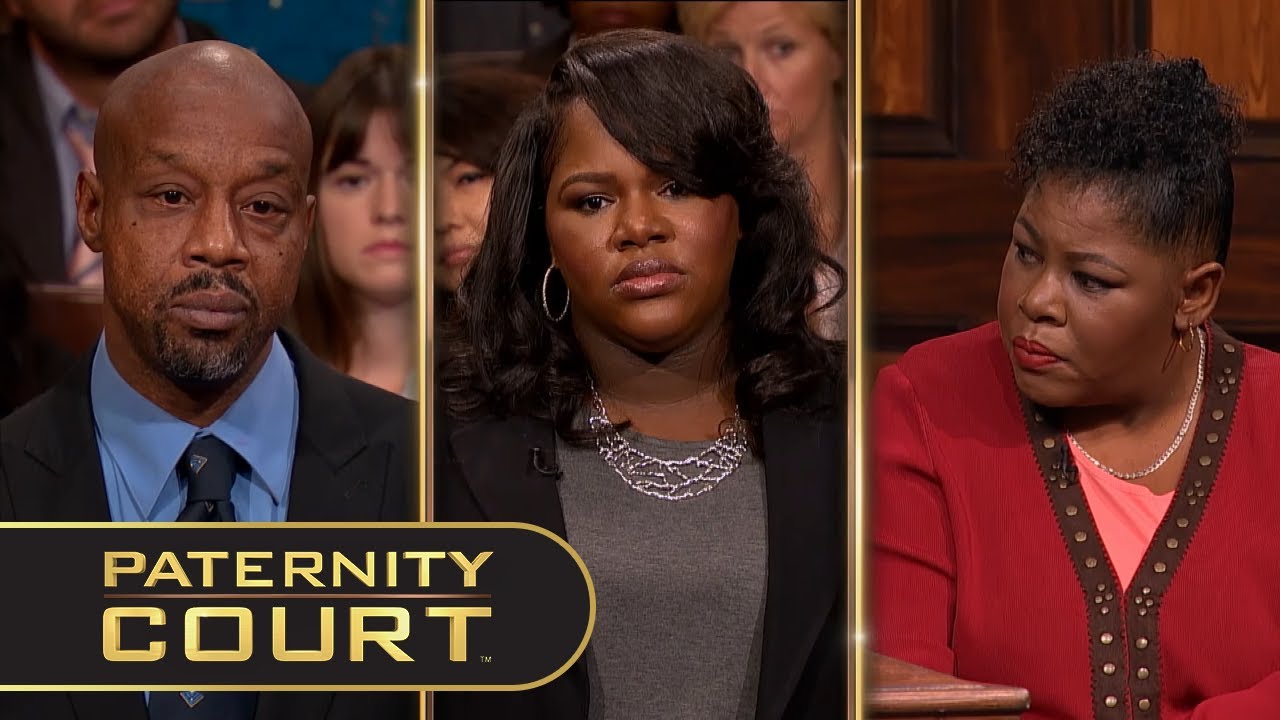
Both men stepped forward, each carrying his own version of hope and fear. One expressed a clear need for closure. He wanted to know the truth so he could either fully commit as a father or move forward without lingering doubt. The other, equally invested, believed he could be the child’s father and was ready to take responsibility if the results confirmed it.
This wasn’t just about DNA—it was about what comes after the answer.
As the mother spoke, her emotions shifted constantly. Guilt, confusion, and determination all showed through. She didn’t try to hide from the situation. Instead, she made it clear that her priority was her child. More than anything, she wanted stability—a clear path forward without unanswered questions hanging over their future.
Inside the courtroom, every word mattered. The judge listened closely, not just to determine biological truth, but to push everyone involved to think beyond the test results. Because knowing who the father is doesn’t automatically fix the situation—it only defines the next step.
And that’s where things get real.
The judge emphasized something most people overlook: responsibility doesn’t start with certainty—it starts with action. Regardless of the outcome, the child’s well-being comes first. That means stepping up, being present, and making decisions that prioritize stability over ego or past mistakes.
When the DNA results were finally introduced, the room fell silent. This was the moment everything had been building toward. The uncertainty, the arguments, the emotional tension—it all came down to a single answer.
But here’s the truth: clarity doesn’t erase what came before.
Whether the result confirmed one man or ruled him out, the emotional journey didn’t end there. The mother still had to rebuild trust and create a stable environment. The man identified as the father would need to fully accept the role—not just biologically, but emotionally and practically. And the other would have to process his place in a story he was once deeply part of.
This case highlights something bigger than paternity—it exposes how fragile relationships can become when communication breaks down and decisions are made without clarity. It also shows how important it is to face reality early, rather than letting uncertainty grow into something much harder to resolve.
At the center of it all is the child—innocent, unaware, but deeply affected by every decision made around them. That’s the part that matters most.
Bottom line:
DNA gives answers, but responsibility defines what happens next.
If this story made you think, don’t just scroll past it. These situations happen more often than people admit. Share your take, start a conversation, and pay attention to stories like this—they reveal the real impact of choices people try to avoid.
FULL VIDEO: