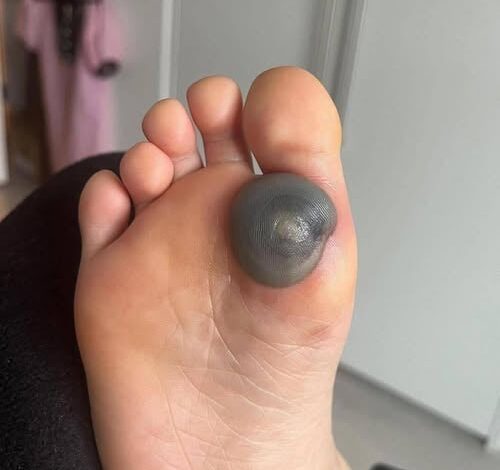
A blood blister is similar to a regular blister but contains blood instead of clear fluid. It develops when a strong pinch, impact, or intense friction damages tiny blood vessels (capillaries) just beneath the skin.
Because the top layer of skin remains intact, the leaked blood becomes trapped underneath, forming a dark bubble. This natural process acts as the body’s quick protection system after minor injuries such as:
- Fingers caught in doors
- Dropping something heavy on a toe
- Friction from sports or playground activity
- Pinching or accidental bites inside the mouth
Blood blisters often appear on areas that experience frequent pressure or movement, including the fingers, palms, heels, or toes. They may also occasionally develop inside the mouth after accidental biting or dental procedures.
Why They Look So Dramatic
Although blood blisters may look alarming, the discoloration simply comes from trapped blood under the skin. Children often feel tenderness or mild throbbing at the spot as the pressure builds within the blister.
Despite their appearance, most blood blisters are not dangerous and heal naturally with minimal care.
The Best Treatment: Leave It Alone
One of the most important things to remember is that blood blisters usually heal best when left untouched.
The skin covering the blister acts as a natural protective barrier that keeps bacteria out and allows the tissue underneath to recover safely. Popping or draining the blister can introduce germs and increase the risk of infection.
When left intact, the body gradually reabsorbs the trapped blood over one to two weeks. As healing progresses, new skin forms underneath and the outer layer eventually dries and flakes away.
Ways to Reduce Discomfort
While the blister heals, simple steps can help keep your child comfortable:
- Apply a cold compress for 10–15 minutes to reduce swelling
- Protect the blister with a clean adhesive bandage
- Use padding or moleskin if the blister is on a high-friction area like the foot
- Avoid pressure or rubbing that could cause the blister to burst
These small precautions help prevent irritation while the skin repairs itself.
If the Blister Breaks
Children are active, so sometimes a blister may burst accidentally. If that happens:
- Wash the area gently with mild soap and warm water
- Apply a thin layer of antibiotic or antiseptic ointment
- Cover with a clean, breathable bandage
Do not peel away the loose skin flap. It still helps protect the healing tissue underneath.
When to Seek Medical Advice
Although most blood blisters heal without problems, certain symptoms require attention from a healthcare professional. Watch for signs such as:
- Severe or increasing pain
- Yellow or green discharge
- Redness, warmth, or swelling around the blister
- Red streaks spreading from the area
These could indicate infection and should be evaluated by a medical provider.
Children or adults with diabetes or circulation problems should also have any skin injury checked promptly, since healing can be slower and infections more likely.
A Small Injury With a Big Lesson
A blood blister may look alarming at first, but it’s actually a remarkable example of how the body protects and repairs itself. With a little patience and basic care, most heal quickly and completely.
Understanding these minor injuries can help families stay calm and confident when unexpected bumps and bruises happen.
Have you ever dealt with a blood blister at home? Share your experience or helpful tips in the comments to help other parents feel more prepared.