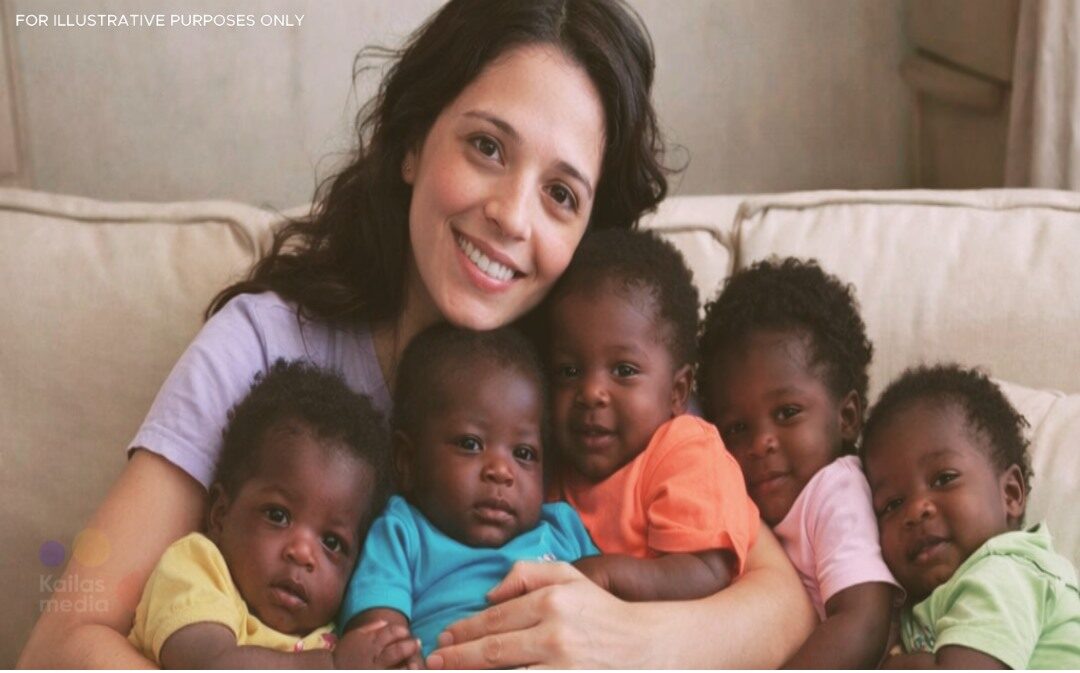
The whispers started before I even left the hospital. Nurses, visitors, strangers asking quietly if I “needed help finding the fathers.”
Plural.
I wheeled five car seats alone to the parking lot. No flowers. No congratulations. No husband waiting to cradle our newborns. Just me—and the world already judging.
The first years were brutal. Strangers at the grocery store stared. Some asked questions with smiles; others with judgment.
“Are they adopted?”
“Different fathers, huh?”
“Wow… that must’ve been complicated.”
I worked two jobs. Then three. I learned to braid hair while cooking. Break up fights while answering emails. Be five people at once because I had to.
At night, when the house was finally quiet, I cried into my pillow. But my babies never felt unwanted.
I told them the truth, gently.
“That man was confused,” I said. “But I stayed. That’s what matters.”
And they believed me.
They grew strong, brilliant, kind. A small, unbreakable army of five. Slowly, the whispers faded.
Fifteen years passed.
Then one afternoon, a knock at the door.
I almost didn’t answer.
But when I did, he was there—older, thinner, lines carved into his face, but unmistakably him. My husband.
“I want to talk,” he said. “I made a mistake.”
I laughed, sharp and humorless. “Fifteen years too late.”
He begged. Haunted. Never married again. Guilt eating him alive. Against my better judgment, I let him in.
The kids were in the living room—teenagers now, tall, confident, unmistakably Black. He froze.
“They look just like you,” he murmured. “But still…”
“Still not yours?” I asked.
“I want proof,” he admitted.
I handed him a thick envelope.
“Medical records,” I said. “From before the birth. From the hospital. From years ago.”
He opened it. Hands trembling. And there it was: a rare genetic condition I had been diagnosed with years earlier, one he ignored, explaining why our children inherited darker pigmentation.
Then, the paternity test. Probability: 99.99%.
He dropped the papers. “No… that can’t be…”
But it was. Every single child—his.
He collapsed into a chair. “I ruined everything,” he sobbed.
One of my sons stood quietly. “Mom, is this him?”
I nodded. Silence filled the room. Then my eldest said simply:
“You left. She didn’t.”
No anger. No shouting. Just truth.
When he left that day, he didn’t ask to stay. He knew better. He still sends letters sometimes, apologies inked in regret that can’t undo time.
I don’t know the future.
But I know this: I raised five children alone—not because I was abandoned, but because I was strong enough to stay. And the truth? It always finds its way home.

Strength and truth always shine through. Share this story if you believe resilience and honesty never go unnoticed.