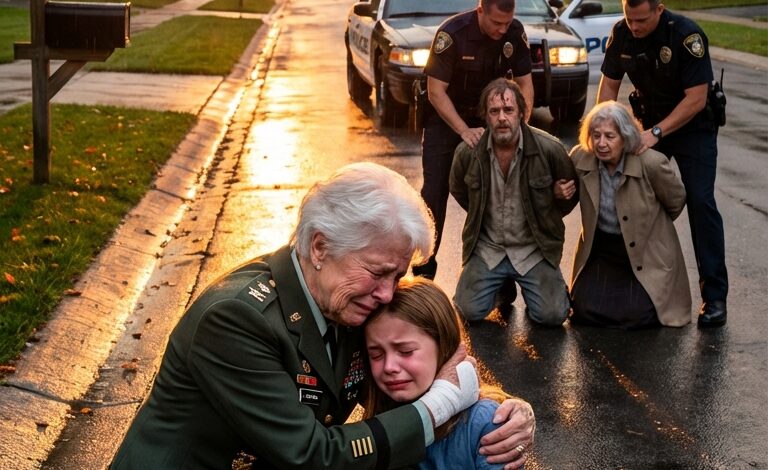
Seven o’clock.
“Where’s Sophie?” I asked from the doorway. “She hasn’t eaten.”
Jason laughed. “She’s learning to be quiet. Kids don’t interrupt adults.”
That’s when I heard it.
A soft, broken sound. Not play. Not laughter. Fear.
I followed it down the hall, heart pounding but mind clear. The laundry room door was locked.
“Sophie?” I whispered.
A tiny voice answered. “Please don’t be mad, Grandma.”
I didn’t hesitate.
The door gave way, and the sight inside froze something deep in my chest. My five-year-old granddaughter was curled inside a metal crate meant for an animal. Her face was wet with tears. A bowl of dry cereal sat nearby like a cruel joke.
Jason appeared behind me, irritated. “She needs discipline,” he said. “You broke the door.”
That was the moment everything changed.
I opened the crate and lifted Sophie into my arms. She clung to me like she’d been holding her breath for hours.
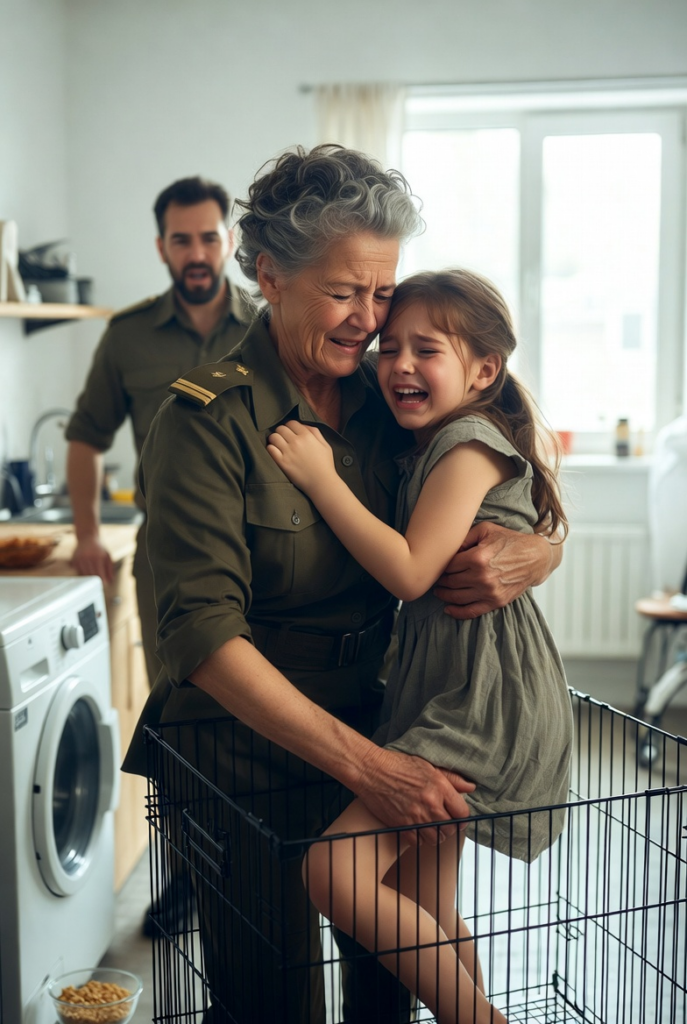
Jason moved toward us, shouting.
I turned, steady and controlled. “Stop.”
Something in my voice made him hesitate.
I carried Sophie to my room, tucked her into bed, and made sure she was safe. Then I walked back out.
Jason charged, angry and reckless. I didn’t raise my voice. I didn’t panic. I simply ended it—swiftly, decisively, without spectacle.
“Listen carefully,” I said, my tone low and final. “This ends now.”
The room went silent.
I laid out exactly what would happen next: the money returned, the behavior stopped, the child protected. No debates. No second chances.
For the first time, no one interrupted me.
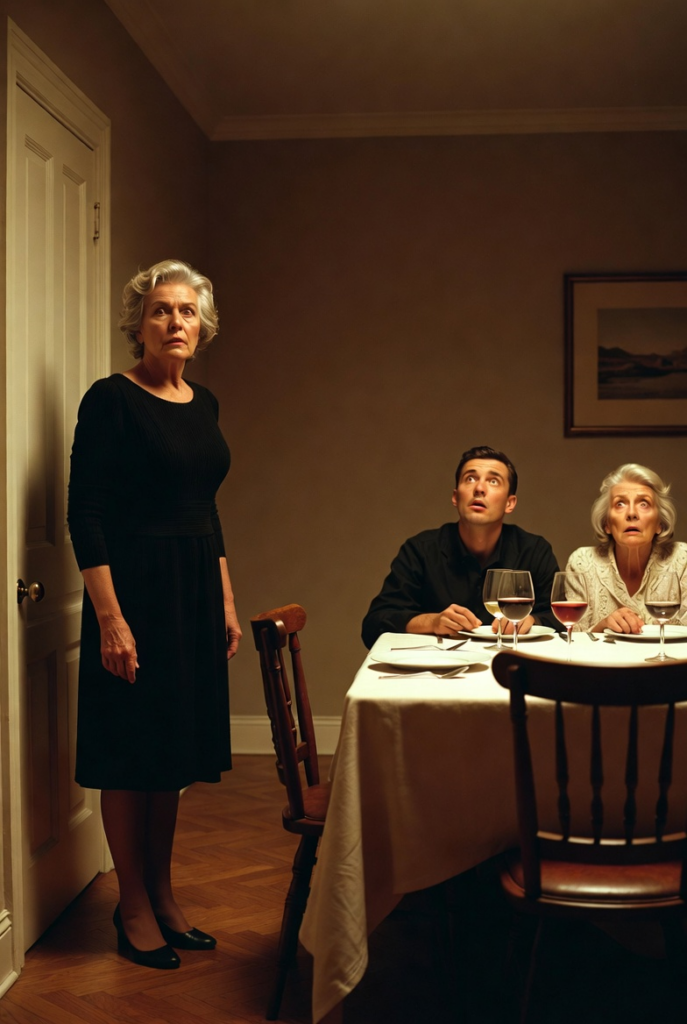
I turned to Mrs. Dilys, who stood frozen. “Dinner’s over,” I said. “You can clear the table.”
Then I went back to my granddaughter.
Some battles don’t start with shouting.
They end when the right person finally stands up.
What would you have done in this situation? Share your thoughts below—and if this story moved you, follow for more powerful real-life narratives.