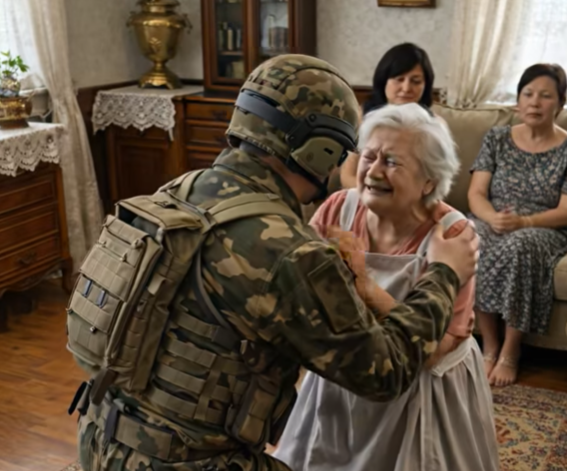
“Mom?”
The voice was raspy, coated with exhaustion, yet unmistakably his. I lifted my gaze slowly, eyes wide with disbelief. There he stood—Alex, my son, in a faded military uniform, dust-covered and worn from the journey home. A heavy rucksack hung from his shoulders, boots scuffed from miles traveled, eyes scanning the room with a precision sharpened by years on the front lines.
His eyes fell on me, and the light in them dimmed as he took in the scene: an elderly woman, kneeling on the floor with soapy water dripping from her hands, beneath the indifferent gaze of two women who had turned her home into a prison. Laura’s mother casually lifted her feet just high enough for me to pass, oblivious to the storm gathering at the doorway.
“Mom… is that you?” Alex whispered, the words thick with disbelief and dawning horror.
The room froze. Laura’s nervous laughter faltered, tea trembling in her hands. But Alex didn’t acknowledge her. He dropped his rucksack, crossed the room in a few measured strides, and knelt beside me. He took my hands in his, thumbs brushing against the rough, cracked skin, the permanent chemical burns etched into my palms. His jaw tightened, and I felt the raw weight of a controlled fury, the kind only someone hardened by war can carry.
He didn’t shout. He didn’t argue. He acted. With deliberate precision, Alex stood and moved toward the sofa, gathering the belongings of the women who had tormented me. Their protests were meaningless against the intensity of his presence.
“Get out,” he commanded, low and unyielding. “If I ever see either of you near my mother again, I will not call the police. I will treat you as you treated her. Leave.”
The room fell silent. The door slammed with finality, reverberating through the house like a drumbeat of justice. The chemical tang of detergent seemed to fade, replaced by the heavy, cleansing scent of freedom and protection. Alex turned back to me, tears finally spilling, unchecked, as he pulled me into his arms.
“Forgive me, Mom,” he whispered, burying his face in my shoulder. “Forgive me for not seeing it sooner. For not protecting you while I was gone.”
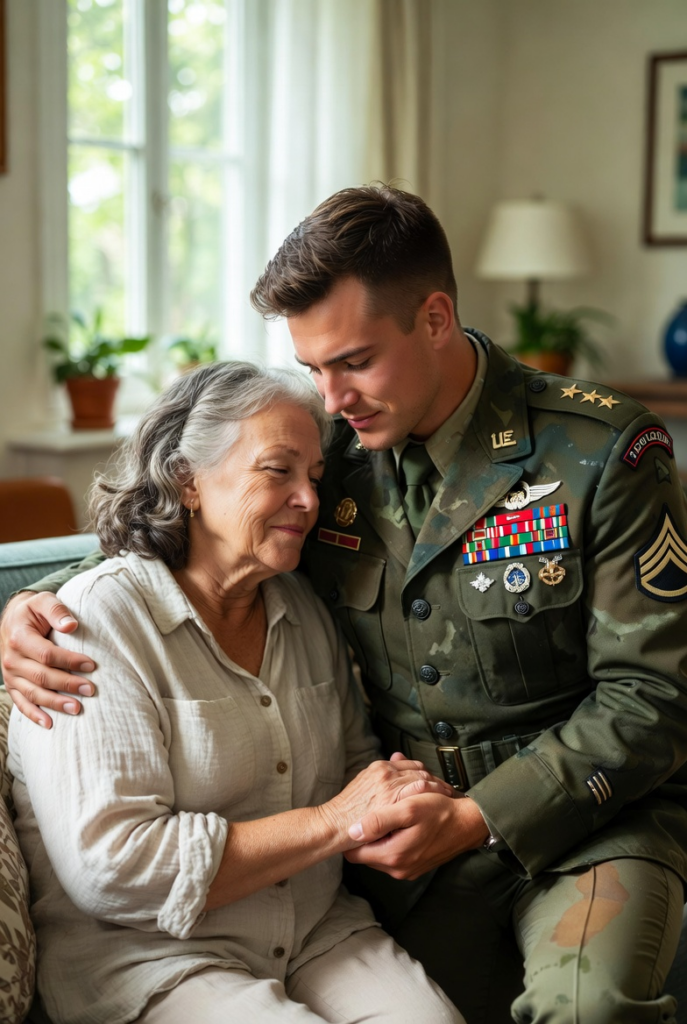
I held him close, feeling the years of fear, humiliation, and invisibility lift slightly in the warmth of his embrace. For five long years, I had been a ghost in my own home. But now, with Alex beside me, I was seen, I was heard, I was protected. The women who had mocked me were gone, their tea cold, their influence erased.
That night, we sat together in the living room, the remnants of harsh soaps and rags discarded. He refused to let me lift a finger, insisted I rest, insisted I finally take the home back. The house felt different: safe, quiet, and whole again.
In that moment, I realized something fundamental. For years, survival had been about endurance. Now, it was about reclamation. I wasn’t just a mother—I was a mother who had finally returned to her own life, to her own dignity, to her own space. And for the first time in half a decade, the world felt right, because my son had returned, and he would never let me face it alone again.
Have you ever witnessed someone finally standing up for a loved one? Share your thoughts and experiences in the comments below!