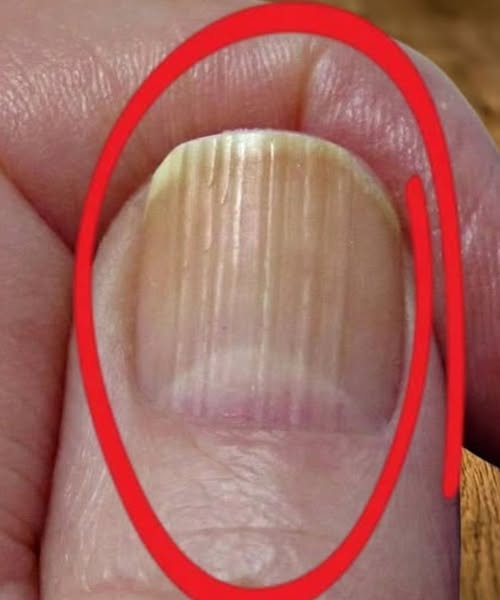
That does not mean every line on your nail is dangerous. In fact, most nail ridges are harmless. But the type of stripe, its color, its direction, and whether it changes over time can all matter.
The key is not to panic. The key is to pay attention.
Vertical Ridges Are Usually Common
Vertical ridges are the fine lines that run from the base of the nail toward the tip. They are very common, especially as people get older.
These ridges often happen because nail growth becomes slower or less even over time. They may also become more noticeable when nails are dry, brittle, or not getting enough moisture.
In many cases, vertical ridges are not a serious concern. They are often part of normal aging or everyday wear and tear. Still, if they become very deep, appear suddenly, or come with other symptoms, it is worth asking a doctor about them.
Simple habits may help improve the appearance of vertical ridges. Drinking enough water, moisturizing the nails and cuticles, and eating a balanced diet can support healthier nail growth. Some nutrients often linked with nail health include biotin, iron, zinc, protein, and omega-3 fatty acids.
Gently buffing the nail surface may make ridges look smoother, but this should be done carefully. Over-buffing can thin the nails and make them weaker.
Horizontal Lines May Need More Attention
Horizontal ridges are different from vertical ridges. These lines run across the nail from side to side. They are sometimes called Beau’s lines.
These grooves may appear when nail growth is temporarily interrupted. This can happen after a period of physical stress, such as a serious illness, high fever, surgery, or major nutritional deficiency.
Sometimes, horizontal ridges may also be linked with health conditions such as thyroid problems, diabetes, or circulation issues. That does not mean every horizontal line is a sign of something serious, but it does mean they deserve more attention than simple vertical ridges.
If you notice deep horizontal grooves, especially across several nails, it is smart to speak with a healthcare professional. A doctor can help determine whether the cause is temporary or connected to something that needs treatment.
As the nail grows, these lines may slowly move outward and eventually be trimmed away. But finding the reason they appeared in the first place is the important part.
White Spots or White Lines on Nails
White marks on nails are also common. Many people notice small white spots and immediately worry, but they are often caused by minor trauma.
For example, bumping the nail, pressing too hard during a manicure, or damaging the nail bed can leave small white spots as the nail grows out.
In some cases, white marks may also be connected to nutritional issues, such as low zinc or protein intake. Less commonly, persistent white streaks may be related to deeper health concerns involving organs such as the liver or kidneys.
The important thing is pattern and persistence. A small white spot after minor nail trauma is usually not alarming. But white lines that keep appearing, spread across multiple nails, or do not improve over time should be checked.
Eating a nutrient-rich diet may help support stronger nails. Foods such as eggs, lean meats, legumes, nuts, seeds, seafood, and leafy greens can all play a role in overall nail health.
Dark Lines Should Not Be Ignored
Dark stripes on the nails need more caution than white spots or common ridges.
A dark vertical line can sometimes be caused by increased pigment in the nail. In many cases, this may be harmless, especially in people with darker skin tones. However, a new or changing dark stripe should always be taken seriously.
One rare but serious concern is nail melanoma, a type of skin cancer that can appear under the nail. This is why sudden dark lines, widening stripes, irregular borders, or dark color spreading into the surrounding skin should be evaluated by a dermatologist.
This does not mean every dark nail line is cancer. But it does mean you should not guess. If a dark stripe is new, changing, or unusual for you, get it checked.
Early evaluation matters.
Brittle Nails With Ridges
Sometimes nail stripes appear together with brittleness, splitting, peeling, or grooves. When nails become weak and ridged at the same time, it may be connected to dryness, frequent chemical exposure, aging, or nutrient deficiencies.
It can also happen with hormonal changes. Pregnancy, menopause, and thyroid imbalances can affect nail texture and strength.
An underactive thyroid, also called hypothyroidism, may sometimes be associated with brittle nails. If nail changes appear along with symptoms such as fatigue, hair thinning, dry skin, feeling cold often, or unexplained weight changes, it is worth discussing thyroid testing with a doctor.
Again, nails alone cannot diagnose a condition. But they can be one clue.
Everyday Habits That Support Healthier Nails
Even when nail stripes are harmless, better nail care can make a visible difference.
Moisturizing is one of the simplest steps. Nails and cuticles can become dry just like skin. Using cuticle oil, hand cream, or a gentle moisturizer can help reduce brittleness and cracking.
Protecting your hands is also important. Cleaning products, harsh chemicals, and frequent water exposure can weaken nails over time. Wearing gloves while cleaning or washing dishes can help prevent damage.
Diet matters too. Nails need nutrients to grow strong. Protein, iron, zinc, biotin, and healthy fats all support nail structure. If your diet is very limited or you suspect a deficiency, it is better to ask a doctor before starting supplements.
Hydration also helps. Dehydrated nails can become more fragile, dry, and prone to splitting.
When You Should See a Doctor
Not every nail stripe needs medical attention, but some signs should not be ignored.
You should consider seeing a healthcare professional if you notice:
- A new dark stripe on the nail
- A dark line that becomes wider or changes shape
- Color spreading into the skin around the nail
- Deep horizontal grooves across several nails
- Nail changes with pain, swelling, or bleeding
- Persistent white lines that do not grow out
- Nail changes with fatigue, hair loss, skin changes, or unexplained weight changes
- Sudden changes in multiple nails at the same time
The goal is not to assume the worst. The goal is to catch possible problems early and avoid ignoring signs that deserve attention.
What Your Nails Can and Cannot Tell You
Your nails can give clues about your health, but they cannot provide a full diagnosis on their own.
A ridge does not automatically mean illness. A white spot does not always mean deficiency. A brittle nail does not always mean thyroid disease.
But nails can reflect changes in the body. They can show signs of stress, injury, nutrition issues, aging, or medical conditions. That is why paying attention to them is useful.
Think of your nails as small warning lights. Sometimes the light means nothing serious. Other times, it tells you to look deeper.
Final Thoughts
Stripes and ridges on nails are common, and most of the time, they are harmless. Vertical ridges are often linked with aging or dryness. Horizontal grooves may suggest that nail growth was interrupted by illness, stress, or another health issue. White spots are often caused by minor trauma, while dark stripes should be checked carefully, especially if they are new or changing.
The best approach is simple: care for your nails, watch for changes, and do not ignore anything unusual.
Healthy nails often come from healthy habits — good nutrition, hydration, gentle care, and protection from damage. But when nail changes persist or look concerning, professional advice is the safest choice.
Your nails may be small, but they can still tell an important story about your body.
Have you ever noticed stripes, ridges, or unusual marks on your nails? Share your experience in the comments and let others know what helped you improve your nail health.