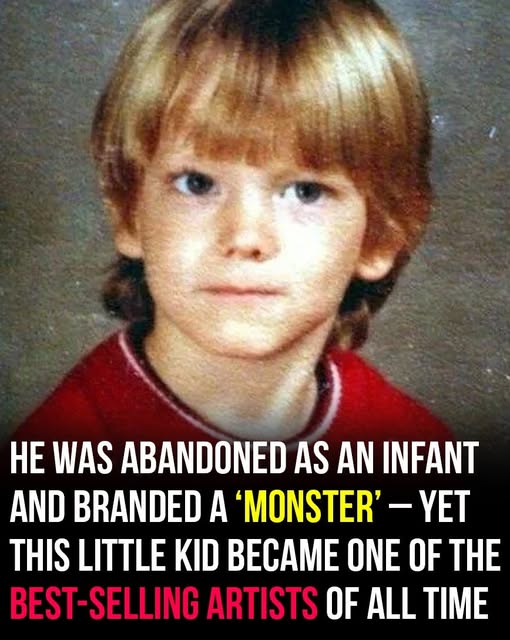
The rise of Marshall Bruce Mathers III—from a largely unseen, deeply troubled boy to the cultural force the world knows as Eminem—stands as one of the rawest origin stories in modern music. His life unfolded against the bleak, industrial backdrop of Detroit, shaped by chronic neglect, violence, and emotional isolation. Instead of collapsing under circumstances that seemed almost engineered to defeat him, Marshall transformed his early damage into creative fuel, forging a voice that would permanently alter hip-hop and ripple far beyond it.
Born on October 17, 1972, in St. Joseph, Missouri, Marshall’s earliest years were marked less by place than by absence. His father, Marshall Mathers Jr., left before his son was old enough to remember him, creating a void that lingered rather than faded. As a child, Marshall tried to reach across that distance by sending letters—each one returned unopened. Years later, Eminem would reflect that he never expected a heroic figure, only acknowledgment. That denial of connection left a deep psychological imprint, later resurfacing as the vulnerability and rage threaded throughout his most personal work.
Instability followed him everywhere. Raised by his mother, Debbie Nelson, Marshall bounced endlessly between homes in Missouri and Michigan, attending so many schools that he never had time to belong anywhere. He became the perpetual outsider—isolated, awkward, and frequently targeted. At just nine years old, bullying escalated into a life-threatening event. During a playground game, a classmate struck him with a weighted snowball, causing a severe head injury that resulted in a brain hemorrhage and a five-day coma. The experience reinforced a harsh lesson: protection would not come from institutions or authority figures. Survival would have to be internal.
Home life offered no real refuge. The household was unstable, marked by shifting relationships and emotional unpredictability. Through his music, Marshall has long described his mother’s struggles with addiction and her inability to provide consistent support. Though Debbie Mathers later contested these portrayals—eventually suing him for defamation—the emotional reality remained his truth. One of the few stabilizing influences in his life was his uncle Ronnie Polkingharn, who introduced him to hip-hop. When Ronnie later died by suicide, it was another devastating loss, but it also anchored Marshall more deeply to the art form that had become his escape.
By his teenage years, rap had become both shield and weapon. As a white teenager in Detroit’s predominantly Black hip-hop scene, Marshall faced immediate skepticism. Acceptance required extraordinary skill. He sharpened his craft at open-mic battles, particularly at the Hip-Hop Shop on West 7 Mile Road, where his relentless wordplay and technical precision slowly earned respect. During this period, he developed the Slim Shady persona—an abrasive, chaotic alter ego that allowed him to channel years of buried anger, fear, and resentment. Slim Shady wasn’t just a character; it was a pressure valve.
Everything changed when one of his demo tapes reached Dr. Dre. Dre’s decision to sign a white rapper from Detroit was a major risk, but it reshaped the industry. Their collaboration on The Slim Shady LP in 1999 introduced a sound that fused dark humor, shocking imagery, and genuine emotional pain. Songs like “My Name Is” and “Guilty Conscience” were confrontational by design, forcing audiences to confront a side of American poverty and dysfunction rarely acknowledged in mainstream culture.
As his career exploded, Marshall’s personal life grew more complicated. In 1995, he became a father when his daughter Hailie Jade was born. Fatherhood gave him something he’d never had before: a reason to fight for stability. His determination to give her a better life became a recurring theme in his music. Tracks such as “Mockingbird” and “Hailie’s Song” stripped away the shock value, revealing a man desperate to end generational cycles of pain. Over time, he also took responsibility for raising his niece Alaina and his child Stevie, reinforcing that family—chosen and protected—mattered more to him than fame.
Eminem’s cultural footprint expanded further with the 2002 film 8 Mile. Though fictionalized, the movie captured the desperation and intensity of Detroit’s battle rap scene, culminating in “Lose Yourself.” The track made history as the first rap song to win an Academy Award for Best Original Song, solidifying his narrative of perseverance as something universally resonant. Despite selling over 220 million records worldwide, Marshall continued to wrestle with addiction, nearly losing his life to prescription drugs in the mid-2000s. His album Recovery marked a turning point, documenting sobriety with the same brutal honesty that defined his rise.
Today, Eminem remains one of the most influential figures in music—a Hall of Fame inductee, a technical benchmark, and a symbol of endurance. He lives quietly in Detroit, deliberately distant from the industry’s usual centers of power, loyal to the city that both scarred and shaped him. His legacy extends far beyond controversy or commercial success. It is a testament to resilience—the idea that pain can be reshaped into purpose, and that a neglected child with nothing but words can build a lasting voice. Marshall didn’t just survive the struggle for the hill; he claimed it and refused to let go.