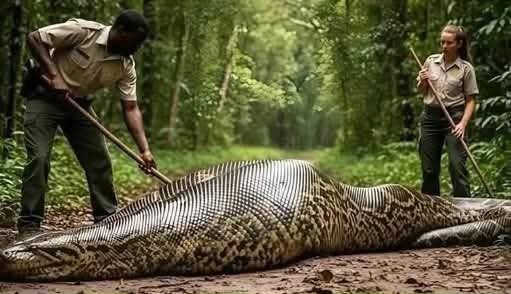
After nearly an hour of coordinated effort in the intense wetland heat, the object finally reached the snake’s mouth.
What emerged stunned the entire rescue team.
The obstruction turned out to be a large jagged piece of industrial plastic waste.
Investigators believe the snake may have mistaken the floating debris for prey in the murky water before swallowing it whole.
The discovery highlighted a growing environmental problem affecting wildlife habitats across the world.
Giant Predator Finally Begins Recovering
Once the plastic debris was removed, the exhausted anaconda immediately began breathing more freely.
Rangers treated minor injuries around the snake’s mouth and provided hydration while closely monitoring its condition.
Rather than releasing the animal immediately, conservation staff placed the snake inside a secure temporary observation area within the wetlands.
Over the next 24 hours, the team monitored the reptile’s breathing, mobility, and overall recovery to ensure no long-term internal damage had occurred.
By the following day, the massive predator had regained much of its strength and natural alertness.
Successful Return to the Wild
After veterinary assessments confirmed the snake had recovered successfully, the rangers transported the anaconda back to the swamp channel where it had originally been discovered.
As soon as the transport enclosure opened, the enormous reptile slowly glided back into the muddy water and disappeared beneath the surface.
For the rescue team, the moment represented both relief and a powerful reminder of the challenges facing wildlife today.
Pollution Continues Threatening Fragile Ecosystems
Although this rescue ended successfully, experts warn that pollution remains one of the greatest threats to sensitive ecosystems around the world.
Discarded plastic waste can travel long distances through rivers and waterways, eventually reaching even protected natural habitats.
Animals often mistake floating debris for food, leading to injury, starvation, or death.
Species like the Green anaconda play an important role in maintaining ecological balance by regulating prey populations within wetland environments.
Conservationists say reducing pollution and protecting natural habitats is essential for preserving biodiversity and preventing similar incidents in the future.