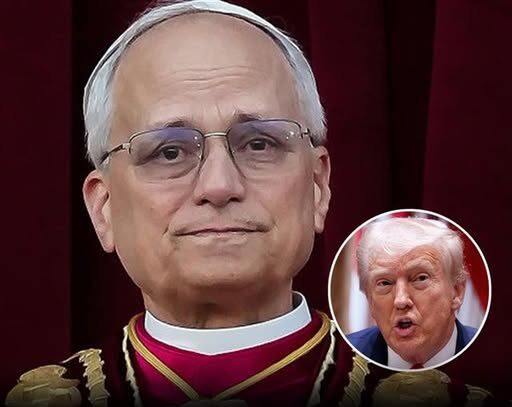
Two Visions of Global Leadership
At the heart of the emerging narrative is a contrast in leadership philosophy.
On one side, the U.S. administration continues to emphasize national security, border enforcement, and strategic global positioning. On the other, the Vatican—under Pope Leo XIV—has increasingly highlighted themes of migration, poverty relief, and de-escalation in conflict regions, particularly in the Middle East.
Rather than a direct confrontation, analysts describe the situation as a “philosophical divergence”—a difference in priorities rather than an open diplomatic rift.
Symbolism Over Statements
Observers note that much of the tension is expressed not through direct statements, but through symbolism.
Every papal visit to vulnerable regions, every sermon focused on displacement and humanitarian aid, and every call for restraint in global conflicts is being closely read as part of a broader moral messaging strategy.
In contrast, the lack of a planned U.S. visit is being interpreted by some commentators as an intentional effort to maintain the Vatican’s perceived neutrality and avoid alignment with any single political agenda.
Quiet Diplomacy Behind Closed Doors
Despite public speculation, diplomatic sources emphasize that communication channels between the Vatican and Washington remain open. Exchanges between envoys continue, and both sides appear careful to avoid any open confrontation.
However, insiders describe the relationship as “professionally respectful but ideologically distant,” with neither side showing signs of adjusting its core positions.
A Delicate Balancing Act for the Papacy
For any pontiff—especially one born in the United States—the challenge of balancing global spiritual leadership with national identity is significant. Analysts suggest that Pope Leo XIV’s current approach may be an effort to reinforce the Vatican’s role as a global moral authority, independent of national politics.
Avoiding a highly symbolic homecoming visit, in this view, could be a strategic decision aimed at preserving that neutrality.
Global Attention Remains Fixed on the Silence
As 2026 progresses without confirmation of a U.S. visit, speculation continues to grow. Whether this diplomatic distance signals a temporary cooling of relations or a longer-term redefinition of Vatican–U.S. engagement remains unclear.
What is certain is that the silence itself has become the story—carefully interpreted, widely debated, and closely watched across the world.
What do you think carries more weight in global leadership today—political power or moral authority? Share your perspective below.