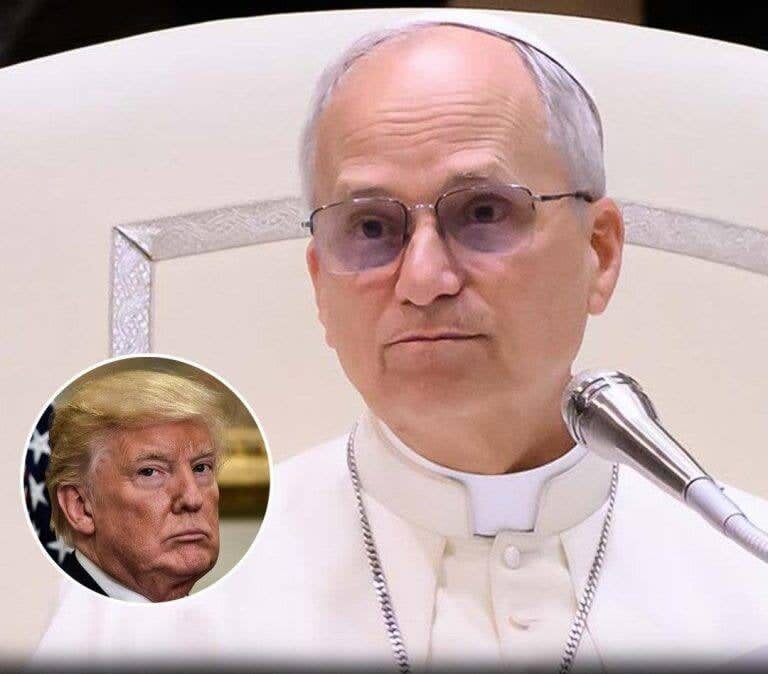
A short, powerful message from Pope Francis has taken the United States by storm, spreading rapidly across social media and sparking conversations far beyond religious communities. Composed of just a few measured sentences, the statement resonated deeply amid political tension, social division, and global uncertainty. Its impact didn’t come from dramatic rhetoric or explicit directives, but from calm clarity and moral restraint—qualities that have defined this papacy.
The Pope’s words were simple yet profound. He called for unity, shared responsibility, and compassion, urging Americans to care for one another regardless of political, social, or ideological differences. He named no leaders, policies, or parties, instead focusing on values that transcend borders: empathy, dialogue, humility, and recognition of our shared humanity. That universality is what made the message so widely relatable—people across the spectrum could see their own struggles reflected in his words.
In a country where public discourse often feels loud, divisive, and polarized, the Pope’s understated tone stood out. Many described it as a pause—a reminder to step back, listen, and reconsider how Americans engage with one another. Clergy across denominations shared the message with congregations, noting that it echoed long-held spiritual principles while also addressing the anxieties of modern life.
Critics responded differently. Some questioned whether a global religious leader should comment on domestic matters, even indirectly. Others argued that moral appeals, while heartfelt, risked oversimplifying complex societal challenges. Yet even skeptics acknowledged the message’s reach and the precision of its delivery. By sparking debate and reflection, the Pope’s words were amplified, reaching audiences far beyond the initial post.
Continue reading on next page…