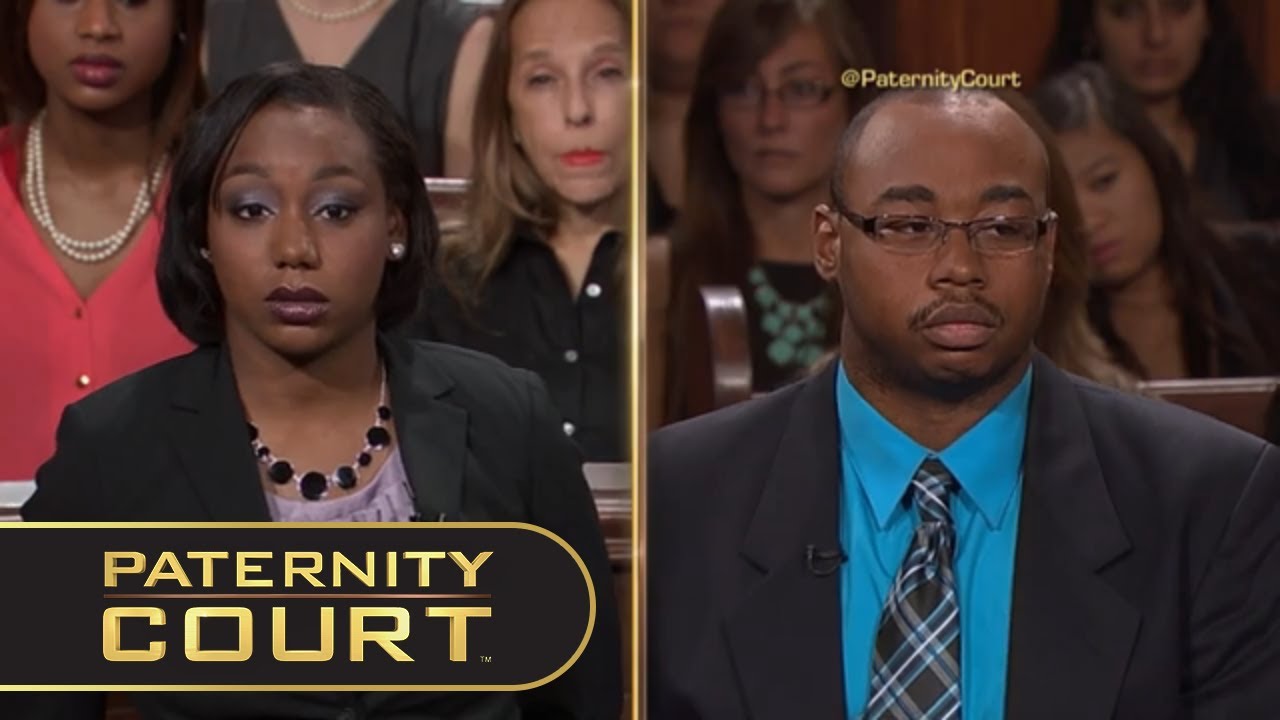
For the man, however, the news came with hesitation.
He didn’t immediately reject the possibility, but he struggled to accept it. The timeline made him question whether it was even possible, given how short their relationship had been. One month didn’t feel like enough time for something so serious to develop, and that doubt stayed with him throughout the case.
As both sides shared their perspectives, the contrast became clear.
The woman described their connection as intense and meaningful from the very beginning. She believed their relationship, even if brief, had been genuine and committed. According to her, the timing of the pregnancy aligned with their involvement, leaving little room for uncertainty.
But the man saw things differently.
He questioned not only the timing but also the depth of the relationship itself. To him, things had moved too quickly. The situation felt rushed, and the idea of becoming a father under those circumstances added pressure he wasn’t ready to accept without clear proof.
This created a growing divide between them.
For the woman, the case was about more than just confirming paternity. It was about stability. She spoke openly about her desire to build a secure future for her child, one where both parents are present and involved. Her frustration came from feeling unsupported during a critical moment in her life.
She wasn’t just asking for answers—she was asking for commitment.
The man, on the other hand, found himself caught between responsibility and uncertainty. He expressed concern about stepping into a fatherhood role without knowing the full truth. While he didn’t want to walk away from the situation, he also didn’t want to make a life-altering decision based on doubt.
That uncertainty shaped everything he said.
As the case progressed, the emotional weight became more visible. The woman shared that past relationship struggles had made this situation even more important to her. She hoped this new chapter would bring something different—support, consistency, and a sense of security for her child.
For her, the stakes were deeply personal.
The man, meanwhile, admitted that the pressure was difficult to process. He wasn’t just dealing with the possibility of fatherhood—he was trying to understand whether the relationship itself was strong enough to support it. The speed at which everything had unfolded left him feeling unprepared.
At this point, the judge stepped in to bring focus.
Rather than allowing emotions to take over, the judge emphasized the importance of facts. In cases like this, assumptions and feelings can only go so far. When it comes to paternity, clarity must come from evidence—not interpretation.
The focus shifted to the only solution that could provide certainty.
A DNA test.
Both individuals understood what that meant. The results would answer the central question and remove all doubt. For the woman, it was a chance to confirm what she already believed. For the man, it was the only way to make a decision with confidence.
As the case moved toward that moment, the tension shifted into anticipation.
The courtroom, once filled with conflicting perspectives, now centered on one outcome—the truth. Regardless of what the results would reveal, both knew their lives were about to change.
Because this situation wasn’t just about biology.
It was about timing, responsibility, and how quickly life can take unexpected turns. It showed how relationships, especially new ones, can be tested under pressure—and how important it is to separate emotion from fact when the stakes are high.
In the end, the legal system can provide answers.
But the choices that come after—those are personal.
What do you think?
If you were in this situation, would you rely on trust—or wait for proof before making a decision? Share your thoughts below and join the discussion.
FULL VIDEO: