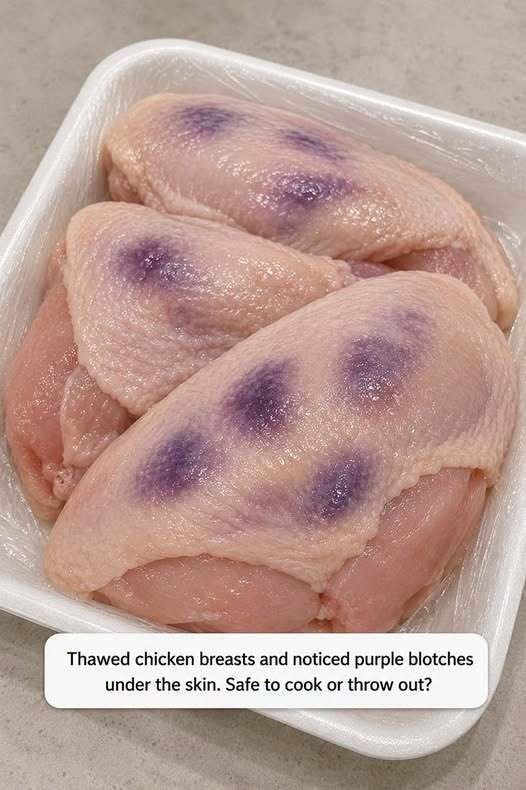
Another possible explanation is myoglobin, a naturally occurring protein found in muscle tissue. Myoglobin helps store oxygen in muscles, and its appearance can change after freezing and thawing, creating darker or purplish areas. Dark meat naturally contains more myoglobin than white meat.
These color changes alone do not necessarily indicate that the chicken is unsafe to eat.
How to Check if Chicken Is Still Safe
Rather than relying on color alone, look for several signs together.
Chicken should generally be discarded if you notice:
- A strong sour, rotten, or ammonia-like odor.
- A slimy or sticky texture that remains after rinsing is not recommended.
- Gray, green, or other unusual discoloration accompanied by unpleasant odors.
- Packaging that is leaking excessively or appears damaged.
- Improper storage or thawing outside safe temperature guidelines.
If the chicken smells normal, feels firm, has been refrigerated properly, and is within its use-by date (or was safely frozen before that date), slight purple or reddish areas may simply be a natural result of freezing.
Safe Cooking Tips
If the chicken appears fresh and shows no signs of spoilage:
- Cook it to an internal temperature of 165°F (74°C), measured with a food thermometer.
- Thaw poultry safely in the refrigerator, in cold water (changing the water every 30 minutes), or in the microwave if cooking immediately afterward.
- Avoid thawing chicken at room temperature, as this can allow harmful bacteria to multiply.
When It’s Best to Throw It Away
If you’re unsure whether the chicken is safe—or if it has an unusual smell, texture, or has been stored improperly—it’s safest to discard it. Food safety experts recommend avoiding unnecessary risks when there is uncertainty about meat quality.
The Bottom Line
Purple spots on thawed chicken can look unusual, but they are often caused by natural pigments from bone marrow or muscle tissue rather than spoilage. Instead of judging by color alone, pay attention to smell, texture, storage conditions, and safe cooking practices.
Understanding these signs can help you make informed decisions, reduce unnecessary food waste, and prepare meals with greater confidence.