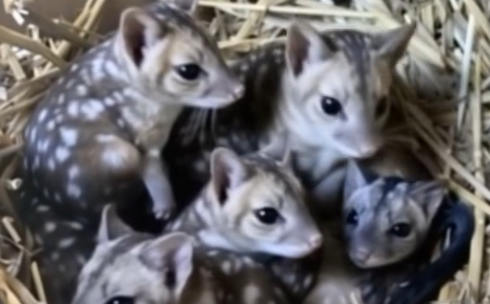
About Western Quolls
Western quolls are small carnivorous marsupials, roughly the size of a domestic cat. Agile and mostly nocturnal, they feed on insects, small mammals, birds, and reptiles. By controlling populations of smaller animals, quolls play a critical role in maintaining ecosystem balance. Without such predators, some species can grow unchecked, causing disruptions across habitats.
Historically, quolls were widespread across mainland Australia, living in forests and open woodlands. Over the last century, however, their populations declined dramatically due to habitat loss, introduced predators such as foxes and feral cats, hunting, and accidental trapping. Today, western quolls survive in only a fraction of their former range, making each successful breeding event vital to species recovery.
Conservation Efforts at Mt. Gibson
The Australian Wildlife Conservancy (AWC) has been leading the effort to reintroduce quolls to their former habitats. Before release, each animal undergoes thorough health checks, and habitats are carefully prepared to minimize threats. Predator-proof fencing, supplemental food, and environmental enrichment help support survival, while ongoing monitoring tracks their movements, behavior, and adaptation.
The recent birth of quolls at Mt. Gibson shows that the sanctuary’s environment provides the resources and safety these animals need to thrive. It signals not only survival but the beginning of sustainable reproduction—an essential step toward establishing a long-term population.
Ecological Impact
Quolls’ role as predators helps regulate smaller animal populations, preventing overconsumption of native plants and supporting biodiversity. Their presence benefits the entire ecosystem, from insects to birds, helping restore natural balance. Successful reintroductions also provide researchers with opportunities to study behavior, growth, and adaptation, improving future conservation projects.
Community and Conservation Success
For the sanctuary team, seeing joeys in their mothers’ pouches is a powerful symbol of hope and perseverance. Years of habitat restoration, fundraising, volunteer coordination, and fieldwork have all contributed to this achievement. The births highlight how collective efforts can help endangered species recover and thrive.
For local communities, these tiny marsupials are a reminder that wildlife recovery is possible when humans actively support conservation. Public engagement—through volunteering, donations, and advocacy—plays a key role in ensuring these successes continue.
A Positive Outlook
The arrival of baby western quolls at Mt. Gibson is a landmark moment in Australian conservation. It demonstrates that with careful planning, dedication, and community support, endangered species can rebound, ecosystems can flourish, and nature’s resilience can be preserved for future generations. These young marsupials are a living testament to the rewards of conservation in action.