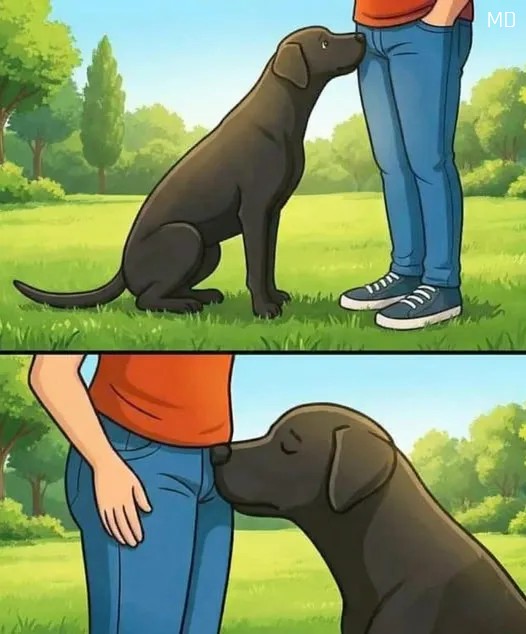
To a dog, scent is information. It’s how they understand what’s happening around them.
So when a dog uses its nose constantly, it’s not random—it’s essential.
Why Dogs Sniff You (Even in Awkward Moments)
If your dog sniffs you often—especially during greetings—it might feel uncomfortable. But for dogs, this is completely normal.
Sniffing is their version of a handshake.
Through scent, dogs can quickly learn:
- Who you are
- Where you’ve been
- How you’re feeling
Some areas of the human body carry stronger scent signals, which is why dogs naturally focus there. It’s not bad behavior—it’s instinct.
Understanding this helps you react calmly instead of correcting something that’s actually natural.
How Dogs Communicate Without Words
Dogs don’t use language the way we do. Instead, they rely on:
- Body language
- Movement
- Scent
Sniffing is a big part of this communication system. It helps them recognize familiar people, identify strangers, and sense changes in mood or environment.
When you understand this, your dog’s behavior starts to make a lot more sense.
Changing Your Perspective Improves Everything
Many behaviors that seem “annoying” are just natural curiosity.
When you shift your perspective:
- You respond with patience instead of frustration
- Your dog feels safer and more confident
- Interactions become smoother and more positive
Dogs learn best in calm, supportive environments—not through stress or punishment.
Training Without Fighting Natural Instincts
You don’t need to eliminate natural behavior—you need to guide it.
Good training is about direction, not suppression.
Here’s what works best:
- Use clear, simple commands
- Redirect behavior instead of reacting harshly
- Reward what you want to see more of
Positive reinforcement helps dogs repeat good behavior naturally.
Finding the Right Balance
A well-behaved dog isn’t one that has no instincts—it’s one that knows how to express them appropriately.
Your goal is balance:
- Allow natural behavior
- Set clear boundaries
- Be consistent
With time, your dog learns how to behave in different situations without losing its natural personality.
Building Trust That Lasts
Trust is the foundation of every strong relationship with a dog.
It grows when your dog feels:
- Safe
- Understood
- Guided, not punished
When you understand your dog’s behavior, communication improves. And when communication improves, everything else follows.
Small Habits Create Big Results
Good behavior doesn’t happen overnight. It’s built through small, consistent actions.
Simple things make a difference:
- Reward calm greetings
- Redirect unwanted behavior early
- Stay consistent
Over time, these habits become automatic for your dog.
A Better Relationship Starts With Awareness
When you understand why your dog behaves a certain way, everything becomes easier.
You stop reacting emotionally and start responding intentionally.
That’s what creates a strong, balanced relationship—one built on trust, clarity, and mutual understanding.
Final Thought
Every behavior your dog shows has meaning. The more you understand it, the better your relationship becomes.
It’s not about control—it’s about connection.