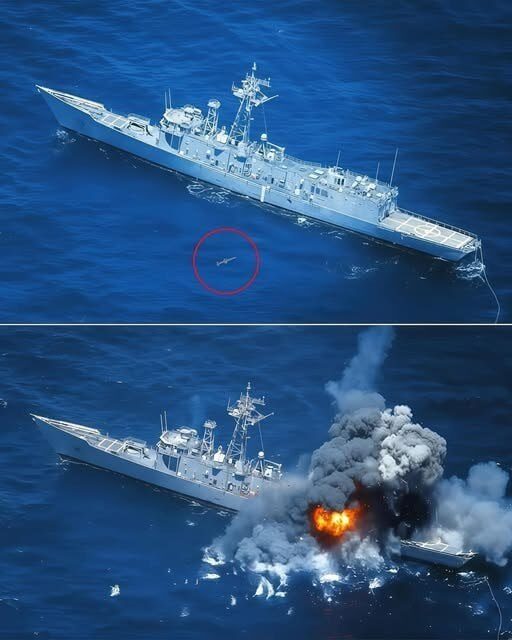
A Controlled Farewell at Sea
The ship’s final chapter came not in combat, but through a scheduled live-fire exercise known as a SINKEX (sinking exercise). This process is part of routine naval training and research, designed to provide real-world data that cannot be fully replicated in simulations.
Before the exercise, the vessel underwent extensive preparation. Environmental teams removed hazardous materials, fuel residues, and sensitive systems to ensure compliance with strict ecological regulations. This step is critical, as decommissioned ships used in such exercises are also intended to serve a secondary purpose: becoming artificial reefs that support marine ecosystems.
During the exercise, modern naval weaponry was tested against the retired frigate, including anti-ship missile systems such as the AGM-84 Harpoon missile. The impact and structural response of the ship provided engineers and defense analysts with valuable insights into damage patterns, ship resilience, and future design improvements.
More Than a Target: A Legacy in Transition
For many sailors who once served aboard the vessel, the moment was deeply symbolic. A ship is more than steel and machinery—it is a shared space of duty, discipline, and lived experience. Watching it sink into the ocean carried emotional weight, even as it fulfilled a broader strategic purpose.
Yet within that final descent lies a different kind of service. The data gathered from the exercise contributes directly to improving the design and survivability of future warships. In this way, the vessel continues to serve the fleet, helping ensure that modern sailors operate with stronger, more advanced protection systems.
From Warship to Ocean Habitat
Beyond military value, the sunken frigate will gradually transform into an artificial reef, offering shelter for marine life and contributing to underwater biodiversity. Over time, coral, fish, and other sea organisms will reclaim the structure, turning a former instrument of war into a living ecosystem.
A Legacy That Continues Beneath the Waves
The story of the USS Rodney M. Davis is not simply one of retirement—it is one of transformation. From Cold War patrols to advanced training exercises and finally to an ocean habitat, its journey reflects how military history evolves rather than ends.
As the United States Navy continues to modernize its fleet, lessons learned from vessels like this one help shape stronger, smarter, and more resilient naval forces for the future.
If stories like this interest you, share your thoughts below and follow for more deep dives into naval history, military technology, and the hidden stories behind the world’s most powerful fleets.