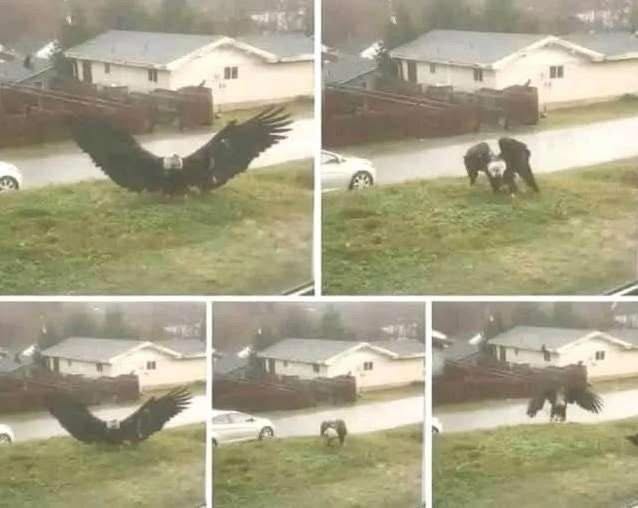
As word spread, specialists began arriving in the region to investigate further. What makes the case so compelling is the reported scale of the bird. Estimates place its wingspan significantly beyond that of known regional species, prompting careful scientific scrutiny rather than immediate conclusions. Researchers are now working to determine whether this represents an extreme natural variation, a rare migratory occurrence, or something previously undocumented.
The bird has since been placed under observation in a controlled conservation environment in the Brownsville area. Authorities emphasize that the priority is careful study and preservation, using non-invasive methods to better understand its biology, behavior, and potential origin. DNA analysis and ecological assessments are currently underway, though no definitive classification has been confirmed.
Scientists remain cautious in their interpretations. While the idea of an unknown or relict species naturally sparks excitement, experts stress that extraordinary claims require extraordinary evidence. At this stage, many are also considering more conventional explanations, including rare genetic variation or environmental factors that may have contributed to atypical growth in a known species.
Despite the uncertainty, the discovery has already had a noticeable cultural and regional impact. The local community has expressed strong interest in the development, with discussions emerging around conservation efforts and the potential creation of a protected habitat or research zone. For many residents, the event has become a symbol of the region’s untamed natural richness and ecological importance.
On a broader scale, the situation has reignited global conversations about biodiversity and the limits of current scientific knowledge. It serves as a reminder that even in well-studied regions, nature can still present surprises that challenge assumptions and encourage further exploration.
For now, the so-called “giant eagle” remains under careful observation, and the scientific community continues its measured investigation. Whether it ultimately proves to be a rare anomaly or something more significant, the discovery has already succeeded in one respect: it has reminded the world that nature still holds questions we have yet to answer.
If this story intrigued you, share your thoughts—do you think we’ve truly mapped the limits of wildlife, or are there still major discoveries waiting in plain sight?