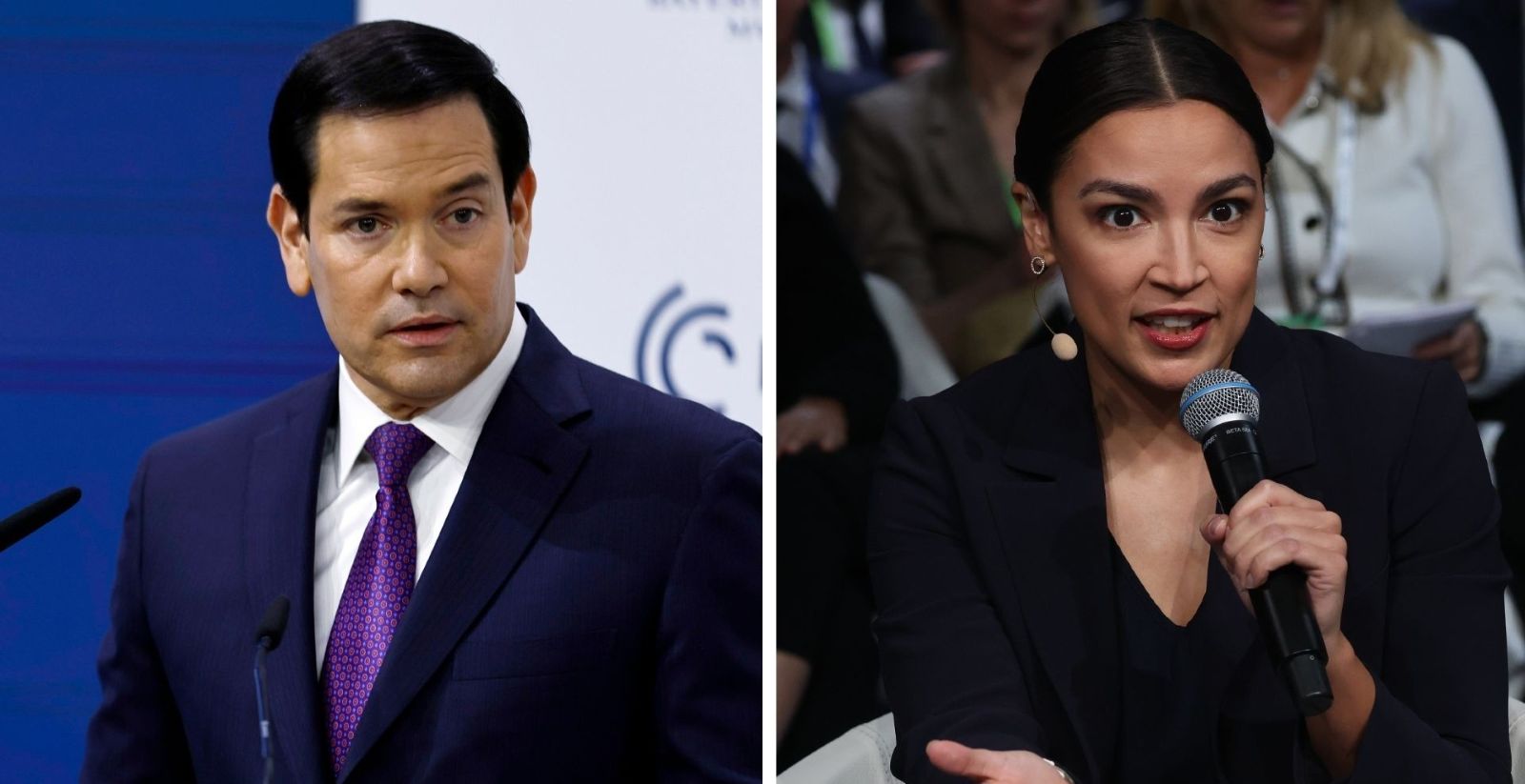
Rubio framed border security and national sovereignty as matters of governance rather than isolation, saying that nations must balance openness with social cohesion. He also highlighted the historical and cultural ties that link Europe and the United States, including the role of religious traditions in shaping political and civic institutions.
As part of a broader point about cultural exchange, Rubio referenced the historical roots of American cowboy culture, noting Spanish influences on horsemanship and ranching traditions. Historians have documented that Spanish and Mexican vaquero practices significantly shaped the development of cattle herding in the American Southwest, alongside contributions from Indigenous and African American communities.
Speaking at a discussion event in Berlin, Ocasio-Cortez criticized Rubio’s framing of Western culture and argued that political conversations should prioritize economic fairness, shared material interests, and addressing inequality. She suggested that discussions of cultural identity can sometimes overlook the diverse contributions of different communities and the role of economic conditions in shaping social outcomes.
Rubio’s supporters said his speech underscored the importance of maintaining close ties between Europe and the United States at a time of global uncertainty. Critics, meanwhile, said the focus on cultural identity risks oversimplifying complex historical and social dynamics.
The exchange reflects broader debates within U.S. politics about how to discuss history, culture, and national identity while addressing present-day economic and geopolitical challenges.
This is my lane of expertise so let me help you translate what AOC is saying here:
— Paul Anleitner (@PaulAnleitner) February 15, 2026
It’s Marxism.
She claims that the foundation of Western culture is “thin” and that culture is really nothing more than a perpetual state of evolution in response to material causes.
Your… pic.twitter.com/RxR00R3aWe