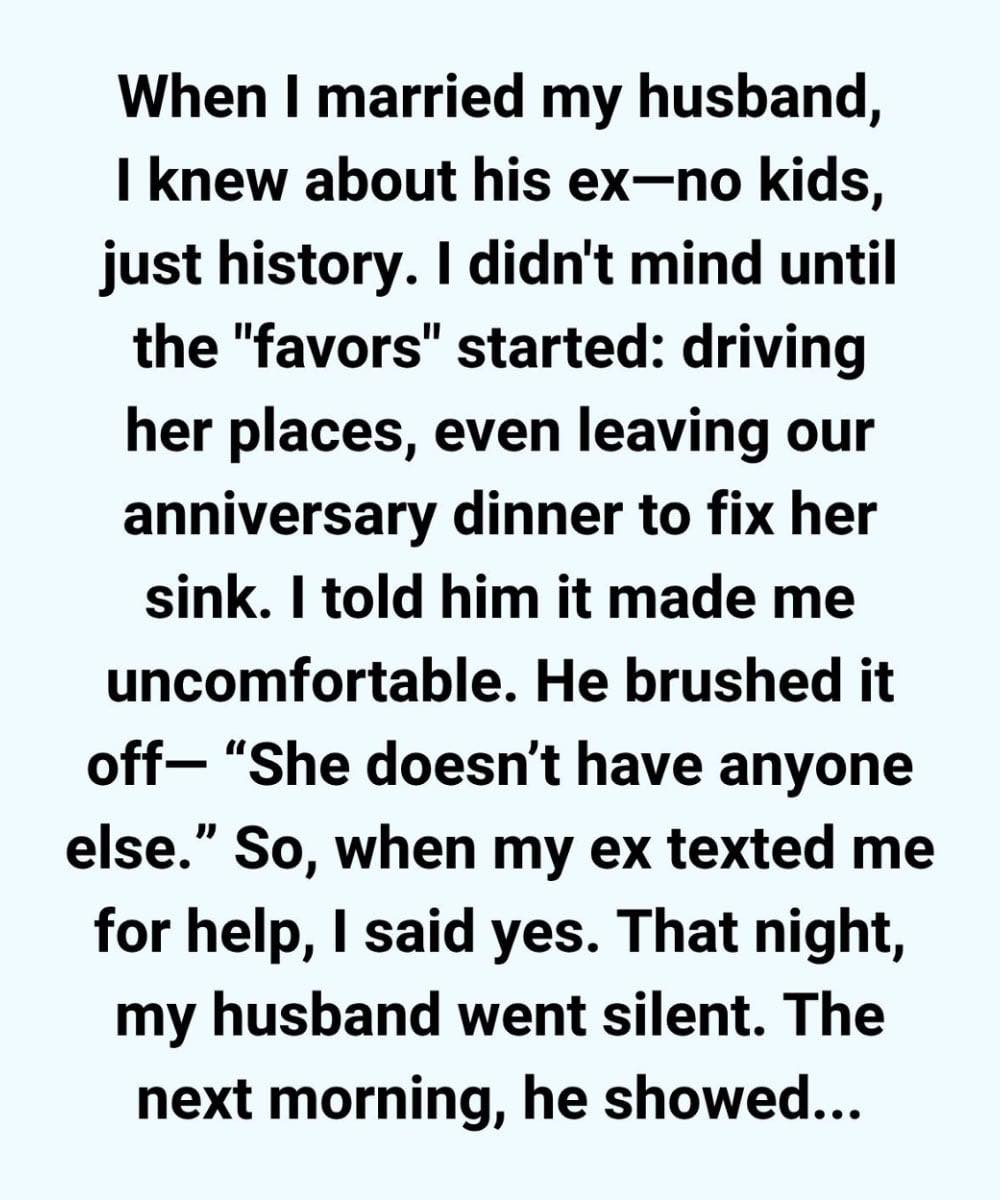
I tried to stay understanding, reminding myself that compassion was a good quality. But on our anniversary, everything changed.
The Turning Point
We were midway through our anniversary dinner when his phone buzzed. I saw Sarah’s name flash across the screen. Without hesitation, he left the table, promising to be back in an hour. I was left sitting alone, half my meal untouched, feeling the imbalance in our relationship.
I didn’t react immediately. I took time to think.
A week later, my own ex reached out for help with a charity event. Normally, I might have declined, but this time I agreed. I mentioned it casually at dinner:
“Oh, by the way, I’m helping Mark with a fundraiser next weekend.”
My husband paused. “A fundraiser?” he repeated.
“Yes,” I said. “He said he could use a hand.”
Over the next few days, I added, “Mark and I might grab coffee to go over the details.”
This time, he paused and set down his fork. “You’re not actually going, are you?”
“Why wouldn’t I?” I replied evenly. “He just needs a friend.”
For the first time, he paused and reflected. He didn’t argue or dismiss me. The discomfort he felt mirrored what I had experienced for months.
A Lesson in Understanding
The next morning, he approached me with his phone in hand.
“I sent Sarah a message,” he said, handing it over.
“I can’t keep being the one you call for every problem. I need to focus on my marriage. I hope you understand.”
It wasn’t dramatic or cruel—it was firm. He admitted he hadn’t realized how it felt until he imagined me in the same situation.
“I wasn’t trying to hurt you,” he said. “I just needed you to see it.”
I nodded. “And now you do.”
The Takeaway
Boundaries in a marriage aren’t always learned through arguments or lectures. Sometimes, they’re understood when someone experiences the other side of the situation. Mutual respect, empathy, and communication are key to maintaining balance in a relationship—and sometimes it takes a real-life example to make the lesson clear.