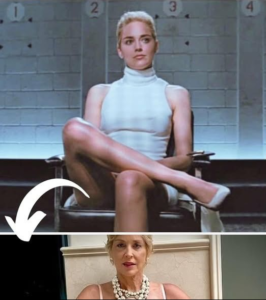
A Modern Reinterpretation, Not a Replica
Stone’s recent recreation is not a frame-by-frame remake of the original moment. Instead, it serves as a reinterpretation—acknowledging the passage of time while emphasizing presence and control. The familiarity is intentional, but so is the difference. This version reflects experience, perspective, and ownership rather than attempting to recreate the past.
In an industry where women are often sidelined as they age, the moment has been widely interpreted as a statement about agency. Rather than chasing relevance, Stone appears to be defining it on her own terms.
Public Reaction and Cultural Impact
The response online was swift, with fans and commentators praising the confidence behind the gesture. Many noted that the moment resonated not because of controversy, but because it challenged long-standing assumptions about aging, especially in Hollywood.
Rather than focusing on appearance, much of the discussion has centered on the message: confidence and influence do not disappear with time. For some viewers, the moment sparked nostalgia. For others, it prompted reflection on how cultural expectations have—or haven’t—changed.
A Career Defined by Reinvention
Sharon Stone’s career has spanned decades and included both critical acclaim and personal challenges. Beyond her most famous role, she has navigated health struggles, public scrutiny, and reinvention in an industry that rarely allows women extended longevity without compromise.
This recent moment feels less like a callback and more like a continuation—an acknowledgment of her past paired with a refusal to be confined by it.
Why It Resonates Now
In a digital era dominated by filters, trends, and youth-driven visibility, Stone’s approach stands out. Rather than attempting to mask time, she embraces it. That authenticity has struck a chord, turning the moment into a broader cultural discussion rather than a fleeting headline.
The power of the original Basic Instinct scene came from its ability to unsettle expectations. The modern reinterpretation achieves something similar—challenging ideas about relevance, aging, and who gets to remain visible.
A Statement of Ownership
Ultimately, this moment is less about revisiting a famous scene and more about control over narrative. Stone’s presence underscores a shift from provocation to authorship. The message is clear: influence is not something that expires, and confidence does not require permission.
Thirty-two years later, the impact remains—not because the moment is repeated, but because it has evolved. Some legacies fade. Others adapt, deepen, and continue to resonate.