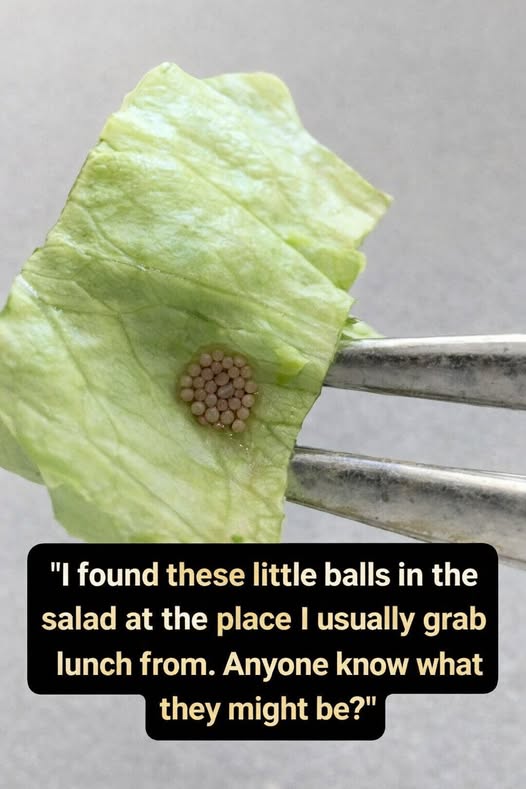
Although finding insect eggs on vegetables sounds disturbing, it’s usually an accidental and uncommon occurrence.
Leafy greens such as lettuce, spinach, kale, and arugula are typically grown outdoors in open fields. Insects naturally live in these environments, and many species lay eggs directly on plant surfaces — especially underneath leaves where they are protected from sunlight and predators.
Farmers use pest control strategies such as integrated pest management, which may include monitoring insect activity, introducing natural predators, and applying regulated treatments only when needed.
Even with careful farming methods, it’s impossible to completely remove nature from crops grown in the open.
Washing and Processing Helps — But Nothing Is Perfect
Once vegetables are harvested, they usually go through several steps such as trimming, sorting, and washing. In large processing facilities, leafy greens are often rinsed multiple times using sanitized water systems to remove dirt, debris, and insects.
Many packaged greens labeled “triple-washed” or “ready-to-eat” go through strict cleaning processes that follow food safety requirements.
However, no system can guarantee that every tiny natural element will be removed 100% of the time. Occasionally, something small can slip through unnoticed.
Is It Dangerous?
In most cases, accidentally coming into contact with insect eggs on produce is not considered a major health risk.
Many insects that lay eggs on leafy greens are not harmful to humans. The eggs themselves are generally inactive and would not survive stomach acid if swallowed.
When it comes to produce safety, larger risks are usually linked to bacterial contamination such as E. coli or Salmonella — which is why farming and food processing regulations focus heavily on sanitation and testing.
For most people, the main impact of finding insect eggs is discomfort or disgust rather than a serious medical concern.
What To Do If It Happens in a Restaurant
If you ever notice something unusual in a meal, the best approach is to stay calm and inform the staff immediately.
Most reputable restaurants take food safety seriously. Reporting the issue allows them to inspect the remaining produce, remove anything questionable, and review their preparation steps.
In most cases, restaurants will replace the dish or provide a refund without hesitation. Communicating respectfully also helps the business improve its inspection process.
Even when kitchens use pre-washed greens from suppliers, many restaurants still rinse produce again as an extra precaution. Still, during busy service hours, small natural contaminants can sometimes be missed.
Steps Consumers Can Take at Home
At home, it’s easier to reduce the chance of surprises by washing and inspecting vegetables carefully.
Even if greens are labeled as pre-washed, a quick rinse under cold running water is often helpful. Checking leaves one by one — especially along folds, stems, and undersides — makes it easier to spot anything unusual.
Using a salad spinner afterward removes excess water and improves freshness.
For whole heads of lettuce, removing the outer leaves and separating the inner layers can also make inspection more effective. Some people prefer soaking greens briefly in a bowl of water to loosen dirt or small particles.
After soaking, lifting the leaves out instead of pouring the water out helps prevent debris from reattaching to the produce.
These steps only take a few minutes but can greatly reduce the likelihood of encountering unwanted surprises.
Fresh Produce Comes From Nature
It can also be reassuring to remember that vegetables are minimally processed foods. Unlike packaged snacks or cooked meals, raw produce still carries traces of the natural environment it grew in.
Small imperfections, discolorations, or occasional natural residues are not unusual and are part of what makes fresh foods different from heavily processed products.
Farmers, distributors, and food suppliers operate under strict regulations covering irrigation water quality, equipment sanitation, worker hygiene, and storage standards. Many farms and processing facilities are also inspected regularly.
While no system is flawless, multiple layers of oversight exist to protect consumers.
Turning an Unpleasant Moment Into Awareness
In this case, the woman’s quick attention and calm reaction prevented the situation from becoming worse. By stopping immediately and informing staff, she allowed the restaurant to address the problem properly.
The incident also served as a reminder for other diners about the importance of checking fresh foods.
Instead of creating panic, it highlighted a simple truth: vegetables come from outdoor environments, and occasional rare surprises can happen.
Final Thoughts
What began as an ordinary lunch quickly turned into a lesson about food safety and how produce reaches our tables.
The discovery of small clusters attached to a lettuce leaf may have been unsettling, but it is generally not dangerous and can usually be resolved through proper washing and responsible reporting.
By staying aware, inspecting produce carefully, and communicating with restaurant staff when needed, people can continue enjoying fresh salads with confidence.
In the end, the experience is a reminder that food safety is a shared effort — from farms to kitchens to consumers — and small precautions go a long way in keeping meals safe and enjoyable.