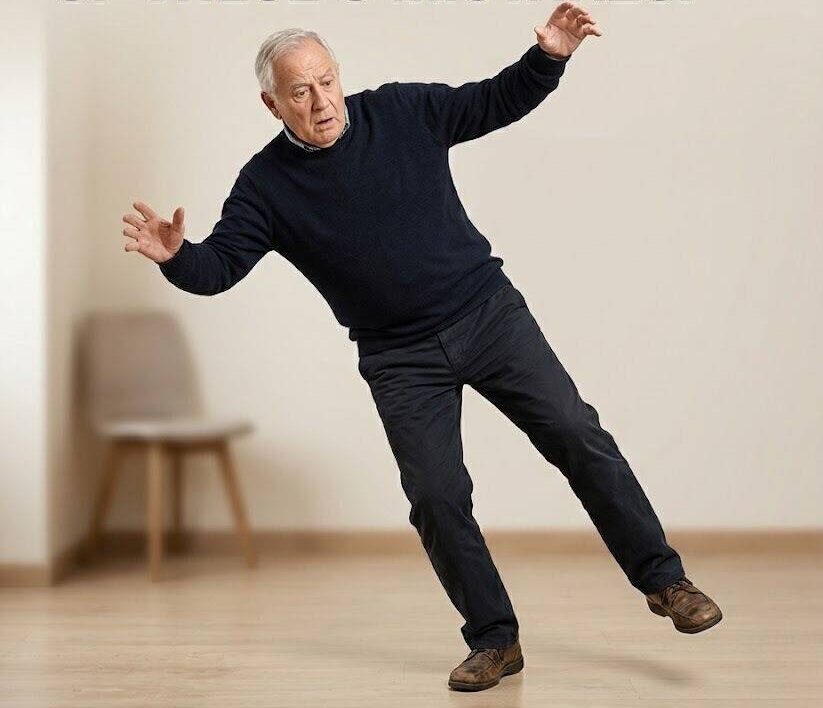
4. The Sensory Blind Spot: See, Hear, and React
Balance relies on more than muscles. Your eyes and inner ear communicate constantly with your brain. Blurred vision, outdated glasses, hearing loss, or untreated vestibular issues distort that communication. When sensory input falters, missteps multiply. Staying proactive with vision and hearing health keeps your reflexes sharp and your footing secure.
5. Foundation Failure: The Shoes You Wear Matter
Your feet are your first line of balance. Loose slippers, worn sneakers, or unsupportive footwear make every step risky. Shoes provide sensory feedback and stability—without them, the floor becomes a trap. Upgrading to sturdy, well-fitted footwear can dramatically reduce the risk of falls, even in familiar home spaces.
Taking Back Control
Balance isn’t a gift—it’s a skill. Small, intentional actions can reverse or improve decline:
- Daily leg and core exercises, from Tai Chi to simple leg lifts
- Staying hydrated and nourished
- Updating sensory tools like glasses and hearing aids
- Using support aids when needed
- Choosing proper footwear for safety and stability
The Bigger Picture
Confidence comes from trust in your body. When you know you can stand tall, move freely, and recover from stumbles, life stays expansive. When balance fades, your world shrinks to the size of a chair. Protecting stability preserves independence, mobility, and the freedom to live life on your terms.
Even simple adjustments—new shoes, a supportive cane, a quick medication review—can prevent major injuries and maintain freedom. Don’t let pride, habits, or neglect steal your footing. With awareness and action, the ground beneath you remains steady.
💬 Take charge today: What step will you take this week to strengthen balance and independence? Share your thoughts and inspire others to stay steady.