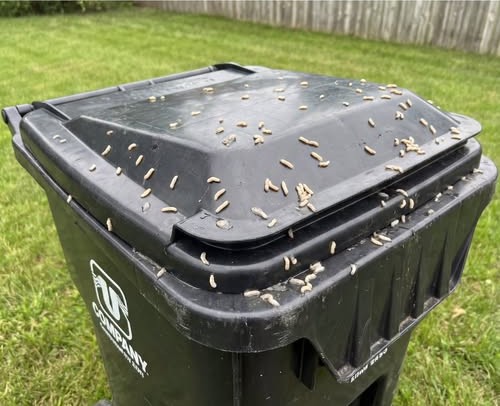
A single fly can lay many eggs at once. In warm conditions, those eggs can hatch quickly, sometimes within a day. That is why people often feel like maggots appeared overnight.
They did not appear magically. The flies got there first.
Why Trash Cans Attract Maggots So Easily
A garbage bin gives flies almost everything they need.
It is usually dark, warm, humid, and full of food waste. If the lid is not fully closed or the trash bag has a leak, flies can enter or gather around the smell.
Once they find spoiled food, they lay eggs. The eggs hatch into larvae, and the larvae begin feeding on the waste.
The strongest triggers are usually:
Food scraps
Rotting fruit
Meat and fish waste
Greasy packaging
Leaking trash bags
Moisture at the bottom of the bin
A lid that does not close properly
Warm weather
When these conditions come together, maggots can appear very quickly.
Why Summer Makes the Problem Worse
Hot weather speeds everything up.
Food rots faster. Odors become stronger. Flies become more active. Eggs hatch sooner. Larvae grow quicker.
Outdoor bins left in direct sunlight are especially vulnerable because the heat trapped inside the container acts almost like an incubator. Even a small amount of meat, seafood, or spoiled food can attract flies within hours.
This is why maggot problems are most common during spring and summer. It is not always about poor cleaning. Sometimes it is simply heat, timing, and exposed waste.
First Step: Do Not Ignore It
Maggots multiply fast. The longer they stay in the bin, the worse the smell becomes, and the more flies may gather around the area.
The best move is to deal with the problem immediately.
It may be unpleasant, but cleaning the bin right away stops the cycle before it gets worse.
How to Kill Maggots Quickly
One of the simplest methods is boiling water.
Carefully empty the trash can first if possible. Then pour boiling water directly over the maggots and the affected areas. Focus on the bottom of the bin, corners, edges, and any cracks where larvae may collect.
The heat kills maggots quickly and also helps loosen sticky food residue.
Be careful when handling boiling water, especially with plastic bins. Use gloves, keep your face away from steam, and pour slowly to avoid burns or splashing.
Deep Clean the Trash Can
After killing and removing the maggots, the bin needs a proper deep clean. If you skip this step, leftover smell and hidden eggs may attract flies again.
Use hot water, dish soap, and a scrubbing brush. Clean every surface, not just the area where the maggots were visible.
Pay attention to:
The bottom corners
The inside walls
The underside of the lid
The handles
The wheels
The rim of the bin
Any cracks or grooves
Flies often land around the lid and edges before laying eggs, so those areas matter.
Use Vinegar and Baking Soda for Odor Control
White vinegar is useful because it helps break down grime and reduce odors. Baking soda can also help lift residue and absorb smells.
Pour hot water and vinegar into the bin, then add baking soda. Let it fizz and sit for a short time before scrubbing. After cleaning, rinse the bin well and let it dry completely.
Drying is important. Moisture helps maggots survive, so a damp bin is more likely to attract flies again.
Salt or Garden Lime Can Help Keep the Bin Dry
After washing and drying the bin, some people sprinkle table salt or garden lime at the bottom.
Both can help absorb moisture and make the environment less comfortable for larvae. This is not a replacement for cleaning, but it can be a helpful extra step, especially during summer.
A dry trash can is much less attractive to flies than a wet, smelly one.
Seal Trash Bags Properly
Loose trash bags are one of the biggest causes of maggot problems.
If the bag is open, flies can reach the food. If the bag leaks, liquid collects at the bottom of the bin. Both create the perfect environment for larvae.
Always tie garbage bags tightly before placing them outside. For messy waste like meat scraps, seafood, spoiled leftovers, or wet food, double bagging can help reduce odor and leaks.
The less access flies have, the lower the risk.
Be Careful With Meat and Fish Waste
Meat and seafood are major fly magnets.
They create strong smells quickly, especially in warm weather. Even small scraps can attract flies fast.
One smart trick is to place meat or fish waste in a sealed plastic bag and keep it in the freezer until collection day. Then throw it out shortly before the garbage is picked up.
That may sound strange, but it works because it reduces the time smelly waste sits in the bin.
Keep the Lid Fully Closed
A trash can lid that is slightly open gives flies an easy way in.
Make sure the lid closes tightly every time. If your bin is cracked, damaged, warped, or missing part of the lid, flies will keep finding their way inside.
If infestations happen often, the bin itself may be part of the problem. A damaged container may need to be repaired or replaced.
Clean the Bin Regularly
Trash cans collect residue over time, even when you use bags.
Liquids leak. Food sticks to the sides. Grease builds up. Odors settle into the plastic.
A quick weekly rinse can prevent bigger problems later. During hot weather, clean outdoor bins more often using hot water, vinegar, dish soap, or a diluted disinfectant.
The goal is simple: remove the smell before flies find it.
Natural Ways to Discourage Flies
Some household methods may help reduce fly activity around trash cans.
Diatomaceous earth can help dry out insects and larvae. Bay leaves, citrus peels, peppermint, eucalyptus, and lemon scents are also commonly used to make bins less appealing to flies.
These methods are not enough to fix a serious infestation on their own, but they can support good cleaning habits.
Think of them as extra protection, not the main solution.
Store Bins in a Cooler Spot
If possible, keep outdoor trash cans in the shade.
Direct sunlight heats the bin and makes food waste rot faster. A cooler bin produces less odor and is less attractive to flies.
Also, avoid letting trash sit too long during hot weather. The faster food waste leaves your home, the fewer chances flies have to lay eggs.
Maggots Do Not Always Mean a Dirty Home
Finding maggots in a trash can is embarrassing, but it does not automatically mean your home is dirty.
Flies are fast and persistent. Even a clean household can deal with maggots if food waste is exposed, a bag leaks, or the weather is hot enough.
The issue is usually caused by three things: heat, moisture, and access to food.
Once you control those, the problem becomes much easier to prevent.
The Bottom Line
Maggots in a trash can are gross, but they are not impossible to handle. Kill them quickly with boiling water, clean the bin thoroughly, remove odors, dry the container, and keep future trash sealed.
The best prevention is simple: tie bags tightly, keep the lid closed, clean the bin often, and be extra careful with meat or fish waste during warm weather.
A few small habits can stop a disgusting problem before it starts.
Have you ever opened your trash can and found an unpleasant surprise inside? Share your experience in the comments — your tip might help someone else avoid the same problem.