Snake or Elephant?
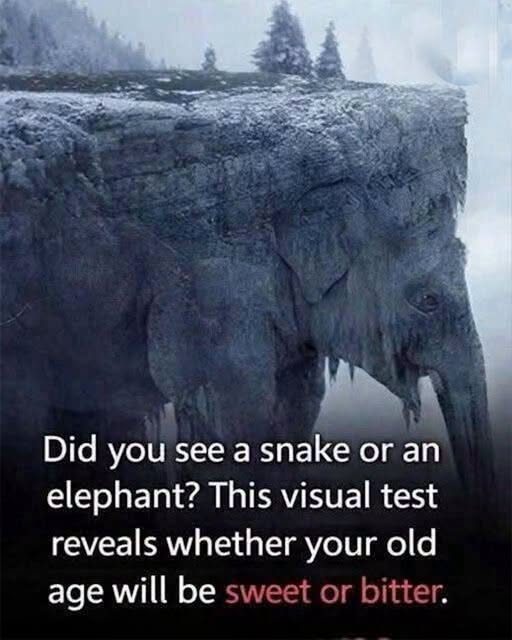
Explore the Psychology Behind This Popular Optical Illusion
Have you ever looked at an image and noticed one shape before anything else? Optical illusions make us curious because the same picture can appear different to different people. The snake-and-elephant illusion is one example, inviting viewers to look closely and discover how their brains interpret ambiguous visual information.
Some versions of this activity attach symbolic meanings to seeing a snake or an elephant first. While these interpretations can be entertaining, they should be understood as playful reflections rather than scientific conclusions about personality or the future.
What Do You See First: A Snake or an Elephant?
Take a moment to examine the image before reading further. Notice which animal stands out to you first. You might recognize a snake, spot an elephant, or discover that the image contains elements of both.
There is no correct or incorrect answer. The purpose of this visual activity is to explore how people interpret shapes and patterns, not to measure intelligence, predict behavior, or determine personal traits.
If You Notice the Snake First
In symbolic interpretations, snakes are often associated with transformation, awareness, renewal, and hidden knowledge. Because snakes shed their skin, they are sometimes used as symbols of change and new beginnings.
For fun, you might use this interpretation as a prompt to reflect on how you approach change or respond to unfamiliar situations.
However, noticing a snake first does not mean you are naturally suspicious, unusually perceptive, or better at identifying risks. The order in which you recognize an image can depend on its design, your attention, your expectations, and other factors.
If You Notice the Elephant First
Elephants are commonly associated with strength, wisdom, patience, loyalty, and resilience. Their social relationships and long-standing cultural significance have contributed to these symbolic associations.
 Up Next: Page 2 of 3
As a lighthearted reflection, seeing an elephant first might inspire you to...
Still, this visual preference cannot establish that you are more loyal, wiser, or more dependable than someone who notices the snake first....
Continue Reading