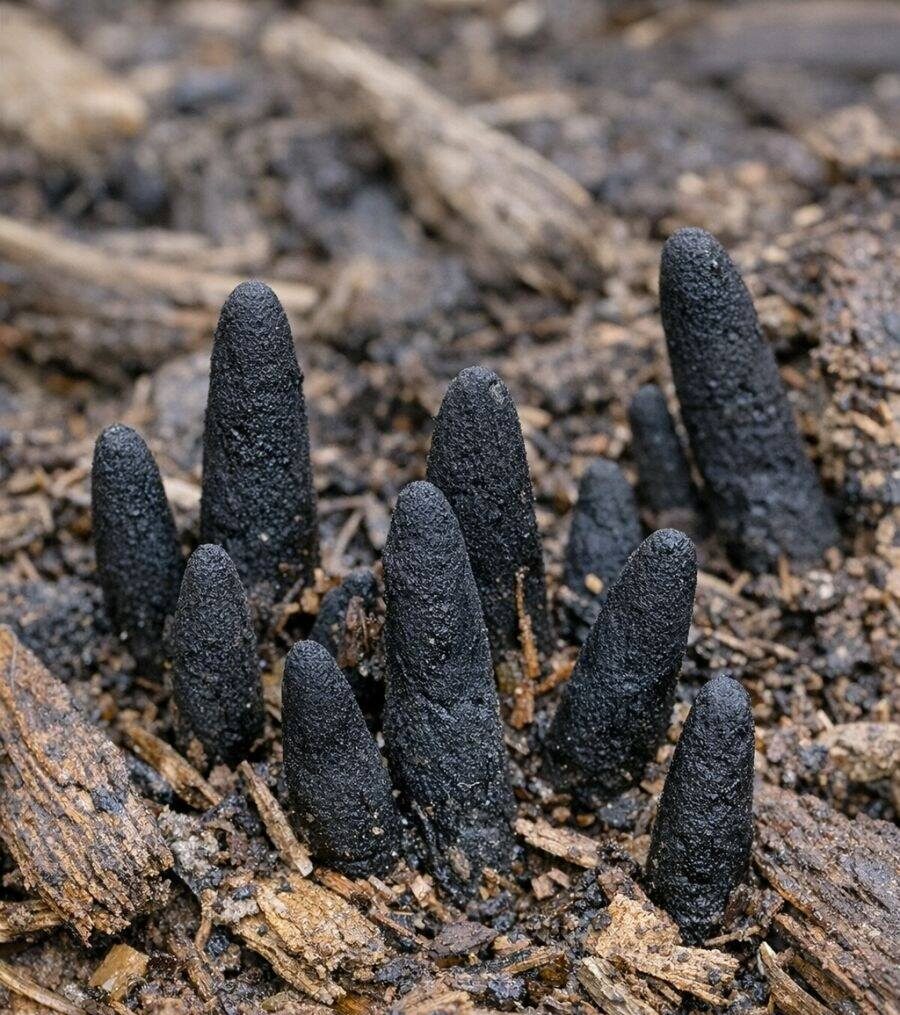
Why They Appear
Dead Man’s Fingers thrive in shaded, moist areas with plenty of decomposing wood. Spring and fall often trigger growth when conditions are ideal for fungal activity. The presence of this fungus signals healthy soil recycling, not a threat.
Are They Dangerous?
Good news: this fungus is harmless to humans, pets, and living plants. It’s not edible due to its tough texture, and it doesn’t attack healthy vegetation. Essentially, it’s a natural recycler in your backyard ecosystem.
Common Confusions
Dead Man’s Fingers can be mistaken for Stinkhorn fungi or blackened roots. Look closely for fungal traits like spore production or rigid structure to tell the difference.
Managing and Removing Dead Man’s Fingers
If aesthetics matter, gently remove them along with decaying wood. Gloves are recommended, and disposal in compost or yard waste is safe. To prevent regrowth, reduce mulch thickness, improve drainage, and use less-decomposable mulch like pine needles or gravel.
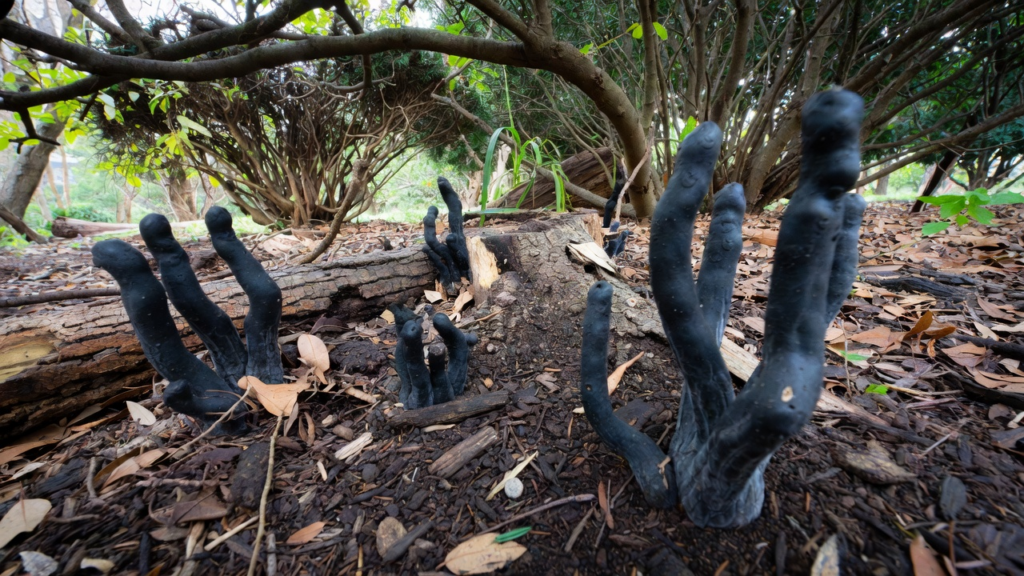
Turning Spooky Findings Into Curiosity
Rather than fear, let this discovery spark interest in mycology, the study of fungi. These organisms are key players in ecosystems, breaking down matter and supporting plant life. Observing fungi like Dead Man’s Fingers can deepen your connection with nature and spark a lifelong fascination.
Next time you see these mysterious black “fingers,” embrace curiosity over fear—and explore the secret world of backyard fungi. Have you spotted any unusual growths in your garden? Share your experience and join the conversation!