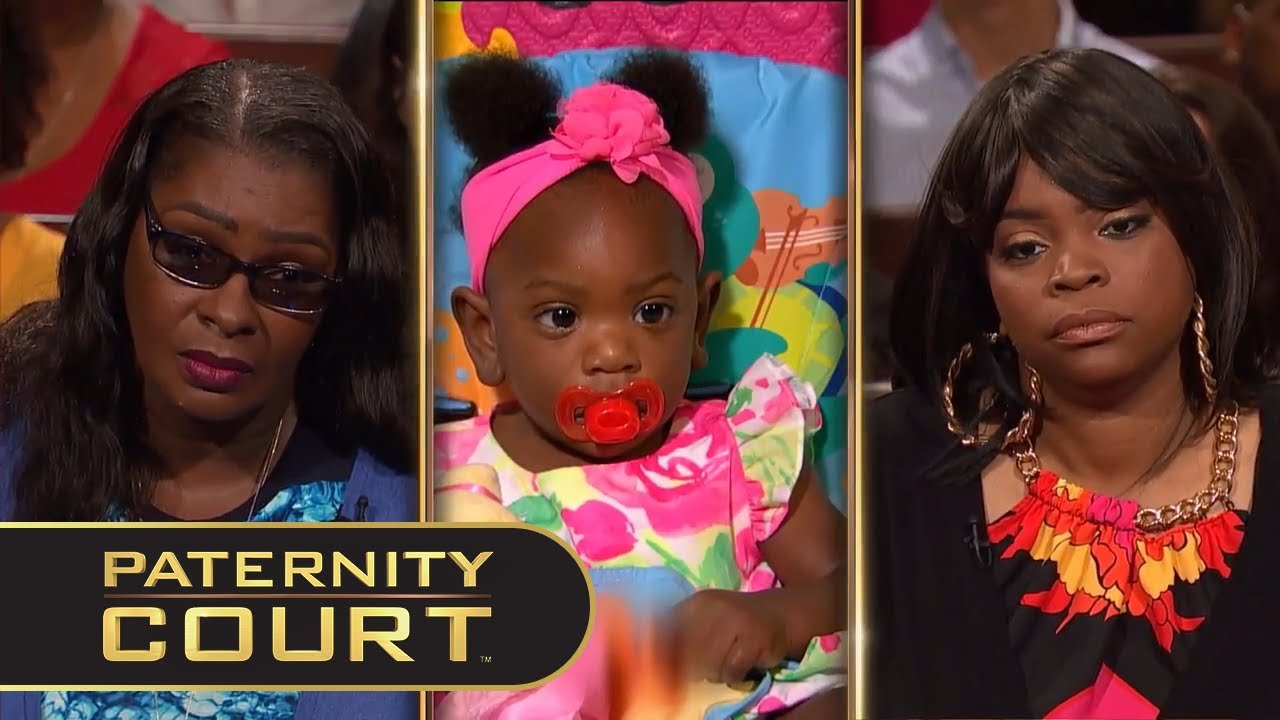
Across from her sat the young woman at the center of the claim. Visibly nervous but composed, she admitted that she had kept the pregnancy private years earlier. At the time, she had been overwhelmed by uncertainty—unsure of how the news would be received, unsure of how to approach a family she didn’t fully know.
“I was scared,” she said. “I didn’t know what to do or how to say it.”
The mother listened without anger.
Instead of reacting emotionally, she expressed something more complex—regret mixed with compassion. She explained that if she had known, she would have stepped in to help, to support both the young woman and the child. What hurt most wasn’t just the possibility of the truth—it was the years lost without knowing.
“I could have been there,” she said softly. “Now I don’t even know if that child is mine to love.”
As the hearing continued, the judge carefully guided the conversation, focusing on facts rather than assumptions. Both women were asked to explain their connection to the late son, the timeline of events, and what had happened in the years since.
The young woman spoke through emotion, describing a relationship that, while complicated, had been meaningful. She recalled moments of connection and said she had intended to share the pregnancy but never had the opportunity before circumstances changed.
The mother, hearing this, reflected on her son.
She acknowledged his flaws but emphasized his humanity. She spoke about his kindness, his struggles, and the love she believed he carried. For her, the possibility of a child left behind wasn’t something to reject—it was something to understand.
“If this is his child,” she said, “then that child deserves to know they came from love.”
At the center of everything was time—and the lack of it.
The mother revealed that her health had declined significantly. This wasn’t a situation she could revisit later. She needed answers now. Not for curiosity, not for legal reasons—but for peace of mind.
“I’ve made peace with my life,” she said. “But I can’t leave without knowing if I have another grandchild out there.”
The courtroom fell quiet.
Her words shifted the focus from dispute to humanity. This wasn’t about winning or losing—it was about truth, and what that truth meant for the people involved.
Then came the moment everyone had been waiting for.
The DNA results were brought forward. The judge handled the moment with care, fully aware of how much rested on the outcome. Both women sat in silence, each preparing for a result that could change everything.
As the results were revealed, emotion filled the room.
Regardless of the outcome, the mother responded with acceptance. Her focus remained unchanged—what mattered most was the child. She made it clear that love, care, and support would not be defined solely by biology.
“That child deserves a future filled with love,” she said. “No matter what the result is.”
The judge acknowledged her strength, pointing out that her presence in court was not driven by anger, but by compassion and responsibility. It was a reminder that truth, even when difficult, can bring people closer to understanding.
This case stood out for a reason.
It wasn’t just about establishing paternity—it was about confronting the past, accepting uncertainty, and choosing empathy over resentment. It showed how people can face difficult truths with dignity, even when the emotional cost is high.
By the end of the hearing, the atmosphere had changed.
What began as a search for answers became something more meaningful—a moment of reflection on family, connection, and the importance of honesty. It showed that even in the most complicated situations, clarity can open the door to healing.
And sometimes, that’s what matters most.
What’s your perspective?
If you were in this situation, would you seek the truth no matter how difficult it might be—or leave things as they are? Share your thoughts below and be part of the conversation.
FULL VIDEO: