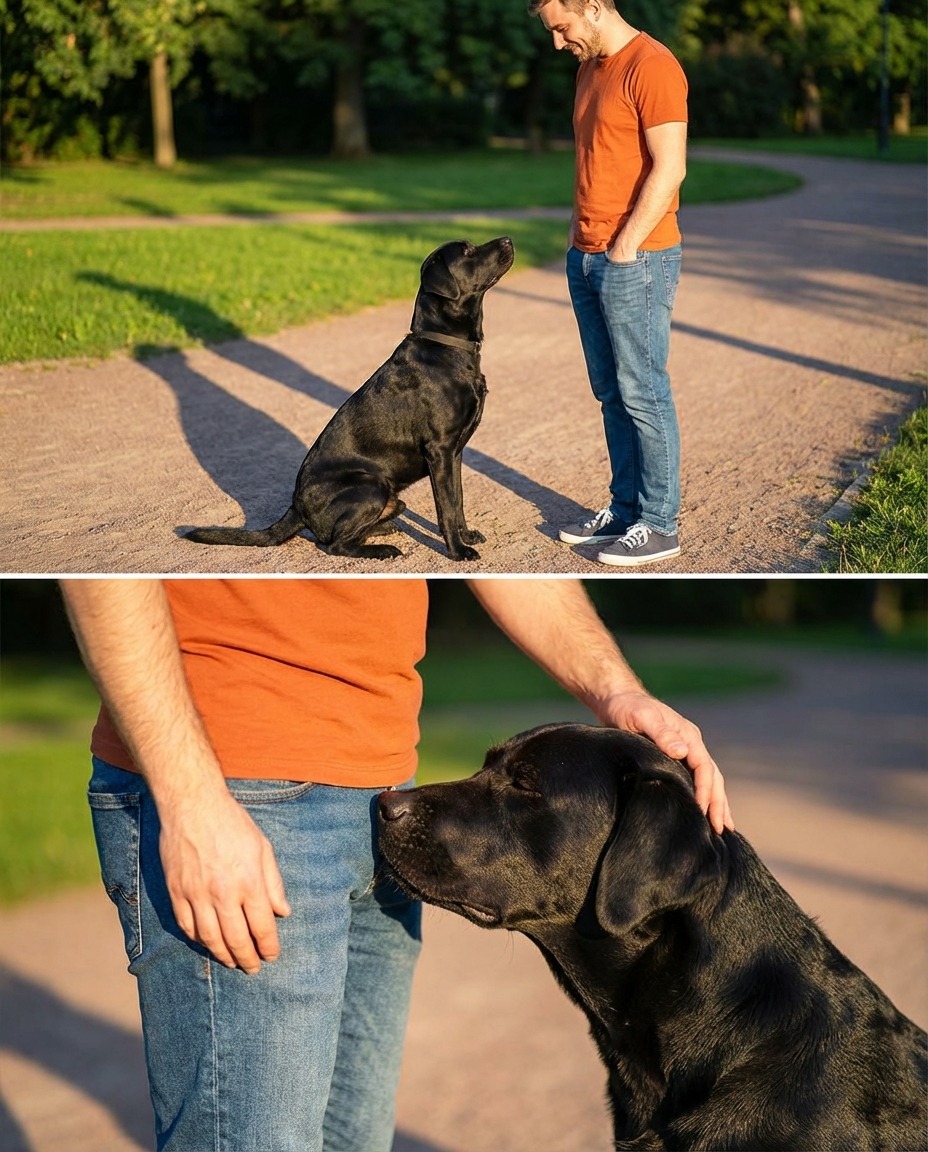
A dog’s nose gathers information that humans cannot detect. Every person carries a unique scent made up of tiny clues — where they have been, what they touched, what they ate, and even changes in stress or excitement.
So when a dog sniffs someone, it is not random behavior. It is how they collect information.
To a dog, one quick sniff can say more than a long conversation says to us.
Why Sniffing Is Not “Bad Behavior”
Many owners feel embarrassed when their dog sniffs guests, strangers, or personal spaces. From a human point of view, it can feel awkward.
But from a dog’s point of view, sniffing is normal.
It is their version of greeting, checking identity, and deciding whether someone feels familiar or safe. Dogs do not understand human social rules unless we teach them.
That does not mean every sniffing habit should be allowed without limits. It simply means the behavior itself is natural, not “naughty.”
Training Should Guide the Instinct, Not Fight It
The goal is not to stop your dog from being a dog. The goal is to teach them how to behave calmly in human spaces.
A dog can learn to sit before greeting guests.
They can learn to wait before approaching someone.
They can learn when sniffing is allowed and when they need to back away.
This kind of training gives structure without creating fear or confusion.
Instead of yelling or pulling the dog away every time, use calm commands, rewards, and consistency. Over time, your dog learns that polite behavior leads to good results.
Your Emotions Affect Your Dog
Dogs are very sensitive to human energy.
If you become tense, embarrassed, or frustrated, your dog may feel that shift. They may become more anxious, excited, or unsure of what to do.
A calm owner usually creates a calmer dog.
That does not mean you should ignore bad habits. It means your reaction matters. Clear direction works better than panic, anger, or constant correction.
Better Walks Start With Understanding
Walks are not just bathroom breaks or exercise sessions. For dogs, walks are information-gathering missions.
Every tree, sidewalk, fence, and patch of grass carries scent messages. When your dog stops to sniff, they are reading the environment.
Letting them sniff in safe, controlled ways can make walks more satisfying and mentally stimulating.
You still need boundaries. Your dog should not drag you everywhere or ignore commands. But allowing some sniffing time helps them feel calmer and more fulfilled.
The Real Bond Comes From Respect
Dogs are not tiny humans. They do not think, communicate, or experience the world the same way we do.
That is exactly why understanding them matters.
When you see sniffing as communication instead of misbehavior, your relationship changes. You stop reacting with frustration and start guiding with purpose.
Your dog learns trust.
You gain control.
The bond becomes stronger.
Final Thoughts
Dogs sniff because that is how they understand people, places, emotions, and the world around them. It is not strange, rude, or meaningless — it is part of their natural language.
Good ownership means balancing instinct with training. Let your dog explore, but teach them calm boundaries.
That is where real companionship starts: not just obedience, but understanding.
Does your dog stop to sniff everything on walks? Share your experience in the comments — other dog owners may relate more than you think.