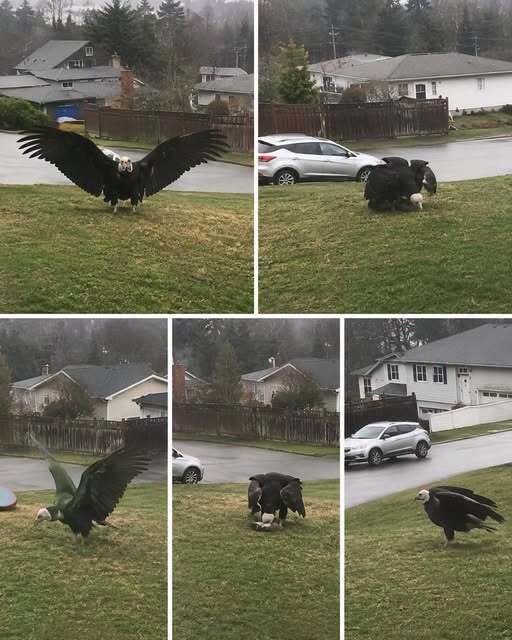
Witnesses described the bird as noticeably larger than the eagles commonly seen in North America, leading to speculation about its identity and origin.
Although extraordinary wildlife sightings often attract significant public attention, experts emphasize that unusual observations require careful scientific evaluation before any conclusions can be reached.
How Scientists Investigate Rare Wildlife
When researchers encounter an animal with unexpected characteristics, they typically begin with a series of non-invasive studies designed to gather accurate information.
These may include:
- Careful physical measurements
- High-resolution photography
- DNA analysis
- Feather examinations
- Health assessments
- Behavioral observations
These methods help determine whether an animal belongs to a known species, represents an uncommon variation, or has characteristics influenced by genetics, habitat, or environmental conditions.
Why Discoveries Matter
Studying rare wildlife helps scientists better understand biodiversity, migration, adaptation, and ecosystem health.
Even when an animal ultimately proves to belong to a known species, unusual observations can provide valuable information about population changes, habitat use, or environmental pressures.
Research also supports conservation efforts by identifying areas that may require additional protection.
Public Interest and Conservation
Stories involving unusual wildlife often inspire curiosity and encourage greater appreciation for the natural world.
Communities sometimes explore opportunities to support conservation through educational programs, research partnerships, and responsible ecotourism, helping balance public interest with the protection of sensitive habitats.
Wildlife experts generally encourage observers to enjoy animals from a safe distance and report unusual sightings to appropriate conservation authorities rather than attempting to approach or disturb them.
The Importance of Scientific Verification
History has shown that some remarkable wildlife discoveries are confirmed after careful research, while others are eventually explained through more familiar causes such as unusual viewing angles, individual variation, or mistaken identification.
For that reason, scientists rely on evidence collected through observation, testing, and peer review before announcing significant findings.
Final Thoughts
Whether this reported sighting ultimately represents an unusual individual, a rare population, or simply a fascinating wildlife observation, it highlights how much there is still to learn about the natural world.
Curiosity often inspires scientific discovery, but careful investigation is what transforms intriguing stories into reliable knowledge.
As researchers continue studying wildlife across diverse ecosystems, each new observation contributes to a deeper understanding of the remarkable species that share our planet.