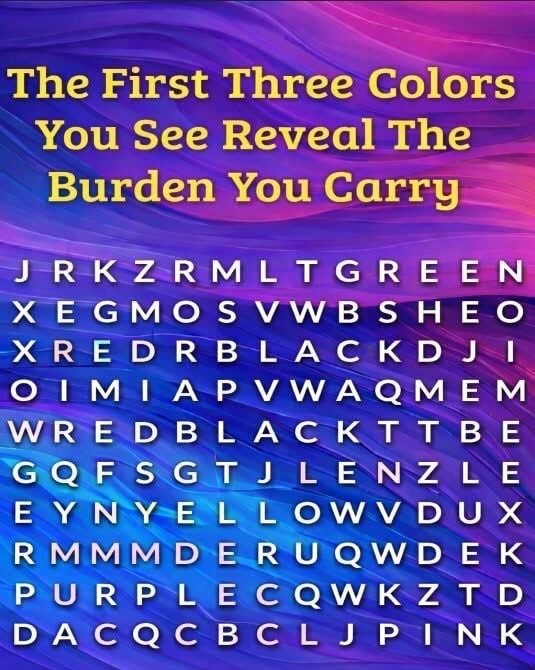
This isn’t a scientific test or a diagnosis. Instead, it’s a gentle, reflective exercise that can help you pause and consider how you’re feeling in the moment.
Our attention is rarely random. What stands out to us can sometimes connect to what’s on our mind or how we’re experiencing things internally.
Common Associations With Colors
While meanings can vary from person to person, certain colors are often linked with general emotional themes:
- Red is commonly associated with energy, urgency, or strong emotions.
- Blue is often connected to calmness, focus, or reflection.
- Yellow may suggest positivity, alertness, or a need for clarity.
- Green is frequently linked to balance, growth, or change.
- Purple can be associated with creativity, depth, or introspection.
- Black is sometimes tied to boundaries, protection, or seriousness.
- White may represent simplicity, order, or a desire for clarity.
- Gray is often seen as neutral, and may reflect uncertainty or transition.
- Orange is linked with activity, enthusiasm, or stimulation.
- Brown can suggest stability, comfort, and grounding.
- Pink is often associated with warmth, connection, and compassion.
These interpretations are not fixed rules. They simply offer a starting point for personal reflection.
Why This Can Be Helpful
Taking a moment to notice what draws your attention can help you slow down and become more aware of your current state of mind.
You might ask yourself:
- Why did those colors stand out to me?
- What do they remind me of?
- How have I been feeling lately?
Even brief moments of reflection like this can support greater self-awareness over time.
A Thoughtful Way to Pause
This kind of exercise isn’t about finding a “correct” answer. It’s about giving yourself space to pause and notice small details that are often overlooked.
In a fast-paced world, even a few seconds of mindful attention can help you better understand your thoughts and emotions.
Sometimes, something as simple as noticing a color can open the door to more meaningful reflection.