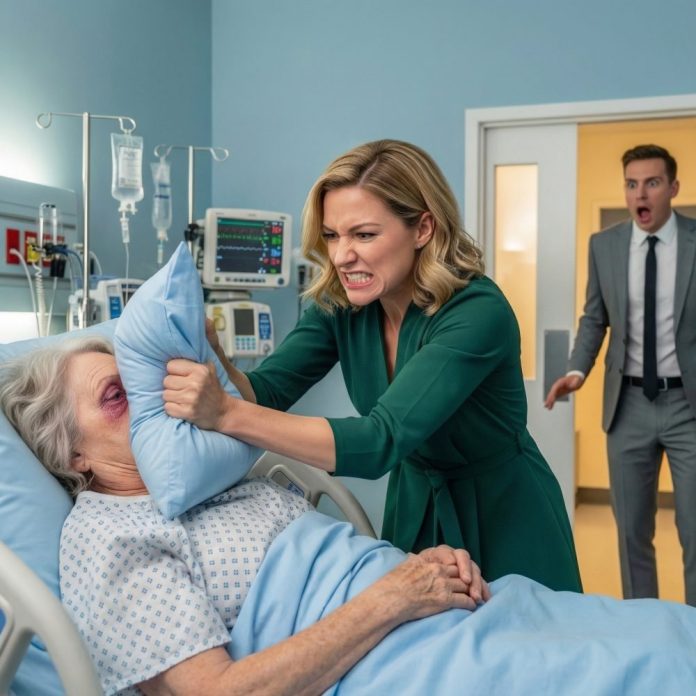
My mother, Eleanor, had been in Room 218 for nearly two weeks, recovering slowly from pneumonia. At seventy-six, frail but still proud, she had always been my anchor. I spent countless hours at her bedside, adjusting her blanket, helping her sip water, and listening to her repeat stories from my childhood—the same stories that somehow made both of us feel steady in a world that moved too fast. Caring for her didn’t feel like a burden; it felt like honoring a lifetime of love.
Marissa, my wife, came to the hospital too—but she carried tension instead of care. The friction between her and my mother had been growing long before Eleanor fell ill. When my business started struggling, and we had to move into my mother’s house temporarily, resentment took root. What should have been a brief arrangement stretched into months. Marissa bristled at what she perceived as criticism, at the limitations of our cramped lives under Eleanor’s roof, and I told myself time would heal things. It didn’t. It only hardened the rift between us.
That morning, I woke unusually early, a feeling of unease pressing in my chest. It wasn’t fear exactly—just an urgent sense that I needed to be there. I drove through the quiet streets, coffee forgotten, trying to convince myself I was overreacting.
Mercy Hill was eerily silent when I reached the second floor. The fluorescent lights hummed overhead, the antiseptic scent filled the corridor, and my shoes squeaked against the polished floor. When I reached Room 218, the door was ajar. I pushed it open—and everything froze inside me.
Marissa was leaning over my mother’s bed, hands tense, my mother struggling weakly under the covers.
The sight made my world tilt. In that moment, I realized some truths you never want to see—but cannot unsee.