Why It Feels More Difficult Than Expected
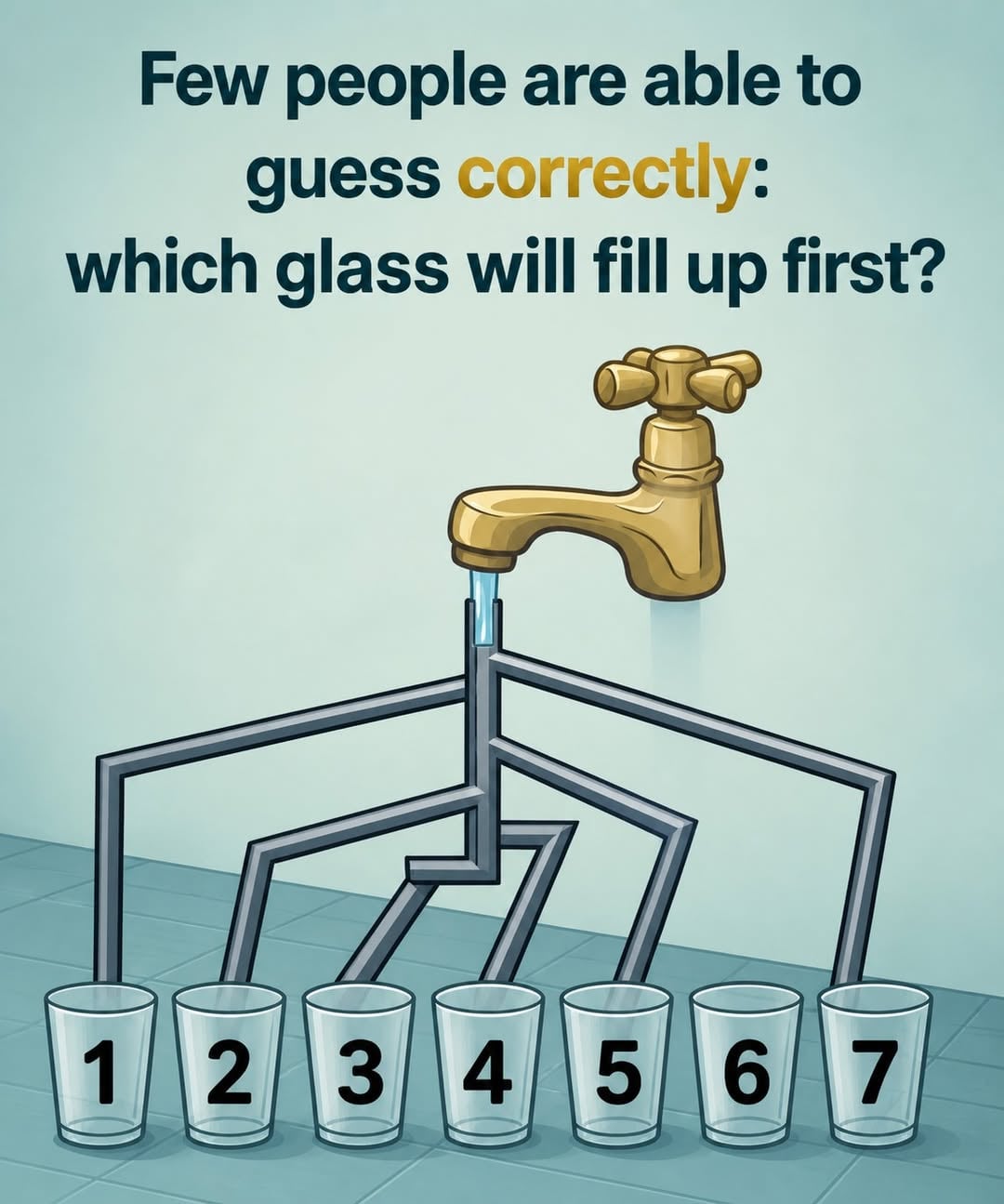
As you begin tracing the routes, each promising path seems to lead somewhere—until it suddenly doesn’t. Small gaps, blocked sections, or subtle breaks in the pipes interrupt the flow.
These details are easy to miss at first, especially when your brain assumes that visually connected lines must also function as continuous paths. This natural assumption is exactly what the puzzle relies on.
A Clever Use of Visual Illusion
The design of the puzzle highlights how quickly we rely on instinct rather than careful observation. It creates a sense of confidence early on, only to challenge that confidence moments later.
Many participants report changing their answers multiple times as they notice new details they initially overlooked. This back-and-forth process is part of what makes the puzzle so engaging.
The Key Insight
After taking a closer look, some viewers arrive at an unexpected conclusion: none of the glasses can actually be filled. Each possible route is interrupted in some way, preventing water from reaching any destination.
This realization often comes as a surprise, especially for those who were certain they had found the correct answer earlier.
More Than Just a Puzzle
Beyond being an entertaining challenge, this type of brain teaser offers a useful reminder. It shows how easily assumptions can influence our thinking—and how important it is to slow down and examine details carefully.
In everyday situations, just like in puzzles, what appears correct at first glance may not always hold up under closer inspection.
A Fun Exercise in Observation
Whether you solve it quickly or take time to work through each possibility, the puzzle serves as a light and engaging way to test attention to detail. It encourages patience, focus, and a willingness to question first impressions.
And that’s exactly why it continues to capture the curiosity of so many people.