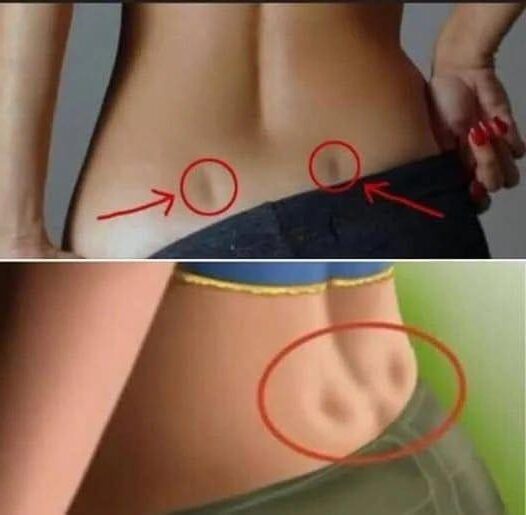
These dimples appear in a specific area of the pelvis where skin is connected more tightly to deeper structures like ligaments and bone. In some people, this connection creates a slight inward pull in the skin, forming visible indentations.
In others, the same area is completely smooth.
Neither version is better or worse—it’s simply a difference in anatomy. Things like pelvic shape, connective tissue placement, and natural fat distribution all play a role in whether these dimples show up.
Because of this, you cannot “force” them to appear through exercise or lifestyle changes. They are not a reward for training or a goal that everyone can unlock.
Can You Develop Them Through Fitness?
This is where a lot of confusion happens.
Lower body fat or increased muscle definition may make existing dimples more visible, but they do not create them from scratch. If the underlying structure isn’t there, no workout will magically produce them.
Exercises like glute bridges, deadlifts, and core training can absolutely strengthen the lower back and improve posture and stability—but that’s about function, not creating a specific visual feature.
So while fitness can change how your body looks in general, it cannot guarantee the appearance of lower back dimples.
The Pressure to “Chase” Physical Features
In recent years, certain body traits have been turned into aesthetic goals. Lower back dimples are one of them, mostly because they are visible and often associated with lean or toned physiques online.
But this creates a misleading idea—that your body is “missing something” if it doesn’t have them.
That simply isn’t true.
Two people can have the same level of strength, fitness, and health, and one may have dimples while the other does not. Comparing the two is like comparing eye color or height—it doesn’t reflect effort or value.
When we turn natural anatomy into a checklist, we risk chasing goals that were never meant to be achievable in the first place.
What They Actually Say About the Body
Lower back dimples don’t measure:
- Strength
- Fitness level
- Body fat percentage accuracy
- Health status
- Discipline or lifestyle
They are not indicators of progress in any meaningful way.
Instead, they are simply one of many small variations in human anatomy—like freckles, ear shape, or dimples on the cheeks.
Your body does not need to display them to be strong, healthy, or attractive.
What Matters More Than Appearance
If we shift the focus away from visuals, fitness becomes much more meaningful.
A strong lower back, stable core, and well-functioning glutes matter far more than whether a small indentation is visible. These muscle groups support posture, movement, balance, and everyday strength.
Better function means:
- Less strain during daily activities
- Improved posture and stability
- More efficient movement
- Lower risk of discomfort from weak support muscles
These benefits last a lifetime—unlike short-lived appearance trends.
Why Body Differences Are Completely Normal
Human bodies are designed to vary. Bone structure, genetics, tissue distribution, and muscle development all influence how we look.
That’s why no two bodies are exactly alike.
Some people naturally have visible lower back dimples. Others don’t. Most fall somewhere in between.
None of these versions is incorrect. They are all normal outcomes of natural variation.
Letting Go of Unrealistic Standards
One of the biggest issues with features like lower back dimples is how easily they become “standards” online.
Once that happens, people start chasing something they were never guaranteed to have. That can lead to frustration, unnecessary comparison, and even body dissatisfaction.
A healthier mindset is understanding this:
You don’t need every trending physical feature to have a strong, attractive, or capable body.
Final Takeaway
Lower back dimples are a small, harmless anatomical trait—not a fitness milestone or a sign of superiority. Some people have them, many don’t, and that difference is completely natural.
They are shaped by structure, not effort. And they do not define your health, strength, or worth.
Instead of focusing on whether your body has a specific visual detail, it’s far more rewarding to focus on what your body can do—move, support, strengthen, and adapt over time.
👉 Final Thought
If you found this helpful, take a moment to reflect on your own fitness goals. Are you chasing appearance-based trends—or building real strength and confidence that lasts?
Feel free to share your thoughts below, and explore more body and wellness insights to better understand how your body truly works.