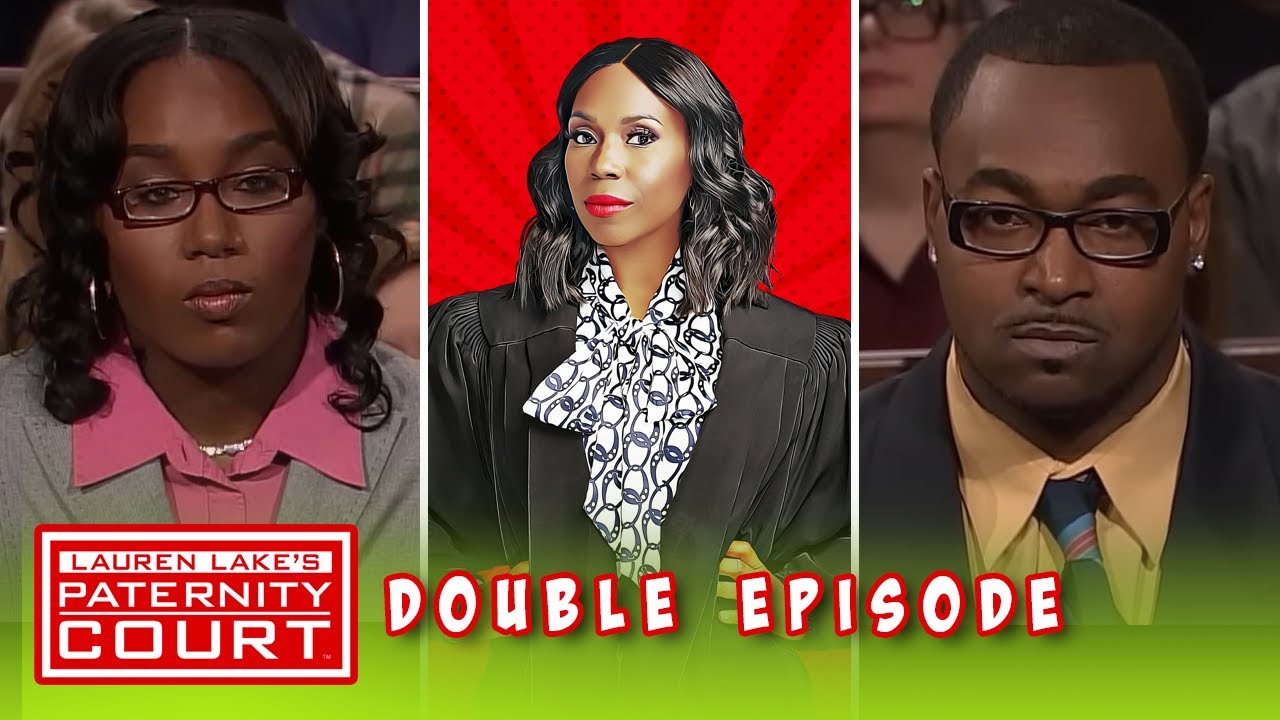
He had doubts.
Those doubts came from the timeline of their relationship, as well as the possibility that there may have been other factors he wasn’t aware of at the time. For him, stepping into the role of a father required certainty, not just belief. Without clear proof, he felt unable to fully accept the responsibility that came with it.
This difference in perspective created immediate conflict.
The woman spoke about the emotional toll of raising a child without consistent support. She described the challenges, the sacrifices, and the uncertainty that came with not knowing whether her child’s father would be present in his life. For her, the case wasn’t just about proving a point—it was about giving her child stability and a clear sense of identity.
At the same time, the man shared his own struggles.
He explained that his doubts weren’t meant to hurt anyone, but rather came from confusion and unresolved issues from their past relationship. He felt that he needed clarity before making a life-changing commitment. For him, the DNA test wasn’t just a formality—it was the only way to move forward with confidence.
As the courtroom discussion unfolded, emotions ran high.
Both sides presented their stories, each shaped by personal experiences, misunderstandings, and lingering questions. It became clear that this case wasn’t only about biology—it was about trust that had been damaged over time and the difficulty of rebuilding it.
The judge stepped in to guide the conversation.
With a calm and focused approach, the judge reminded both individuals that the case was not about revisiting every detail of their past, but about determining the truth in a way that would benefit the child. The emphasis remained on one key point: the child’s future must come first.
That shifted the entire tone.
Suddenly, the focus moved away from arguments and toward resolution. The question was no longer who was right or wrong—it was what could be proven. And in cases like this, proof matters more than anything else.
That’s where DNA testing became central.
Both parties knew that the results would provide a clear answer. For the woman, it was an opportunity to confirm what she had believed all along. For the man, it was a chance to either step into fatherhood with certainty or move forward without lingering doubt.
But the wait for those results wasn’t easy.
Emotionally, both sides were dealing with fear. The woman feared rejection—not just for herself, but for her child. The man feared responsibility—especially if it came from a situation he still didn’t fully understand. These fears added another layer to an already complex situation.
And then came the moment of truth.
As the results were revealed, the tension in the courtroom reached its peak. This was the turning point—the moment that would settle the question once and for all. Regardless of the outcome, it would force both individuals to face reality and make decisions based on facts, not assumptions.
But even with answers, the emotional journey didn’t end there.
Cases like this leave a lasting impact. They highlight how easily trust can be broken and how difficult it can be to rebuild. They also show how important it is to face uncertainty with honesty, especially when a child’s identity and future are involved.
This episode made one thing very clear.
Paternity disputes are never just about DNA. They are about people, relationships, and the choices that shape lives over time. They remind us that while the truth may be difficult to face, it is always necessary for moving forward.
In the end, the courtroom provides answers.
What people do with those answers—that’s what defines everything that comes next.
What’s your view?
Do you think doubt is enough to question paternity, or should proof always come first? Share your thoughts below and join the discussion.
FULL VIDEO: