Why Do People Get Different Answers?
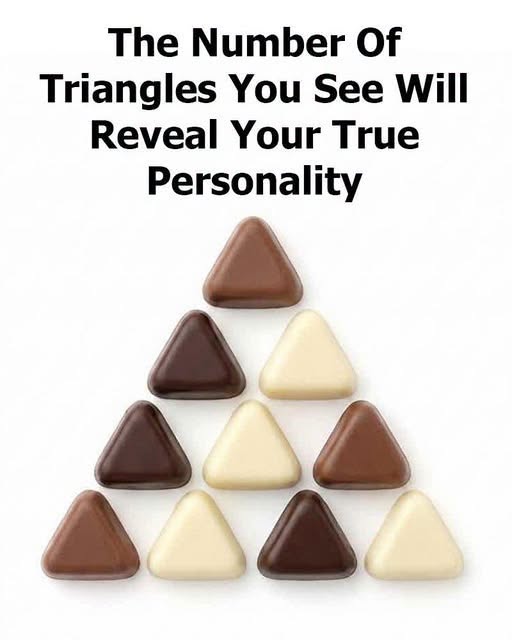
Visual puzzles challenge the way our brains process information. Rather than seeing every detail at once, the brain naturally groups shapes together and focuses on the most obvious patterns first.
Some people immediately notice the larger triangles, while others instinctively begin counting the smaller ones. The real challenge is remembering to look for triangles that are created by combining multiple smaller sections.
This is why it’s common for people to change their answer after looking at the image several times.
More Than Just a Fun Puzzle
Brain teasers like this aren’t simply entertaining—they also encourage important thinking skills, including:
- Careful observation
- Pattern recognition
- Attention to detail
- Flexible problem-solving
- Visual reasoning
These are the same skills people use every day when solving problems, designing projects, reading maps, or analyzing information.
A Simple Strategy
If you’re trying to find every triangle, don’t rush.
Instead, try this approach:
- Count the smallest triangles first.
- Move on to medium-sized triangles.
- Look for larger triangles formed by combining smaller ones.
- Scan one section of the image at a time instead of the entire puzzle all at once.
Many people miss several shapes simply because they stop searching too soon.
Why These Puzzles Are So Popular
Triangle puzzles are enjoyable because they encourage us to question our first impression. What seems obvious at first often changes after a closer look.
That’s also why two people can study the exact same image and arrive at completely different answers—both believing they’re correct until they compare notes.
Sometimes the challenge isn’t about finding the answer quickly. It’s about slowing down and noticing details that were easy to overlook.
Final Challenge
Before checking anyone else’s answer, take one more careful look at the puzzle.
You may be surprised by how many additional triangles appear once your brain starts recognizing the hidden patterns.
How many triangles did you count? Compare your answer with friends or family and see who noticed the most hidden shapes before revealing the solution