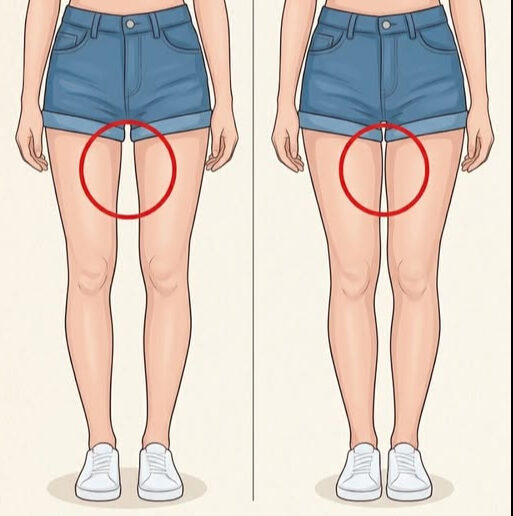
A thigh gap simply refers to the space between the inner thighs when someone stands with their feet together.
That’s all it is—a physical characteristic.
It is not a fitness achievement, a medical condition, or a reliable indicator of body quality or health. Just like height, shoulder width, or hand size, it varies naturally from person to person.
Some people have it, and many people don’t.
Both are completely normal.
Why Some People Have One and Others Don’t
Whether someone has a thigh gap is mostly influenced by their natural body structure. Several factors play a role, including:
- Hip width
- Pelvic shape
- Bone alignment
- Muscle placement
- Natural fat distribution
Because these traits are largely genetic, exercise or dieting alone cannot guarantee a thigh gap. Many healthy individuals will never develop one, regardless of their fitness routine.
Understanding this can help remove unnecessary pressure and unrealistic expectations.
Is a Thigh Gap a Sign of Health?
The short answer is no.
Health is determined by many factors, such as balanced nutrition, physical strength, heart health, energy levels, and lifestyle habits. A single physical feature cannot accurately measure overall wellness.
Someone can be healthy without a thigh gap, and someone can have a thigh gap while still facing health challenges.
This is why experts often encourage people to focus on how their body functions rather than how it compares to a trend.
The Risks of Chasing Appearance-Based Goals
When a specific body feature becomes popular, some individuals may feel pressure to pursue it at any cost. This can sometimes lead to extreme dieting, unhealthy habits, or overtraining.
Instead of improving health, these behaviors may place stress on the body and affect mental well-being.
Building healthy habits should support the body, not push it toward unrealistic standards.
Shifting the focus away from appearance and toward balance can make a big difference in long-term wellness.
How Media Shapes Body Image
One reason the thigh gap trend gained attention is the influence of curated images online. Social platforms and advertising often highlight certain body types more than others.
Over time, constant exposure to these visuals can create the impression that they represent the “ideal,” even though they reflect only a small portion of real body diversity.
Recognizing this influence can help people approach body trends with a more critical and balanced mindset.
Understanding Natural Body Differences
Every person’s body stores and distributes fat differently. Fat in areas like the hips and thighs is a normal and natural part of human biology.
In fact, these differences play a role in how the body stores energy and supports daily functions.
Continue reading in the next page….