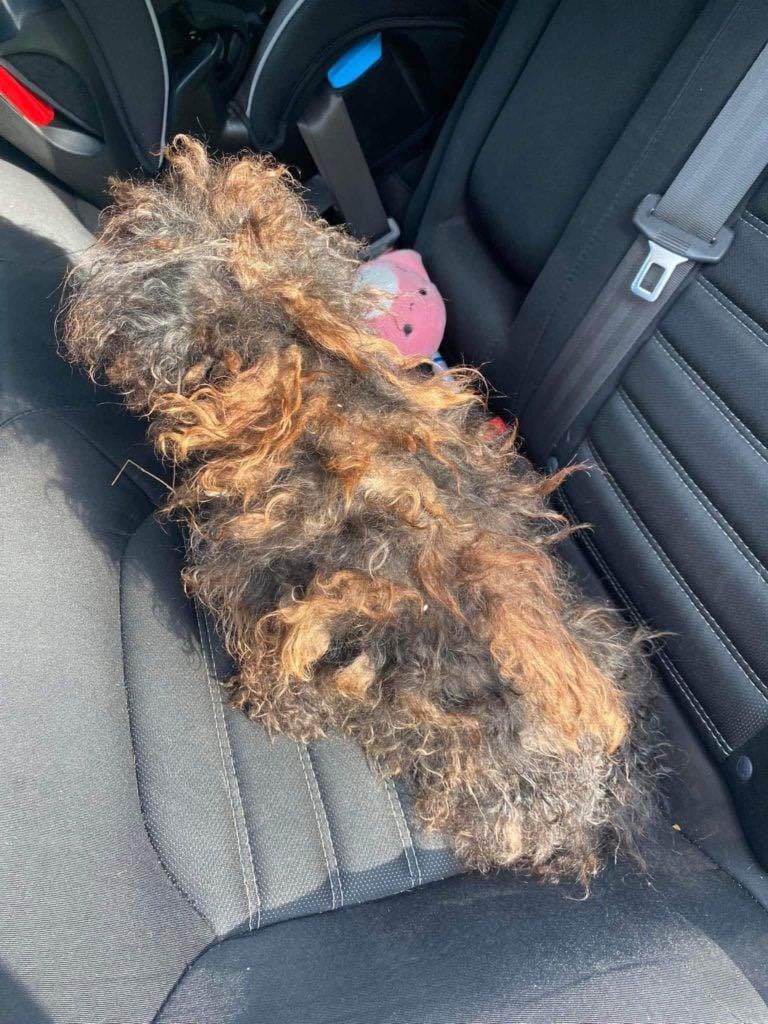
When the final layers were gone, Pear stood unsteady but present. Smaller than expected, she carried visible signs of long-term neglect—scarring, weakness, and the absence of one eye, hinting at a past no one would fully know. Yet even in that state, she was no longer hidden.
Food was offered. She ate urgently, as though afraid the moment might disappear. And then, for the first time in what may have been years, she slept deeply—no longer forced to remain alert for survival.
In the days that followed, Pear’s story began to spread. Before-and-after images captured attention online, showing a dramatic transformation. But for those caring for her, the real change wasn’t just physical.
It was emotional.
The most powerful moment came quietly. During a routine interaction, a volunteer extended a hand—not to treat or examine her, but simply to offer presence. Pear hesitated, then slowly leaned in.
That single gesture said more than any transformation photo ever could. It was a choice to trust again.
Not because fear was gone—but because hope had finally been given space to exist.
Pear’s journey is not just about rescue. It is about recovery, patience, and the quiet return of safety after long-term neglect. Her strength wasn’t only in surviving what she endured, but in choosing connection after it.
Today, she stands as a reminder that even the most broken-looking stories are not finished stories.
Healing doesn’t always arrive loudly. Sometimes it begins with a single moment of trust.
If Pear’s story moved you, share your thoughts and join the conversation below—your voice helps keep stories of resilience and second chances alive.