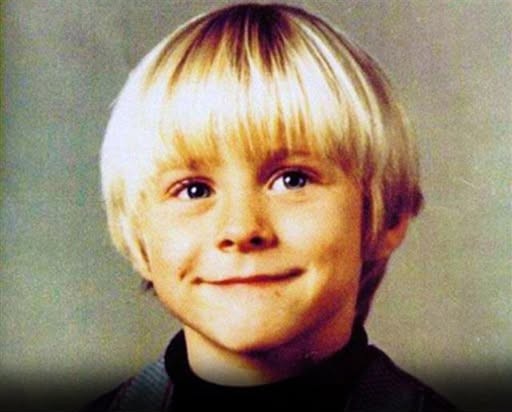
As a child, Cobain loved drawing, singing, and making up songs. Family members later recalled that he began singing when he was very young. By the time he was only a few years old, he was already showing signs of the artistic personality that would later define his career.
He was energetic, sensitive, and imaginative.
But that peaceful image of childhood did not last.
The Divorce That Changed Everything
When Cobain was around nine years old, his parents divorced. The split affected him deeply.
People close to him noticed a major change in his behavior afterward. The once cheerful and lively child became more withdrawn, frustrated, and difficult to reach. Cobain later admitted that he wanted the stability of a normal family and felt hurt that his home life had fallen apart.
That pain stayed with him.
Both parents eventually moved into new relationships, which only made things more complicated. Cobain struggled to feel settled in either household. He moved between relatives, friends, and temporary living situations, often feeling like he did not fully belong anywhere.
For a child who already felt deeply, that instability left a lasting mark.
Feeling Like an Outsider
As Cobain grew older, he became increasingly disconnected from the world around him.
He did not fit easily into the small-town culture of Aberdeen. He had little interest in many of the activities expected of boys his age, including sports and hunting. Instead, he was drawn to art, music, and people who felt different from the mainstream.
That made him a target.
In school, Cobain was bullied and misunderstood. After befriending a gay student, rumors spread about his own identity, and classmates treated him harshly. Rather than trying to fit in, he often pushed back harder.
He dyed his hair in bold colors, challenged social expectations, and rejected the narrow labels others tried to place on him.
This outsider identity later became a major part of his music.
Art Became His Escape
Even when life felt chaotic, Cobain kept creating.
He drew constantly, wrote music, and used art as a way to process what he could not easily explain. His drawings sometimes caused controversy at school, but they also showed how strongly he needed to express himself.
Eventually, school lost its hold on him.
Cobain dropped out shortly before graduation after realizing he did not have enough credits. Around the same time, his home situation became more unstable. After being told to either find work or leave, he began drifting between temporary places to stay.
Stories later emerged about him spending time near the Wishkah River bridge, a detail often connected to Nirvana’s song “Something in the Way.” Whether literal or exaggerated, the story captured something real: Cobain felt restless, displaced, and disconnected.
Punk Music Changed His Direction
A major turning point came when Cobain discovered punk rock.
Through local musicians and the underground music scene, he found a sound that matched what he felt inside. Punk was raw, direct, emotional, and rebellious. It gave him a place to put his anger, pain, humor, and sensitivity.
That discovery changed everything.
Cobain began performing, writing songs, and shaping the musical identity that would eventually become Nirvana. His lyrics were often strange, emotional, sarcastic, and deeply human. They did not sound polished or artificial. They sounded honest.
That honesty became his power.
Nirvana’s Rise Changed Rock Music
Before Nirvana became a global name, the band went through lineup changes and years of uncertainty. Their 1989 album Bleach introduced their sound to underground audiences, but the real breakthrough came later.
When Dave Grohl joined as drummer, Nirvana’s energy shifted.
In 1991, the band released Nevermind. Its lead single, “Smells Like Teen Spirit,” became a cultural explosion. Almost overnight, Nirvana moved from underground clubs to international fame.
The album helped bring grunge and alternative rock into the mainstream. Suddenly, music that once felt too rough, too emotional, or too outsider-focused was everywhere.
Cobain became the reluctant voice of a generation.
Fame Brought Pressure He Never Wanted
Nirvana’s success made Cobain famous around the world, but fame did not bring him peace.
He often seemed uncomfortable with celebrity attention. The more popular the band became, the more pressure surrounded him. Fans, media outlets, critics, and the music industry all wanted something from him.
At the same time, Cobain continued to deal with personal struggles, health issues, addiction, and depression.
His marriage to Courtney Love also drew constant public attention. Together, they had a daughter, Frances Bean Cobain, but their family life was often placed under intense media scrutiny.
For someone who had spent much of his life feeling misunderstood, the spotlight became overwhelming.
A Legacy That Never Faded
Kurt Cobain died in April 1994 at the age of 27. Authorities ruled his death a suicide.
His passing shocked fans around the world and marked the end of one of the most influential chapters in modern rock music.
But Cobain’s legacy did not disappear.
If anything, it grew stronger.
Nirvana’s music continued to reach new generations. Songs like “Come as You Are,” “Lithium,” “Heart-Shaped Box,” and “Smells Like Teen Spirit” remained cultural landmarks. His voice, style, and songwriting influenced countless artists who came after him.
What made Cobain different was not just his talent. It was the emotional honesty behind it.
He made vulnerability sound powerful.
He made frustration sound poetic.
He made outsiders feel seen.
The Boy Behind the Icon
It is easy to remember Kurt Cobain only as a rock legend, but his story began with a sensitive child trying to make sense of a difficult world.
His childhood pain, feelings of alienation, and need for creative expression all shaped the artist he became. Those struggles did not define his entire life, but they clearly influenced the music that millions of people connected with.
Cobain’s story is both inspiring and tragic.
He rose from a small working-class town to become one of the most important musicians of his era. Yet behind the fame was a person carrying emotional weight that success could not erase.
The Bottom Line
Kurt Cobain’s life was short, complicated, and deeply influential. From a creative boy in Aberdeen to the frontman of Nirvana, he helped change the sound of rock music forever.
His legacy remains powerful because his music still feels real. It speaks to pain, confusion, rebellion, loneliness, and the search for identity — emotions that never go out of date.
What do you think made Kurt Cobain’s music connect with so many people? Share your thoughts and join the conversation below.